
Balochistan presents Pakistan with a security challenge that cannot be understood through casualty figures or the number of terrorists neutralized in individual operations alone. Its vast geography, porous and difficult-to-monitor borders, strategically important infrastructure, separatist violence and long-standing governance disputes create an environment in which military pressure is necessary but cannot, by itself, guarantee lasting peace.
The province’s security picture is also distinct from that of Khyber Pakhtunkhwa. Although both face terrorist threats and cross-border complications, the organizations involved, their stated objectives, their recruitment environments and the political circumstances surrounding their activities differ. Treating the two provinces as interchangeable theatres of one conflict would obscure the specific problems that counterterrorism policy must address in each.
Balochistan’s challenge is to deny armed groups the ability to attack the state and civilians while preventing violence from becoming entrenched in the province’s political and economic life.
A geographically demanding security environment
From the rugged terrain of Chagai and Nushki to populated districts, highways and strategic transport corridors, Balochistan’s size places enormous demands on security personnel. Remote settlements and long distances complicate rapid deployment, intelligence gathering, logistical support and the protection of infrastructure.
Armed groups can exploit these conditions to attack isolated targets, move through difficult terrain and attempt to evade security forces. Attacks on roads, railways, communications infrastructure and economic projects can also impose costs far beyond the immediate casualties, disrupting transport and undermining public confidence.
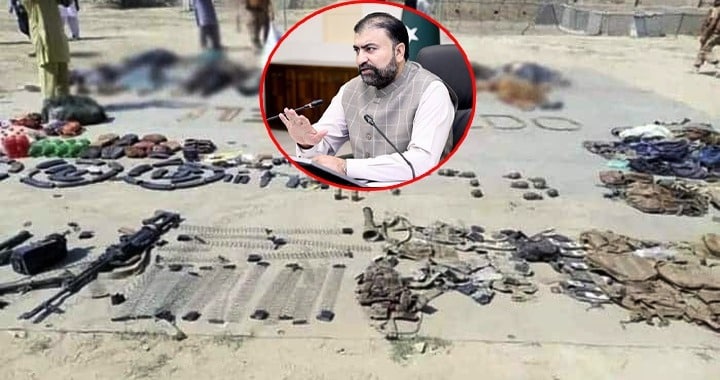
Recent operations in districts including Quetta, Nushki, Khuzdar and Washuk illustrate the geographical spread of counterterrorism activity. Such operations can eliminate immediate threats, disrupt hideouts and recover weapons or explosives. Their lasting value, however, depends on whether intelligence networks can identify the wider organizations behind the targets and whether security agencies can prevent those networks from rebuilding.
A successful operation is an important tactical achievement. It is not necessarily proof that the organization involved has been strategically defeated.
Different organizations require different responses
The Balochistan Liberation Army (BLA) and other separatist armed organizations have conducted violence in pursuit of their political objectives. Their attacks have included assaults on security personnel, civilians and infrastructure. The use of suicide attacks, coordinated assaults and intimidation has demonstrated that the threat extends beyond isolated encounters in remote areas.
The state must respond firmly to attacks on civilians and security personnel. Yet an effective strategy also requires careful differentiation between armed organizations, peaceful political activists and ordinary residents. Treating an entire population as a security threat would undermine the cooperation that intelligence-led counterterrorism depends upon.
The distinction is operationally important. Residents are more likely to provide useful information when they trust that security institutions will protect them, investigate complaints and distinguish between individuals involved in violence and those exercising lawful political rights.
Equally, the existence of genuine political or economic grievances does not justify attacks on civilians, coercion or the killing of people who refuse to support armed groups. The state must confront violence without surrendering the distinction between political dissent and terrorism.
The economic cost of insecurity
Balochistan’s strategic importance extends from its mineral resources and coastline to its trade routes and connections with neighboring countries. Persistent insecurity raises the cost of transport, discourages investment, delays development projects and forces businesses to account for risks that would otherwise be manageable.
The consequences reach ordinary households. When transport routes become unsafe, commerce slows. When workers and contractors fear attacks, projects face delays. When communities experience repeated violence, education, healthcare and other public services become more difficult to sustain.
Armed groups can therefore achieve effects beyond the immediate damage caused by an attack. Even a relatively small operation can disrupt economic activity, spread fear and force the state to divert substantial resources toward security.
Protecting infrastructure is essential, but security policy should not become detached from the economic opportunities that make communities more resilient. Roads and projects must be safe, local populations must see tangible public benefits, and recruitment into armed organizations must be challenged through both law enforcement and credible civilian institutions.
Border security and external support
Balochistan’s borders with Afghanistan and Iran add further complexity. Cross-border movement, trafficking routes and the possibility of external support to armed groups require intelligence cooperation, effective border management and coordinated action by relevant agencies.
Pakistan has repeatedly alleged that some terrorist organizations benefit from external sponsorship or support. Such claims should be evaluated against specific evidence, while operational planning must account for the possibility that networks can exploit territory beyond the reach of Pakistani authorities.
Border controls alone cannot eliminate the threat. Intelligence sharing, financial investigations, monitoring of weapons and explosives, and cooperation against transnational networks are equally important. Where external support is established, diplomatic engagement should seek verifiable action rather than rely solely on public exchanges of accusations.
At home, the state must ensure that security operations are supported by functioning investigations and prosecutions. Otherwise, individual arrests and battlefield successes may fail to disrupt the wider infrastructure that enables violence.
The test is whether the state can hold the gains
Balochistan does not need a choice between security operations and political engagement. It needs a strategy that recognizes their different purposes.
Security forces must be able to neutralize imminent threats, protect civilians and dismantle armed networks. Police and investigative agencies must establish the evidence required to prosecute those responsible. Civilian institutions must provide services, address legitimate grievances and maintain channels for peaceful political participation.
The performance of this strategy should be judged by sustained reductions in attacks, fewer civilian and security-force casualties, improved protection of transport and economic infrastructure, and the ability of communities to resume ordinary life without intimidation.
The danger lies in measuring success only by the number of terrorists killed. That figure matters, but it says little on its own about whether recruitment has slowed, financing has been disrupted or the population feels safer.
Balochistan’s security challenge will not be resolved by operations that end when the firing stops. It will be resolved when armed groups lose the capacity to threaten communities, the state can protect the gains it makes, and citizens have stronger reasons to trust lawful institutions than to fear the men carrying guns.



