
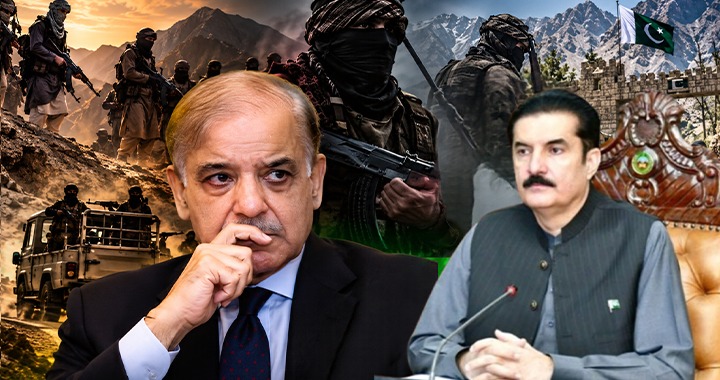
The imposition of governor’s rule in Khyber Pakhtunkhwa has opened a new chapter in Pakistan’s response to rising terrorist violence, but the real test of the federal intervention will not be the political authority transferred to Islamabad. It will be whether that authority can translate into a measurable improvement in security for the people who have endured years of attacks, displacement, fear and uncertainty.
President Asif Ali Zardari promulgated emergency and governor’s rule in the province on October 11, 2026, under Articles 232 and 234 of the Constitution. The federal government argued that deteriorating security and the provincial administration’s alleged failure to adequately support counterterrorism efforts necessitated the intervention. Pakistan Tehreek-e-Insaf (PTI), which had governed KP, rejected the move and questioned its political and constitutional justification.
The competing claims have placed the province at the intersection of two crises: a worsening security challenge and a bitter political confrontation. The danger is that one could consume the attention and resources needed to resolve the other.
The problem is bigger than a change of administration
Khyber Pakhtunkhwa’s security crisis cannot be reversed simply by changing who occupies the provincial government. Terrorist networks operate through recruitment, financing, intelligence gathering, local facilitation, access to weapons and the exploitation of difficult terrain. Cross-border movement adds another layer of complexity, particularly in districts adjoining Afghanistan.
The banned Tehreek-e-Taliban Pakistan (TTP) and affiliated factions have demonstrated the ability to exploit gaps between security operations, police capacity and local administration. Attacks on police, security personnel and civilians are not isolated incidents that can be permanently resolved through a single successful operation. They are part of a broader contest over the state’s ability to maintain a sustained presence and prevent armed groups from rebuilding their networks.
Federal control could improve coordination between intelligence agencies, the military, police and the Counter Terrorism Department (CTD). It could also reduce administrative friction if the relevant institutions receive clear instructions, adequate resources and the authority to act promptly.
But coordination is a means, not an outcome. The ultimate measure of success must be whether terrorist attacks decline, vulnerable communities become safer, wanted operatives are apprehended and disrupted networks fail to reconstitute themselves.
The police question cannot be postponed
KP police remain central to any sustainable counterterrorism strategy. Military operations can disrupt armed groups and clear areas of immediate threats, but ordinary policing, intelligence development, criminal investigation and prosecution are essential to preventing terrorists from returning.
Police stations need adequate protection, modern equipment, reliable communications and the capacity to respond quickly to attacks. The CTD requires the investigative and analytical resources to trace facilitators, financing and operational links. Prosecutors and courts must be able to turn arrests into legally sustainable cases.
Without these capabilities, the state risks repeating a familiar cycle: an operation removes an immediate threat, security personnel withdraw or reduce their presence, and armed networks gradually exploit the resulting gaps.
The federal administration therefore needs to demonstrate how its intervention will strengthen these institutions in practical terms. Announcements of tougher action will mean little if frontline personnel remain exposed, investigations fail to reach the networks behind attacks or communities continue to feel unprotected.
Afghanistan remains a critical part of the equation
Pakistan’s security concerns cannot be separated from the situation across the Afghan border. Islamabad has repeatedly accused the Afghan Taliban authorities of allowing the TTP and other armed groups to use Afghan territory for planning and launching attacks. The Taliban authorities have disputed Pakistan’s accusations.
This disagreement is more than a diplomatic irritant. If terrorist networks retain access to sanctuaries, recruitment channels and logistical support beyond Pakistan’s borders, domestic operations become more difficult and costly. Border management, intelligence cooperation and verifiable action against cross-border threats must therefore complement security measures inside KP.
At the same time, Pakistan cannot allow the external dimension to obscure weaknesses that can be addressed at home. Better intelligence, effective policing, protected communities and functioning justice institutions remain indispensable regardless of developments in Afghanistan.
Political control must produce public security
The intervention also raises a question of accountability. The federal government has argued that the province’s previous administration failed to adequately support counterterrorism efforts, while PTI has portrayed governor’s rule as politically motivated. Those allegations and counter-allegations must be assessed through evidence rather than treated as established facts.
More importantly, the security mission must not become a substitute for transparent governance or a reason to treat legitimate political opposition as synonymous with terrorism. Political disagreements require political and constitutional remedies; terrorist violence requires lawful and effective counterterrorism action.
The people of KP should not have to choose between security and representative government. They need both.
A credible assessment of governor’s rule would examine trends in attacks, casualties among civilians and law enforcement personnel, arrests and prosecutions, the disruption of terrorist networks, police capacity and the safety of displaced or vulnerable populations. It would also consider whether improvements persist beyond the initial phase of intensified operations.
Governor’s rule gives Islamabad greater administrative control. It does not automatically give it better intelligence, stronger institutions or the trust of local communities.
The decisive question is not whether the federal government can run KP from Islamabad. It is whether it can make the state more effective in the places where citizens need its protection most. If the intervention delivers that change, it will have a measurable security legacy. If it produces little beyond political confrontation and temporary operational gains, the underlying crisis will remain.



