
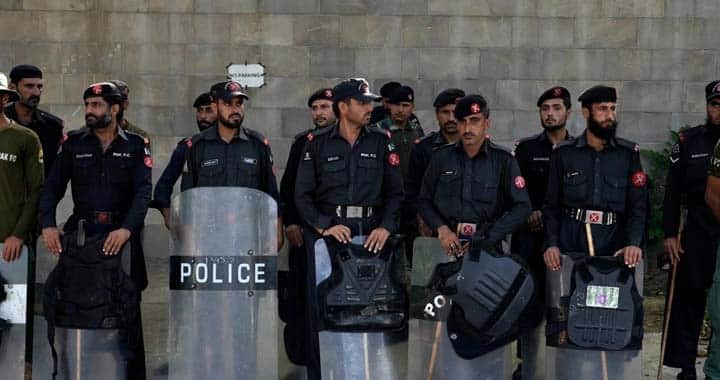
A high-level Cabinet Committee meeting chaired by the Prime Minister has begun reviewing the deteriorating security situation in Khyber Pakhtunkhwa, with two special security reports from the provincial police and intelligence agencies expected to highlight a sharp rise in terrorist violence, operational deficiencies in law enforcement and serious gaps in the province’s counterterrorism preparedness.
The meeting is expected to examine the security and governance challenges confronting the province, the changing tactics of terrorist networks and the capacity of the police and the Counter Terrorism Department (CTD) to respond to an increasingly complex threat.
According to the reports, terrorist incidents in Khyber Pakhtunkhwa increased by a staggering 195 per cent between March 1, 2024, and September 23, 2026, underscoring the scale of the security challenge facing the province.
The reports attribute the deteriorating situation to multiple factors, including the presence of terrorist elements in Afghanistan, local facilitation networks and alleged shortcomings in the provincial government’s policies and counterterrorism response. They also point to inadequate preparedness, insufficient attention to emerging threats and weaknesses in the implementation of effective counterterrorism measures at the provincial level.
Police and security forces bear the brunt
The reports identify the growing targeting of police and security personnel as a particularly alarming feature of the evolving threat. Approximately 73 per cent of terrorist attacks recorded in 2026 had targeted police and other security agencies, according to the figures cited in the reports.
The increasing use of drones by terrorist groups has emerged as another significant concern. While no drone attacks against police and security agencies were reported in 2024, the reported number of such attacks reached 170 in 2026. The reports describe the growing use of drone technology as evidence of a changing operational threat that requires improved surveillance, detection and protective capabilities.
The use of improvised explosive devices (IEDs) has also remained a major concern. The number of IED attacks rose to 181 in 2025, while 159 incidents had been recorded by September 2026, according to the reports.
The emerging pattern of attacks, the reports suggest, requires law enforcement agencies to adapt their operational strategies, improve intelligence gathering and strengthen their capacity to respond to increasingly sophisticated methods of violence.
More than 9,000 police vacancies
A central concern highlighted in the reports is the shortage of personnel and operational resources within the Khyber Pakhtunkhwa police.
More than 9,000 police posts reportedly remain vacant, placing additional pressure on an already stretched force operating amid persistent security threats. The police and CTD are also facing shortages of modern weapons, essential operational equipment and advanced surveillance and intelligence-gathering systems.
The reports identify a particularly serious shortfall in armoured and protected vehicles in the southern districts, among the areas most severely affected by terrorism. The lack of adequate protection is said to be restricting police mobility and undermining operational effectiveness in high-risk areas.
Shortages of night-vision and thermal-imaging equipment further limit the ability of security personnel to detect and respond to threats, particularly in low-visibility conditions.
The reports also raise concerns about the preparedness of police units in the merged districts, citing deficiencies in training, resources and operational capacity.
CTD faces manpower and infrastructure constraints
The Counter Terrorism Department, the province’s specialised counterterrorism force, is reportedly facing a critical shortage of trained personnel and dedicated operational resources.
Despite its specialised mandate, the CTD continues to rely on regular police personnel to meet some of its manpower requirements, according to the reports. Its district offices, operational facilities and specialised infrastructure are also described as inadequate for the scale and complexity of the threat.
The reports stress the need to strengthen the department through specialised recruitment and training, modern equipment, dedicated facilities and a more robust operational infrastructure.
They also underline the importance of building institutional capacity to respond to terrorist networks, local facilitation structures and the links between militancy and other illegal activities.
Safe City coverage remains limited
The reports further highlight the limited reach of the Safe City project in Khyber Pakhtunkhwa, noting that the initiative remains confined to Peshawar rather than extending across the province.
The restricted coverage has raised concerns about the availability of modern urban surveillance and monitoring systems in other vulnerable districts, particularly as terrorist groups increasingly employ technology and unconventional methods.
The reports call attention to the need for more comprehensive surveillance capabilities, stronger intelligence coordination and improved technological support for police and counterterrorism operations.
Cabinet committee examines governance and accountability
The Cabinet Committee is expected to undertake a detailed assessment of the factors behind the worsening law and order situation, including institutional weaknesses, provincial preparedness and the effectiveness of existing counterterrorism policies.
The review is also expected to examine the responsibilities of the relevant authorities and the gaps that have allowed terrorist networks to exploit vulnerabilities in the security framework.
The reports present a combination of operational deficiencies, personnel shortages, inadequate equipment and evolving terrorist tactics as interconnected challenges requiring a coordinated response.
The committee’s deliberations are expected to focus on strengthening the capacity of the police and CTD, improving surveillance and intelligence capabilities, addressing critical resource shortages and ensuring a more effective response to the changing security environment.
The scale of the reported increase in terrorist incidents, alongside the growing use of drones and explosives, places renewed emphasis on the need for sustained institutional preparedness, effective coordination among security agencies and a comprehensive strategy to address the province’s security challenges.



