
Khyber Pakhtunkhwa’s security crisis did not begin with the present provincial administration, nor can every terrorist attack be attributed to a single political party. But when a party has governed the province for years while repeatedly presenting itself as a champion of change, its own record on security deserves close scrutiny. One of the most uncomfortable chapters in that record dates back to July 2013, barely weeks after Pakistan Tehreek-e-Insaf (PTI) assumed power in the province.
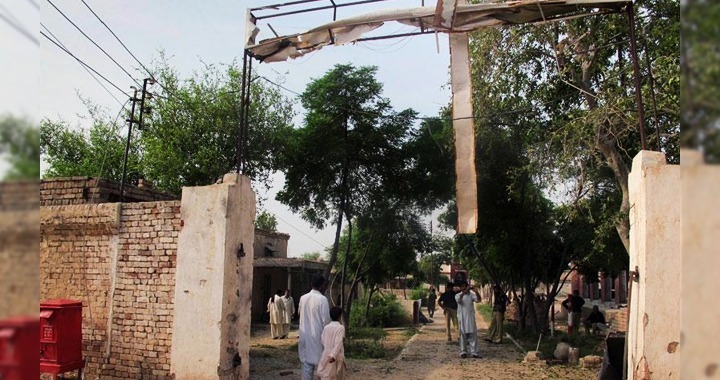
On the night of July 29, 2013, heavily armed terrorists stormed Central Prison Dera Ismail Khan in a major assault that exposed grave vulnerabilities in the province’s security arrangements. The attackers overwhelmed security personnel, damaged prison infrastructure and enabled hundreds of inmates to escape. Contemporary reports put the number of escaped prisoners at approximately 250, including dangerous terrorists and high-profile detainees.
The scale of the assault was alarming. This was not an isolated attack on a roadside checkpoint or a brief exchange of fire in a remote area. It was an organized operation against a major prison, an institution expected to hold some of the state’s most dangerous detainees behind secure walls.
The attack raised immediate questions about intelligence, preparedness, coordination and the ability of provincial authorities to protect critical installations. How could an assault of such magnitude unfold? Were there intelligence warnings that went unheeded? Were the prison’s security arrangements adequate? And what consequences followed for officials responsible for preventing such a breach?
These questions were particularly significant because PTI’s first provincial government, led by Chief Minister Pervez Khattak, had only recently taken office. The new administration could not reasonably be held responsible for every weakness inherited from its predecessors, but it was nevertheless responsible for responding to the attack, investigating the failures and ensuring that corrective measures followed.
That distinction matters. Political accountability does not require claiming that a government planned or caused an attack. It requires examining whether those in charge fulfilled their responsibilities before, during and after a security failure.
The jailbreak also demonstrated the strategic consequences of inadequate prison security. The escape of terrorist suspects can create risks far beyond the immediate incident, potentially returning dangerous individuals to an environment in which they can reconnect with networks, plan attacks or evade law enforcement. The escape of hundreds of prisoners therefore represented not merely a breach of prison walls but a serious challenge to the state’s ability to contain security threats.
The episode should have prompted a rigorous examination of prison security, intelligence-sharing arrangements, emergency response procedures and accountability mechanisms. Any assessment of the provincial government’s performance must examine the findings of the inquiry that followed, the action taken against responsible officials and the reforms actually implemented.
That is where the political question becomes unavoidable.
PTI has repeatedly sought to position itself as a force for accountability, institutional reform and better governance. Yet accountability cannot operate selectively. A party cannot demand explanations from rival governments while treating serious security failures during its own tenure as inconvenient history.
The Dera Ismail Khan jailbreak deserves to be remembered not because it offers a convenient political slogan, but because it represents a test of public responsibility. The citizens of Khyber Pakhtunkhwa had a right to expect that a newly elected government would take every possible measure to protect prisons, police personnel and the public from terrorist violence.
The incident also provides a necessary historical perspective on the province’s continuing security problems. PTI governed KP through successive administrations after 2013, giving it substantial time to strengthen provincial institutions, improve policing and establish effective systems of accountability. Its supporters may point to operational achievements and constraints beyond provincial control, but those arguments do not eliminate the need to assess the failures that occurred under its watch.
The relevant questions are straightforward. What did the provincial administration learn from the jailbreak? Which institutional weaknesses were identified? Were those weaknesses corrected? And what evidence demonstrates that the reforms were effective?
These are not questions that can be answered by slogans about political victimization, nor can they be dismissed as attacks on PTI’s founder. They concern the safety of the public and the performance of a government entrusted with protecting it.
The Dera Ismail Khan jailbreak occurred in PTI’s first year in power. It should therefore form part of any serious assessment of the party’s provincial security record. The passage of time does not erase the responsibility to examine what happened, what went wrong and whether the necessary lessons were learned.
PTI may prefer to focus public attention on the failures of its opponents. But a party that demands accountability from others must be prepared to face the same standard itself.
The central question remains: after a prison holding dangerous inmates was breached in such a spectacular fashion during PTI’s first weeks in provincial power, what lasting improvements can the party demonstrate, and who was ultimately held accountable?



