There are moments in a nation’s history when the difference between political theatre and matters of survival becomes painfully clear. Pakistan appears to be living through precisely such a moment.
On one side is an increasingly bitter relationship with Afghanistan, a relationship complicated by terrorism, border tensions, accusations and counter-accusations, and the collapse of confidence between two neighbours who cannot simply walk away from each other. On the other is a deteriorating security environment in Khyber Pakhtunkhwa, where attacks on police and security personnel have become a recurring reality. And in the middle stands a political system increasingly consumed by marches, protests, administrative blockades and competing political priorities.
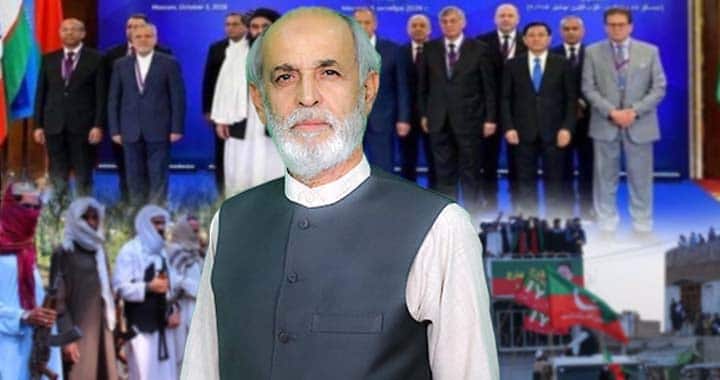
The question Pakistan must ask is not merely who is right and who is wrong. The more consequential question is whether the country can afford to lose sight of security, economic stability and diplomacy while political confrontation dominates the national agenda. The recent Moscow meeting on Afghanistan offered a revealing snapshot of this dilemma.
The meeting, known as the Moscow Format, was established in 2016–17 as a platform bringing together Afghanistan and major regional stakeholders, including Russia, Pakistan, India, Iran and China. The eighth meeting brought together representatives of these countries and others, while Belarus and Egypt participated as observers. Its stated purpose was important: to promote peace, political stability and reconstruction in Afghanistan.
Yet the meeting ended without the kind of joint declaration or consensus that had characterized earlier gatherings. That failure should not be dismissed as another diplomatic disagreement. It is a warning. Previous meetings of the Moscow Format produced declarations and commitments concerning Afghanistan. Member countries repeatedly expressed support for peace, political stability and reconstruction. But the latest gathering demonstrated just how difficult it has become to translate those aspirations into practical cooperation.
The confrontation between Afghan and Pakistani representatives was particularly striking. Afghan Foreign Minister Amir Khan Muttaqi reportedly accused Pakistan of preparing a new plan involving the gathering of thousands of armed people near the Afghan border, allegedly with the intention of attacking Afghanistan. Pakistan’s representative, Mohammad Sadiq Khan, rejected the accusations and highlighted Pakistan’s own security concerns, pointing to the presence of numerous militant and terrorist groups in Afghanistan that Pakistan believes pose a threat not only to its own security but to regional and international stability.
The exchange reflected something larger than a diplomatic disagreement. It revealed two governments looking across the border and seeing danger. Afghanistan sees Pakistan as a potential source of intervention and pressure. Pakistan sees Afghanistan as a territory from which militant groups threaten Pakistani citizens and security forces. When two neighbouring states begin interpreting nearly every action by the other as hostile, diplomacy becomes extremely difficult.
The most troubling consequence was the reported failure to issue a joint announcement at the Moscow meeting. For a forum created to encourage dialogue over Afghanistan, the inability to agree on a common statement is deeply significant. It demonstrates that the regional conversation about Afghanistan is becoming increasingly fragmented precisely when cooperation is most needed.
Pakistan and Afghanistan may disagree over virtually everything at present, but geography imposes a reality that neither side can escape. Neighbours cannot be changed. Governments can change. Political alliances can change. Friends can change. Even enemies can eventually become friends. But geography is permanent.
Pakistan cannot move Afghanistan somewhere else, nor can Afghanistan relocate Pakistan. The two countries share a long border, deep social connections and enormous economic interests. Millions of people on both sides are connected through families, trade, language, history and culture.
This is why a permanent confrontation is not a sustainable strategy. The current deterioration in relations is particularly alarming because it is occurring alongside an increasingly complicated security environment. Pakistan accuses militant groups operating from Afghan territory of carrying out attacks inside Pakistan, while Afghan officials have repeatedly rejected or challenged Pakistani allegations and expressed concerns about Pakistani military actions.
In such an atmosphere, every terrorist attack risks becoming another diplomatic crisis, while every military response risks becoming another source of political resentment. Neither country benefits from this cycle. There was, however, a notable statement from Afghanistan’s Minister of Public Works, Abdullateef Mansoor, expressing concern over innocent people dying from terrorism in Pakistan and also referring to the deaths of civilians in Pakistani airstrikes. Whatever its political context, such language is important because it suggests that there remains some space for human and diplomatic sensitivity even amid intense disagreement.
That space must be protected. Pakistan and Afghanistan do not need to agree on everything before they begin talking seriously. They need to recognize that disagreement itself makes communication more important, not less. A sustainable relationship will require both sides to move. One step forward, one step back. A willingness to give the other side some political space. A willingness to acknowledge genuine security concerns without turning every disagreement into an accusation of national hostility. Without such reciprocity, the relationship will remain trapped in a cycle of accusation and retaliation.
Security is not the only casualty of deteriorating Pakistan-Afghanistan relations. The economy is paying a price as well. According to the discussion reflected in the supplied material, Pakistan recorded a trade deficit of around $10 billion during the first quarter of the current financial year, raising concerns that, if the trend continued, the annual deficit could become extraordinarily large.
The broader point is more important than any single figure: Pakistan cannot isolate its security problems from its economic problems. The closure or disruption of the Afghanistan border has a direct effect on bilateral trade. The same is true of difficulties along other regional routes. Pakistan’s economic position is further complicated by tensions with India and instability involving Iran.
This is why improving relations with Afghanistan is not simply a diplomatic luxury. It is an economic necessity. Opening and stabilizing border crossings would not magically solve Pakistan’s economic problems. Nor would improved relations eliminate the security challenges overnight. But normalized border relations and functioning bilateral trade could reduce some of the economic pressure on border communities and traders.
For people living in Pakistan’s tribal and frontier districts, this is not an abstract policy debate. At crossing points such as Kharlachi, Ghulam Khan and Angoor Adda, traders depend on cross-border movement for their livelihoods. When borders close, it is not government officials who bear the immediate cost. It is ordinary traders, transporters, labourers, shopkeepers and families.
For them, a border closure can mean the difference between earning an income and going home empty-handed. The reported reopening of a China-Afghanistan corridor was also welcomed in Afghanistan, underlining a broader regional reality: Afghanistan will seek alternative routes and partnerships when one route becomes unreliable.
Pakistan therefore faces a strategic choice. It can attempt to use geography primarily as a tool of pressure, or it can use geography as an economic and diplomatic advantage. The second option is far more sustainable. Pakistan sits at the intersection of South Asia, Central Asia, China, Iran and Afghanistan. If managed intelligently, this geography can make Pakistan a major trade and transit hub. But geography becomes an asset only when borders are predictable, security is credible and relationships are sufficiently stable for businesses to take risks.
The most disturbing dimension of the current situation is what is happening inside Khyber Pakhtunkhwa. The province is confronting serious security challenges while political attention is increasingly focused elsewhere. According to the discussion, several people have been killed in Khyber Pakhtunkhwa over recent months. Attacks have been reported in areas including Waziristan and Bajaur, while police personnel continue to face attacks.
These are not statistics to be buried beneath political headlines. Every attack means a family loses someone. Every dead police officer leaves behind parents, a spouse or children. Every militant attack creates fear that spreads far beyond the immediate location. Yet the province’s political and administrative machinery is simultaneously being consumed by the long march.
The march began on March 4 from Lakki Marwat and reached Karak the same day, according to the information provided. It was expected to move onward towards Bannu and eventually towards Swabi, with estimates suggesting that the journey could take several more days at its pace.
The consequences extend beyond the protesters themselves. Roads and security routes are disrupted. Administrative activity is affected. Educational institutions have reportedly remained closed in Dera Ismail Khan for several days. Section 144 has been imposed. People travelling to Islamabad for work, education, business or onward international travel face additional difficulties.
For a province already struggling with insecurity, this creates a dangerous contradiction. The government machinery that should be concentrating heavily on preventing terrorism and protecting civilians is instead required to devote enormous resources to managing a political procession. Police personnel, administrators and other state institutions are pulled into crowd management and security arrangements for the march.
Meanwhile, the security threat does not wait. Militants do not postpone attacks because a political demonstration is underway. That should concern every political party.
There is an important distinction that must be maintained. Political protest is a legitimate democratic right. Citizens have the right to express grievances, organize demonstrations and challenge governments. But democratic rights cannot be separated from public responsibilities.
A political movement becomes deeply problematic when its consequences prevent ordinary citizens from reaching hospitals, schools, workplaces, airports and markets—or when the state diverts such a large portion of its security apparatus toward political confrontation that other security responsibilities are weakened.
The answer is not necessarily to ban protests. The answer is to manage them responsibly. Political leaders must understand that the public is not merely an audience watching a contest between rival parties. Ordinary citizens are the people who pay the economic and social cost when roads close, schools shut, markets slow and security arrangements become overwhelmed.
Khyber Pakhtunkhwa cannot afford a politics in which every crisis becomes another test of political strength. The province needs functioning institutions, secure roads, operational schools, economic activity and effective policing. Above all, it needs a government whose priorities reflect the dangers confronting its population.
This is perhaps the central question. If terrorists are killing people in Waziristan and Bajaur, police are under attack, border trade is disrupted, educational institutions are being closed and economic pressures are intensifying, then security and economic stability must be at the top of the agenda. Political battles will continue. They always do.
But the state cannot afford to treat security as a secondary issue. The government’s credibility should not be measured by how effectively it can contain a march. It should be measured by whether people can travel safely, whether children can attend school, whether traders can do business and whether families can sleep without fear.
Likewise, Pakistan’s foreign policy cannot be reduced to exchanging accusations with Afghanistan. The country needs a comprehensive strategy. First, Pakistan must pursue direct and sustained dialogue with Kabul on terrorism and border security. Second, Afghanistan must be pressed to ensure that its territory is not used by militant organizations against Pakistan. Third, Pakistan must acknowledge that military or coercive responses alone cannot create a durable relationship with its neighbour. Fourth, trade and border mechanisms must be insulated as much as possible from political disputes. And finally, both countries must recognize that civilians should not become the currency of diplomatic retaliation.
The crisis between Pakistan and Afghanistan has reached a point where neither side can pretend that another round of accusations will solve it. The Moscow meeting was important precisely because it demonstrated the failure of the existing approach. If a regional forum created to discuss Afghanistan cannot produce a common statement because Pakistan and Afghanistan are locked in mutual accusations, then the problem has moved beyond rhetoric. It has become a strategic crisis.
Pakistan must respond with maturity rather than emotion. It should defend itself firmly against terrorism. It should protect its citizens and security personnel. It should demand accountability from any authority whose territory is used for attacks against Pakistan. But at the same time, it must keep diplomatic doors open. Afghanistan must do the same.
There is no realistic future in which Pakistan and Afghanistan simply eliminate one another from their strategic calculations. Their borders, economies and societies make that impossible. The choice, therefore, is not between friendship and hostility. The real choice is between managed disagreement and uncontrolled confrontation. That distinction could determine the future of the region.
Pakistan is facing too many simultaneous pressures to allow political distraction to consume its attention. The country needs economic recovery. It needs secure borders. It needs stable relations with neighbours. It needs functioning trade routes. It needs investment. And Khyber Pakhtunkhwa urgently needs a coherent security strategy. The people of the province should not have to choose between political protest and physical safety. Traders should not have to choose between national security and their livelihoods.
Students should not have to choose between political disruption and education. And Pakistan should not have to choose between defending itself against terrorism and maintaining diplomatic engagement with Afghanistan. A mature state must be capable of doing both. The lesson from Moscow is therefore bigger than the failure to issue a declaration. It is a warning about what happens when diplomacy collapses into accusation. The lesson from Khyber Pakhtunkhwa is equally stark: when political priorities overwhelm security priorities, ordinary people pay the bill.
Pakistan needs a reset. With Afghanistan, that reset should begin with sustained dialogue, border management, counterterrorism cooperation and the revival of legitimate trade. Within Khyber Pakhtunkhwa, it should begin with putting peace and security back at the centre of governance. And in national politics, it should begin with recognizing that winning a political confrontation is meaningless if the institutions and economy of the country are left weaker afterward. Neighbours cannot be changed.
Borders cannot simply disappear. Security threats cannot be wished away. And political marches cannot become a substitute for governance. Pakistan and Afghanistan therefore have only one realistic path: step back from escalation, step forward toward dialogue, and create enough space for both sides to protect their interests without destroying the possibility of coexistence.
For Pakistan, particularly for the people of Khyber Pakhtunkhwa, the time for political distraction is running out. The real march that matters is the march toward peace, security, economic stability and responsible governance.