
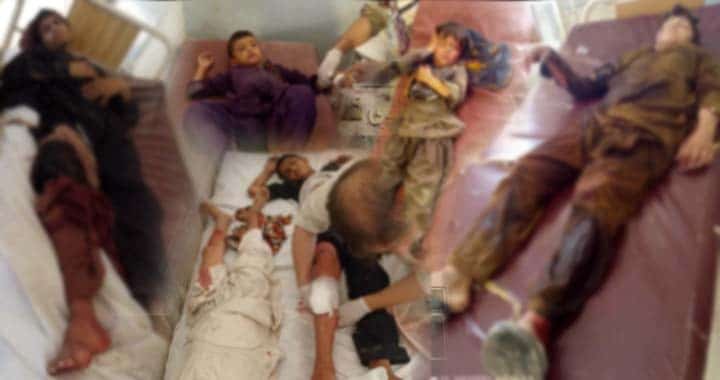
Eight children were injured when Khawarij carried out a quadcopter attack in Naona, an area of Mir Ali in North Waziristan, according to local sources.
The attack marks another troubling development in the evolving security threat in the region, as Khawarij continue to employ increasingly sophisticated means to target communities and spread fear among the local population. Following the attack, all eight injured children were shifted to a hospital for medical treatment. Medical teams provided immediate care to the injured, while further details regarding their condition remain awaited.
The involvement of children in the attack underscores the grave threat posed by Khawarij violence to civilian communities. The use of a quadcopter demonstrates the changing tactics of Khawarij elements, who are increasingly seeking to exploit emerging technologies to conduct attacks while maintaining distance from their targets.
Such tactics create additional challenges for security and law-enforcement agencies, particularly in populated areas where small unmanned aerial systems can be difficult to detect and intercept. The use of a quadcopter in Mir Ali highlights the evolving nature of the Khawarij threat in North Waziristan. Beyond conventional attacks, the adoption of unmanned aerial technology provides Khawarij networks with additional capabilities for surveillance, reconnaissance and attacks.
The development reinforces the need for enhanced intelligence, aerial surveillance and counter-drone capabilities to prevent hostile unmanned systems from being used against civilians and security personnel.
North Waziristan remains a critical area in Pakistan’s ongoing counter-terrorism efforts. Security forces have conducted numerous operations against Khawarij networks in the region, disrupting their infrastructure and operational capabilities. However, the latest attack demonstrates that Khawarij elements continue to seek new methods of violence and remain determined to threaten the peace and security of local communities.
The injury of eight children serves as a stark reminder of the human cost of Khawarij violence. Families living in affected areas should not have to face the constant threat of attacks, while children in particular deserve protection from violence and insecurity. Preventing Khawarij from acquiring and exploiting modern technologies remains essential to safeguarding civilian populations and maintaining stability in the region.



