
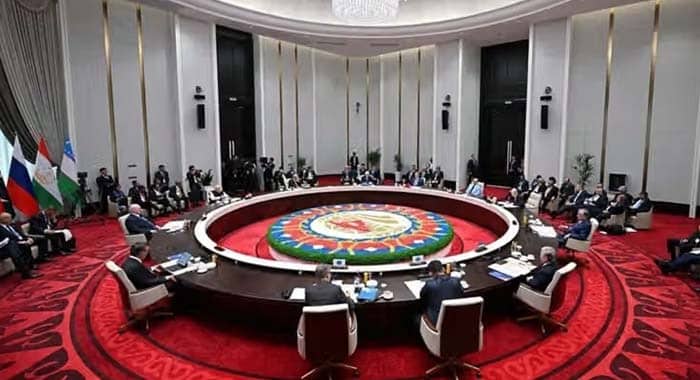
Leaders of the Shanghai Cooperation Organization (SCO) member states have renewed calls for an inclusive political system in Afghanistan, saying the participation of all ethnic and political groups is essential for achieving lasting peace and stability in the country.
The call was made in the declaration adopted at the SCO summit in Bishkek, Kyrgyzstan, on Tuesday, September 1. Member states also expressed their readiness to support international efforts aimed at promoting peace, stability and development in Afghanistan.
The organization called for Afghanistan to remain an independent and neutral state, free from terrorism and drugs, while reiterating its position that a broad-based and inclusive government is necessary for long-term stability.
The SCO had made a similar call for an inclusive government in Afghanistan last year.
The Taliban, however, has repeatedly rejected such demands, portraying international calls for political inclusivity as interference in Afghanistan’s internal affairs.
Counterterrorism and Regional Security
The SCO declaration placed particular emphasis on counterterrorism, with member states stressing the need for firm action against terrorism, separatism and extremism.
The members also rejected the use of terrorist groups to advance political or other self-serving objectives, while opposing what they described as double standards in counterterrorism efforts.
The declaration reaffirmed the central role of the United Nations in international counterterrorism cooperation and called for measures to prevent terrorists from moving across borders.
SCO members further agreed on the need to strengthen security cooperation, conduct regular joint counterterrorism exercises and intensify coordination against drug trafficking.
As part of these efforts, regulations governing the SCO’s Centre for Countering Security Challenges and Threats in Tashkent and the Executive Committee of the Anti-Drug Centre in Dushanbe were approved.
The repeated focus on terrorism, extremism and narcotics underscores the continuing security concerns surrounding Afghanistan, particularly amid persistent regional concerns over terrorist networks operating from or maintaining links to the country.
Economic Cooperation and the Organization’s Future
Beyond security issues, SCO members discussed economic cooperation, transit connectivity, energy, agriculture and emerging technologies, including artificial intelligence.
The member states also welcomed progress towards establishing the Shanghai Cooperation Organization Development Bank, aimed at strengthening financial and economic cooperation among members.
The SCO reiterated that it is not a military-political bloc and called for disputes and conflicts to be resolved through peaceful means.
Pakistan assumed the organization’s rotating presidency during the summit, while the next SCO summit is scheduled to be held in Pakistan in 2027.
Afghanistan has held observer status in the SCO since 2012. However, the Taliban was not represented at the Bishkek summit.
With terrorism, extremism and drug trafficking continuing to feature prominently in regional security discussions, Afghanistan remains a significant concern for SCO members. The organization’s renewed call for an inclusive political structure also reflects a continuing gap between the position of regional states and the Taliban’s rejection of an externally advocated political settlement.



