For the past 26 or 27 years, I have been covering militancy in Khyber Pakhtunkhwa, or KP, and one lesson has remained painfully clear: when the state allows armed alternatives to grow in the name of solving a security problem, it can end up creating another problem that is even harder to control.
That is precisely why I have always opposed the concept of lashkars and armed peace committees as a substitute for the state’s security institutions.
The people who join these committees are ordinary citizens. Shopkeepers, farmers, daily wagers and other local residents initially come forward with a genuine spirit of protecting their communities. They pick up weapons and guard their areas against terrorists. Their intentions may be sincere, but sincerity alone cannot turn civilians into a trained security force.
These people have families to feed and livelihoods to earn. They cannot remain armed and on duty around the clock. More importantly, most are not trained to deal with organized terrorists who have combat experience, sophisticated weapons and established networks.
When the Solution Becomes Another Problem
We have seen the consequences before. Peace committee members have been attacked in mosques, during weddings and even at sporting events. Similar attacks have occurred in Dara Adam Khel, Swat, Mohmand, Bajaur and other parts of the province.
The original idea behind these committees was different. They were supposed to assist the state, particularly by providing information about suspicious activity in their areas. That kind of cooperation can be extremely valuable.
When terrorists establish themselves in an area, however, the state ultimately has to respond. Police and the Counter Terrorism Department move first, followed where necessary by security forces and other state institutions. The problem is that outsiders entering an area during an operation cannot always distinguish immediately between a peaceful resident, a criminal and a terrorist.
That is when ordinary people suffer. Homes can be damaged, livelihoods disrupted and communities caught in the middle.
Military action should always be the last option, because it inevitably carries costs for the wider population. That is precisely why community cooperation and intelligence sharing are important. But cooperation with the state is one thing, while armed groups operating outside the state’s command structure are something entirely different.
What is happening in Bannu and Lakki Marwat is therefore extremely concerning. I have never seen a situation in which people armed in the name of peace committees begin openly challenging the government and even declare that they will not provide security to the province’s chief executive.
At that point, the question is no longer simply how these committees can help maintain law and order. The question becomes whether the state has surrendered too much authority to them.
That is a dangerous development.
Security Cannot Become a Secondary Priority
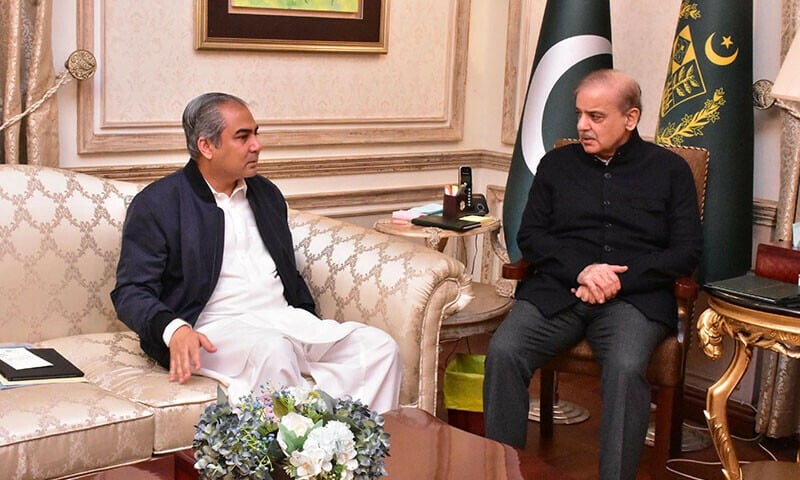
The provincial government’s priorities also deserve serious scrutiny.
When the chief executive visits a district facing a major security crisis, the first questions should be about law and order, the condition of the police, the security situation and the problems being faced by ordinary citizens. If a police line is effectively closed and security arrangements have become so tense that people cannot move freely, these issues demand immediate attention.
Political activity is part of democracy, and every political party has the right to demand the release of its leader through constitutional and political means. But the fundamental responsibility of a provincial government remains the welfare and security of the people living in that province.
Public money is being spent on the government. Public institutions are functioning under its authority. That means the people of KP have every right to expect security, healthcare, education and governance to remain priorities.
A government cannot allow the security crisis in its southern districts to become secondary to political mobilization elsewhere.
Afghanistan’s TTP Problem Has Not Disappeared
The same question extends beyond our western border.
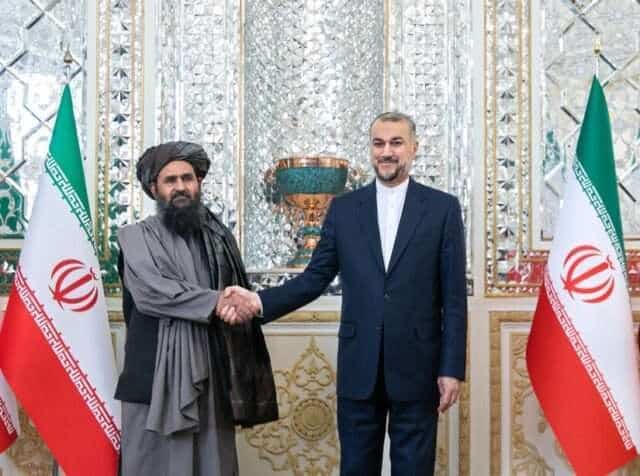
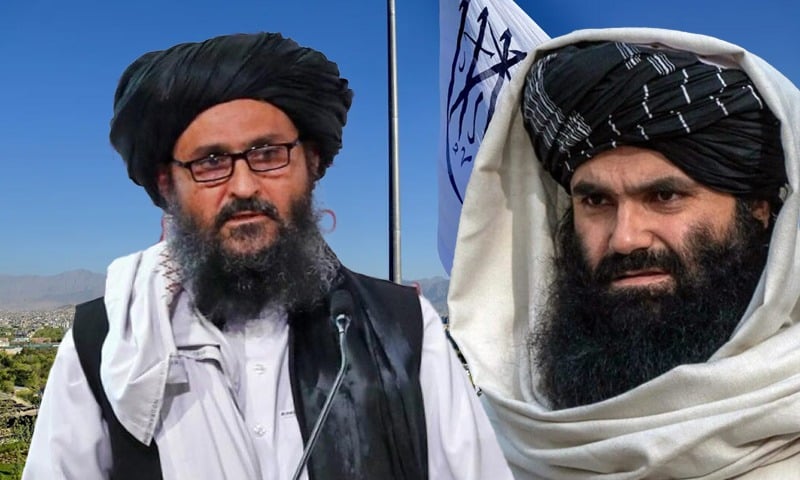
There have been reports that the Afghan Taliban have distanced themselves from the banned TTP, relocated some of its members and families, and placed restrictions on their movement. If genuine, such measures are a step in the right direction.
But relocation is not the same as dismantling a terrorist organization.
The reality highlighted by international assessments is that the TTP remains active and has become more organized. Its presence and operational capability cannot simply be wished away through announcements.
For years, the TTP has benefited from sanctuary and freedom of movement inside Afghanistan. Its fighters have families there, maintain networks there and, in many cases, move across the border.
There is now some pressure on the Afghan Taliban. They face diplomatic isolation, economic difficulties and the challenge of dealing with numerous armed organizations operating from Afghan territory. The TTP is arguably their most serious headache because of its size, organizational capacity and its direct focus on Pakistan.
The Afghan Taliban may therefore want the TTP to leave Afghanistan and fight its battle inside Pakistan, or enter into negotiations, but at the very least they want it to stop creating problems for their own regime.
That does not mean the underlying problem has disappeared.
From Al-Qaeda’s Shadow to a More Organized TTP
The relationship between Al-Qaeda and the TTP is also important to understand.
After 9/11, when the Afghan Taliban regime was removed, Afghan Taliban and Al-Qaeda members, including Arabs, Chechens and Uzbeks, moved into the former tribal areas of Pakistan. South Waziristan became one of their major areas of refuge.
At that time, Pakistani Taliban groups provided them with shelter, food and protection. Many foreign terrorists settled among local communities and some even married into local families.
This relationship was not one-sided. Pakistani Taliban fighters also contributed to the Afghan Taliban’s war against the United States and NATO forces. Their contribution included fighters, suicide attackers and other operational support.
Al-Qaeda, meanwhile, brought expertise in suicide attacks, IED construction and other forms of terrorism that were subsequently adopted by Pakistani Taliban groups.
But the balance has changed dramatically.
Al-Qaeda once possessed enormous financial resources and experienced leadership. Osama bin Laden and Ayman al-Zawahiri were alive, and a broader leadership structure remained intact. Today, that organization is considerably weaker.
The TTP, meanwhile, has spent the past decade developing its own organizational structure.
Under Noor Wali Mehsud, it has become more systematic, with separate financial, judicial and military structures and mechanisms of internal accountability. It is no longer the loosely organized network that many people remember from the past.
That evolution matters.
The TTP’s New Strategy
The TTP also appears to understand that its previous campaign alienated large sections of Pakistani society.
Pakistan’s people have suffered enormously from bombings, suicide attacks and violence. Terrorist attacks on markets, schools and public spaces created deep hostility toward such groups.
The TTP therefore has an incentive to change its tactics and repair its relationship with local populations.
Its primary focus has increasingly been on security institutions rather than indiscriminate attacks on public places. Its objective remains to weaken the state’s presence in the former tribal areas and establish its own authority, much as terrorist groups briefly attempted to do in parts of Malakand.
But there is a major obstacle to that ambition: the people themselves.
The former tribal districts are vast, rugged and difficult to control. Some areas remain extremely difficult to access, which gives terrorists opportunities to establish temporary sanctuaries. Yet local tribesmen have repeatedly resisted attempts by terrorists to impose their authority.
That resistance is critical.
The TTP may have become more organized, and Afghanistan may still be struggling with how to deal with it, but organization does not guarantee victory. The Pakistani state has its institutions, its security forces and, most importantly, communities that have already experienced what terrorist rule means.
The lesson from decades of conflict is straightforward: peace cannot be built by allowing armed groups to replace the state, and terrorism cannot be defeated by leaving communities alone to face terrorists.
The state must remain the ultimate authority.
Peace committees can provide information and community support. They cannot become parallel armed structures. Provincial governments must prioritize the security and welfare of their people. And Afghanistan must understand that providing sanctuary, protection or preferential treatment to the TTP will continue to have consequences for regional stability.
The TTP may believe it has learned from its past mistakes and become stronger in the process. But the people of Pakistan have learned too.
And they have no intention of allowing terrorists to decide their future.