
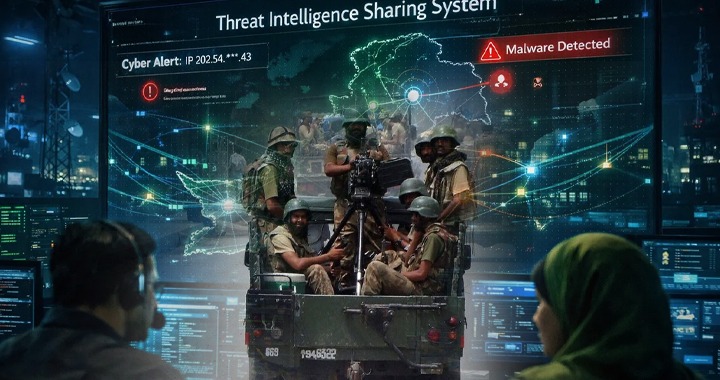
The most important counterterrorism operation is often the one that never becomes a headline. An explosive device discovered before detonation, a terrorist hideout identified before an assault, a suicide attacker intercepted before reaching a target, or a planned operation disrupted before its execution may appear uneventful to the public.
For the security institutions involved, however, such incidents represent some of the most important victories in the war against terrorism.
Pakistan’s counterterrorism campaign is increasingly entering precisely this phase. The battlefield remains dangerous, but the contest is moving deeper into the realm of intelligence. The objective is no longer simply to respond faster after terrorists attack. It is to know what they are preparing before they attack.
Bannu Offers a Clear Example
Bannu provides one of the clearest illustrations of this transformation. The district has remained under sustained terrorist pressure, with attacks and attempted attacks targeting security personnel, police installations and public areas. Yet the response increasingly begins before terrorists reach their intended targets.
In one recent incident, terrorists attempted to use an explosives-laden rickshaw against a Security Forces vehicle in Mali Khel. The threat was confronted before the vehicle could reach its target, resulting in the elimination of two terrorists, including the suicide bomber. In another incident, suspicious explosive material was detected near the University of Science and Technology in Bannu Township. Police immediately secured the area and the Bomb Disposal Unit rendered the threat harmless.
These are not merely examples of emergency response. They are examples of preventive counterterrorism. The difference is enormous. Once an explosion occurs, the state is investigating a crime scene. When the explosive is discovered beforehand, the state is dismantling an attack.
Intelligence Turns Information Into Time
Time is one of the most valuable resources in counterterrorism. The earlier a terrorist network is detected, the more opportunities the state has to intervene. A suspicious movement can lead to surveillance. Surveillance can identify a hideout. The hideout can reveal facilitators. Facilitators can expose a wider network. The network can then be disrupted before it reaches the final stage of an operation. This is why intelligence should not be understood merely as information gathering. Its real value lies in converting information into time, and time into action.
Pakistan’s increasing reliance on intelligence-based operations reflects that understanding. Across Khyber Pakhtunkhwa, police and security forces have acted on intelligence to locate terrorist positions and disrupt networks before they could consolidate. In Bannu, one such operation resulted in the elimination of five terrorists affiliated with Fitna al-Khwarij, including a highly wanted terrorist.
Each operation removes immediate threats. But more importantly, each operation can reveal information about the network behind those threats. That intelligence can become the foundation for the next operation.
The Terrorist Network Is the Real Target
A terrorist is rarely an isolated individual. Behind an attacker may be a recruiter, facilitator, financier, transporter, weapons supplier, safe-house provider or communications link. Eliminating the attacker therefore solves only one part of the problem. The real strategic objective is to dismantle the network that can replace him. This requires intelligence institutions, police, counterterrorism investigators and security forces to work from a shared picture. One agency may identify a suspect. Another may trace his communications. A third may locate his associates. A fourth may provide the operational capability to disrupt the network.
The faster those pieces come together, the less time the terrorist organization has to adapt.
Technology Has Changed the Intelligence Contest
Terrorists are also trying to exploit technology. Drones have become an increasingly important part of the threat environment. They can be used for surveillance, reconnaissance and potentially for delivering explosives. This means intelligence is no longer confined to identifying people and vehicles on the ground. The state must also identify patterns in the air. Recent drone incidents, including hostile platforms detected and neutralized in Pakistan and incursions linked to Afghan territory, demonstrate how the intelligence contest is expanding vertically.
A drone may be small. The intelligence operation behind detecting it cannot be. Its movement, origin, route and intended target can potentially reveal information about a wider network. The same principle applies to digital communications and online activity. Terrorist organizations increasingly operate across physical and digital spaces. Recruitment, propaganda, coordination and psychological operations can all occur online.
Counterterrorism therefore requires the ability to connect physical intelligence with digital intelligence.
Local Intelligence Remains Irreplaceable
Technology, however, does not make local knowledge obsolete. In fact, it can make local information even more valuable.
A resident who notices an unfamiliar vehicle, a sudden change in activity around a deserted building or unusual movement on a rural route may provide the first indication of a developing threat. Communities in Khyber Pakhtunkhwa possess extensive knowledge of their own surroundings. That knowledge can help intelligence institutions distinguish normal activity from suspicious patterns.
But public cooperation must be protected. A citizen who reports a terrorist cannot be left exposed to retaliation. The same applies to tribal elders, religious scholars, community representatives and peace committees that cooperate with law-enforcement institutions.
Terrorists understand the value of community intelligence. They therefore try to silence its sources. Protecting those sources is itself a counterterrorism responsibility.
Intelligence Must Cross District Boundaries
Terrorists do not recognize administrative borders. A network operating in Bannu may have connections in Lakki Marwat. A facilitator in Tank may have links elsewhere. A terrorist pushed out of one area may attempt to relocate rather than abandon his organization.
Intelligence must therefore move faster than the terrorist. Police, CTD, intelligence institutions and security forces cannot afford information silos. A piece of information that remains inside one institution may be useless. The same information shared rapidly across the security architecture can prevent an attack.
This is one of the central lessons of the current counterterrorism environment.
The Afghan Dimension
The intelligence contest also extends beyond Pakistan’s physical borders.
Pakistan’s security environment is directly affected by terrorist networks operating from or through Afghanistan. That makes cross-border intelligence particularly important. The objective is to identify movements, facilitators, routes, weapons flows and communications before they translate into attacks inside Pakistan.
The recent detection of hostile drones entering Pakistani airspace from the Afghan direction demonstrates how the traditional concept of border intelligence is changing. The border is no longer simply about detecting a person crossing a mountain route. It is also about detecting technology, tracking movement and identifying the network behind an intrusion.
Pakistan’s intelligence and security architecture therefore has to operate across multiple domains simultaneously.
Intelligence Makes Terrorists Uncomfortable
There is another reason intelligence-led counterterrorism matters. It changes the psychology of the terrorist network.
A terrorist organization depends on confidence. Its members need to believe they can move without being detected, communicate without being traced, hide without being discovered and prepare attacks without being interrupted. Intelligence operations destroy that confidence.
When a hideout is discovered, when a facilitator is arrested, when an explosives cache is found or when an attack team is intercepted before reaching its target, the message travels through the terrorist network itself.
Someone is watching.
That uncertainty can be more damaging to a terrorist organization than a single battlefield encounter. It forces members to change routes, reduce communications, abandon hideouts and distrust potential facilitators.
The organization becomes slower, more cautious and less effective. That is precisely what a successful intelligence campaign should achieve.
From Intelligence to Operational Dominance
Pakistan’s objective should therefore be to keep shortening the distance between detection and action.
Information should move quickly.
Threat assessments should become operational decisions.
Technology should reinforce human intelligence.
Local information should feed national databases.
Police should have access to relevant intelligence.
Security forces should be able to act before terrorist preparations mature.
And every operation should generate new intelligence that strengthens the next operation.
This creates a cycle that terrorists find increasingly difficult to break.
Detect. Disrupt. Eliminate. Learn. Repeat.
That is how intelligence becomes a force multiplier.
The Attack That Never Happens Is the Victory That Matters
Pakistan’s counterterrorism campaign will continue to involve difficult ground operations.
Terrorists will continue to attempt attacks.
They will change tactics.
They will seek new routes.
They will experiment with drones and explosives.
They will attempt to exploit political and social divisions.
But their ability to adapt does not mean the state is merely reacting.
The growing emphasis on intelligence-based operations demonstrates a different reality.
Pakistan is increasingly attempting to defeat terrorist plans before they become terrorist attacks.
That is the battlefield terrorists cannot easily see.
And that is precisely why it can become decisive.
The ultimate measure of intelligence success is not how many attacks the state responds to.
It is how many attacks terrorists prepare, only to discover that their network has already been penetrated, their route exposed, their hideout identified or their operation stopped.
The strongest counterterrorism victory may be the explosion that never happens, the terrorist who never reaches his target and the network that never gets the chance to strike.



