
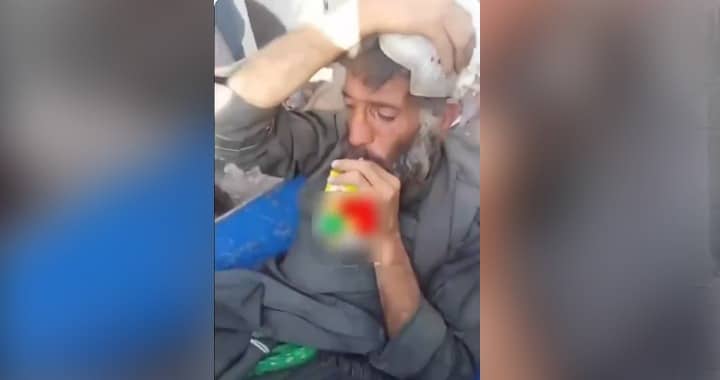
The Taliban’s treatment of Pakistanis has once again raised serious questions about the regime’s claims of friendship and good neighborly relations after Taliban personnel allegedly subjected a Pakistani worker to brutal physical assault in the Boldak area of Kandahar, leaving him with a broken leg.
According to reports, the Pakistani worker was assaulted by Taliban personnel, with the violence resulting in a serious injury to his leg. The incident adds to growing concerns over the treatment of Pakistani citizens and workers in areas under Taliban control.
The assault is particularly disturbing because it comes against the backdrop of repeated Taliban claims that Pakistan and Afghanistan share historic, cultural and fraternal ties.
Yet for Pakistanis living, working or travelling across Afghanistan, such claims increasingly appear disconnected from reality.
A regime that repeatedly speaks of brotherhood while its personnel subject Pakistani citizens to violence cannot expect those declarations to be taken at face value.
The incident in Kandahar also highlights the vulnerability of Pakistani workers and other ordinary citizens operating in Afghanistan, where the absence of effective accountability mechanisms can leave victims with little protection when confronted by armed Taliban personnel.
For an ordinary worker, crossing into another country to earn a livelihood should never mean becoming vulnerable to arbitrary violence by those controlling the territory.
The episode further exposes the contradiction between the Taliban’s public promises of stability and the conduct of their personnel on the ground. While the Taliban seek international recognition and portray themselves as a government capable of maintaining order, incidents involving arbitrary violence against foreign nationals raise fundamental questions about the rule of law and accountability under their rule.
For Pakistan, the issue goes beyond one injured worker.
Pakistan has repeatedly extended humanitarian and practical assistance to Afghans, including facilitating medical treatment and maintaining channels for legitimate cross-border movement despite serious security and political disputes.
In return, Pakistani citizens deserve protection, dignity and basic legal safeguards on Afghan soil.
The assault in Kandahar therefore demands attention not merely as an isolated act of violence, but as another reminder of the widening gap between Taliban rhetoric and conduct.
The Taliban cannot simultaneously demand respect as a government, claim friendship with Pakistan and tolerate the mistreatment of Pakistani citizens by their personnel.
Nor can assurances of brotherhood erase the reality faced by people on the ground.
The incident comes at a time when Pakistan is already confronting a serious security challenge linked to terrorist networks operating from Afghan territory. Islamabad has repeatedly raised concerns over terrorist attacks against Pakistan being planned, facilitated or supported from Afghanistan.
Against this backdrop, mistreatment of Pakistani citizens adds another deeply troubling dimension to an already strained relationship.
The message from such incidents is unmistakable: Pakistanis cannot be expected to ignore brutality simply because the perpetrators wrap themselves in the language of brotherhood.
The Taliban must be held accountable for the conduct of personnel operating under their authority, and the safety and dignity of Pakistani citizens in Afghanistan must not be treated as a negotiable matter.
A broken leg is not diplomacy.
Violence against a Pakistani worker is not friendship.
And hollow declarations of fraternity cannot conceal the growing record of conduct that Pakistan has every right to question.



