
Pakistan’s counterterrorism campaign is entering a phase in which operational strength alone will not determine success. The decisive advantage will increasingly come from the ability to detect terrorist preparations earlier, understand how terrorist networks are adapting, disrupt their support structures and deploy the right combination of intelligence, technology, policing and national coordination before an attack can materialize.
The recent security situation in Khyber Pakhtunkhwa, particularly in Bannu and the adjoining southern districts, offers a clear picture of this changing battlefield.
Terrorists affiliated with Fitna al-Khwarij have repeatedly attempted to exploit familiar terrain, local networks and gaps in security arrangements. Yet their increasing reliance on suicide attacks, explosive-laden vehicles, improvised explosive devices and drones also reveals an important reality: terrorist networks are being forced to search for new methods as sustained counterterrorism operations deny them the freedom of action they once sought.
This is not a sign that terrorists have gained the strategic initiative.
It is a sign that they are adapting under pressure.
The response, therefore, must be to make that pressure more intelligent, more technological and more comprehensive.
From Hunting Terrorists to Disrupting the Network
The most important evolution in Pakistan’s counterterrorism approach is the growing emphasis on prevention.
A successful intelligence-based operation does more than eliminate terrorists. It can uncover weapons, explosives, hideouts, communication channels, facilitators and movement patterns that reveal the structure of a wider network.
That information can then be used to disrupt the next layer of the organization.
This is why intelligence-based operations in Bannu, Lakki Marwat and other vulnerable districts are strategically important. When security forces identify terrorist presence before an attack takes place, they deny terrorists the opportunity to choose the time, location and method of an assault.
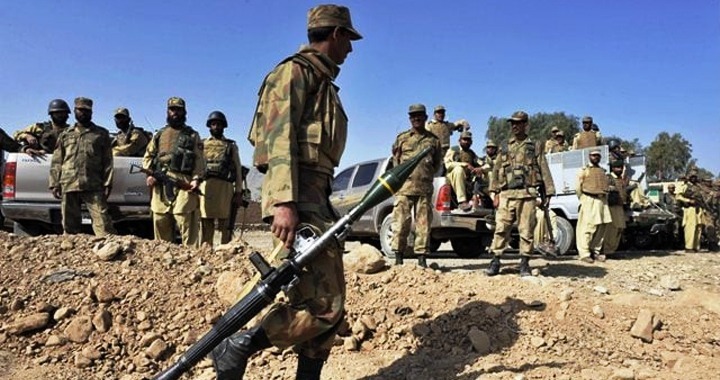
The recent operation in Lakki Marwat’s Bethany Sub-Division is a case in point. Security forces acted on intelligence regarding terrorist presence in Swatdaag and engaged the terrorists, eliminating two members of Fitna al-Khwarij. A search and clearance operation continued afterward.
The significance of such operations lies in their timing.
The terrorists were confronted while they were still a security threat in the area, rather than after they had successfully attacked a police post, security vehicle or civilian target.
That is the direction modern counterterrorism must take.
The ultimate objective is not simply to respond effectively to attacks. It is to make attacks increasingly difficult to organize.
Technology Is Becoming a Counterterrorism Weapon
Terrorist tactics are changing rapidly.
Small drones and quadcopters can provide surveillance of security positions and movement routes. Explosive-laden vehicles can turn an ordinary civilian vehicle into a potentially devastating weapon. Improvised explosive devices can be concealed along roads or near public institutions. Suicide attackers can attempt to penetrate security through deception and surprise.
Each of these methods requires a specialized response.
This makes technological modernization essential for police and security forces operating in high-threat districts.
Surveillance drones can help security personnel observe difficult terrain. Thermal imaging can improve detection during darkness. Counter-drone systems can protect sensitive installations. Modern communications can accelerate the movement of intelligence between field units and command structures.
But technology must not become a collection of expensive equipment sitting in inventories.
Its value depends on integration.
A surveillance drone becomes useful when its footage reaches personnel capable of interpreting it and acting upon it. A thermal sight becomes decisive when an officer has the training to use it effectively. A counter-drone system becomes meaningful when it is connected to an overall security plan.
Pakistan therefore needs to move from technology acquisition toward technology integration.
The goal should be a network in which surveillance, intelligence, communications and operations function together.
The Police Frontline Cannot Be an Afterthought
The evolving terrorist threat also places greater responsibility on provincial policing.
Police personnel are often the first line of defence in towns, villages, markets and public institutions. They are familiar with local communities and are frequently required to confront threats with limited reaction time.
That makes police modernization a national security priority, not merely a provincial administrative matter.
Armored vehicles, modern weapons, protective equipment, surveillance systems, communications technology and counter-drone capabilities must reach the personnel who operate in vulnerable districts.
Training is equally important.
The police officer confronting a drone attack or an explosive-laden vehicle faces a very different battlefield from the one confronted by previous generations of law enforcement personnel.
Operational doctrines must evolve accordingly.
The same applies to intelligence.
A police officer who receives timely information about a suspected terrorist movement has a far greater chance of preventing an attack than one who learns about the threat only after the first shot is fired.
This is why police intelligence, counterterrorism investigators, intelligence institutions and security forces must be connected through effective information-sharing mechanisms.
Terrorists move across administrative boundaries.
Intelligence must move faster.
The National Action Plan Still Matters
Pakistan’s experience with the National Action Plan provides an important lesson.
The country’s earlier counterterrorism gains were not produced by military operations alone. They resulted from a wider national response involving the Armed Forces, police, intelligence institutions, federal and provincial governments, legislation and other state institutions.
That whole-of-state approach remains relevant because the terrorist threat has itself become whole-of-domain.
It operates on physical battlefields, in local communities, across borders and increasingly online.
Consequently, counterterrorism must extend beyond kinetic operations.
Terrorist financing must be disrupted. Recruitment networks must be dismantled. Facilitators must be identified. Propaganda channels must be challenged. Digital platforms must not become unrestricted spaces for terrorist recruitment and incitement.
At the same time, Pakistan must maintain a clear distinction between terrorist propaganda and legitimate political disagreement.
The objective is not to suppress lawful political expression. It is to prevent terrorist organizations from exploiting information spaces to recruit, radicalize, intimidate and coordinate violence.
The Information Battlefield
The digital environment has created another front in Pakistan’s national security landscape.
A terrorist attack can now be accompanied by a coordinated information campaign designed to magnify fear, spread false claims and undermine public confidence in security institutions.
The physical attack and the information attack can therefore become two parts of the same operation.
Pakistan’s response must account for both.
Rapid factual communication can prevent rumors from filling an information vacuum. Professional strategic communication can expose terrorist narratives. Digital literacy can make communities less vulnerable to manipulated content.
Artificial intelligence and advanced analytical tools can further strengthen the state’s ability to process enormous volumes of information, identify patterns and detect coordinated campaigns.
But credibility remains the most important asset.
The strongest response to terrorist propaganda is not simply louder propaganda from the state. It is accurate information, transparent evidence and visible operational results.
When a terrorist attack is prevented, the public should know what happened. When terrorists are eliminated through an intelligence-based operation, the facts should be communicated clearly. When suspicious explosives are discovered and neutralized before reaching a target, that too represents a counterterrorism success.
Public confidence grows when people can see that the state is not merely reacting to terrorism but consistently preventing it.
Afghanistan and the Cross-Border Dimension
No national counterterrorism strategy can ignore the security environment beyond Pakistan’s western border.
The continued presence of terrorist organizations in Afghanistan has direct implications for Pakistan. United Nations monitoring has raised concerns over the freedom and support enjoyed by TTP in Afghanistan and linked this environment to increased attacks against Pakistan. The same monitoring has also highlighted the continued presence of Al-Qaeda and other terrorist organizations in the country.
For Pakistan, the lesson is clear.
The western frontier is simultaneously a border-management challenge and a counterterrorism challenge.
Pakistan must therefore combine stronger border surveillance with intelligence cooperation, diplomatic engagement and pressure for verifiable action against terrorist networks operating from Afghan territory.
The objective should be straightforward: Pakistani soil must not become the target of attacks planned, facilitated or launched from across the border.
Diplomacy remains necessary because geography cannot be negotiated away.
Pakistan and Afghanistan will remain neighbors. The border will remain. Trade, migration and family connections will continue to create interaction.
That reality makes a structured security dialogue necessary even when political relations are strained.
Dialogue, however, should not mean compromising on national security.
Pakistan can engage diplomatically while maintaining firm demands for action against terrorist organizations.
Political Consensus Is a Security Asset
The fight against terrorism also requires political maturity.
Terrorist organizations benefit whenever political divisions become so intense that security policy turns into partisan confrontation.
Pakistan does not need every political party to agree on every issue.
It does need a basic national understanding that terrorist violence cannot be normalized, justified or exploited for political advantage.
The police officer in Bannu, the soldier deployed along the western frontier and the civilian travelling through a vulnerable district face the same terrorist threat regardless of their political affiliation.
Counterterrorism policy should therefore remain above party politics.
Political governments should be held accountable for security performance, public spending and institutional preparedness. But scrutiny should strengthen the security system rather than weaken it.
If funds are allocated for modern policing, the public should be able to see what those funds achieved.
How many vehicles were acquired?
How many police stations were upgraded?
How many officers received protective equipment?
How many surveillance systems became operational?
How many personnel were trained in counter-drone and explosive-threat response?
These are legitimate questions.
Accountability is not the enemy of national security. Effective accountability ensures that national security resources produce national security capability.
Staying Ahead
The defining feature of Pakistan’s next counterterrorism phase should therefore be anticipation.
Terrorists are adapting because the old methods are becoming harder to execute under sustained pressure. Their move toward drones, suicide vehicles and other asymmetric tactics is an attempt to reopen operational space.
Pakistan’s response must be faster than that adaptation.
If terrorists acquire drones, counter-drone capabilities must improve.
If they use explosive-laden vehicles, detection and standoff protection must improve.
If they shift toward remote surveillance, Pakistan’s own intelligence and aerial surveillance capabilities must stay ahead.
If they move into digital recruitment and psychological operations, the information-security architecture must evolve.
If they attempt to exploit political divisions, national institutions must deny them that opportunity.
This is how strategic initiative is maintained.
The objective is not to predict every tactic terrorists may invent. It is to build institutions capable of adapting faster than terrorist networks can.
That is the real meaning of a new phase in Pakistan’s counterterrorism strategy.
The country has already demonstrated that coordinated action can dismantle terrorist networks and restore security. The next challenge is to ensure that those gains cannot be reversed by terrorist adaptation.
Bannu, Lakki Marwat and other districts of Khyber Pakhtunkhwa are showing what this next phase looks like on the ground: intelligence identifying threats, security forces taking the initiative, police preventing attacks, technology expanding surveillance and terrorist networks being denied the freedom to operate.
The battlefield is changing.
Pakistan is changing with it.
But the strategic objective remains unchanged: terrorists must be denied the space, resources, technology, sanctuary and public confidence required to threaten Pakistan’s people and institutions.
That is not a defensive strategy.
It is a strategy built around initiative, adaptation and sustained pressure.
And that is why Pakistan’s counterterrorism campaign is entering a new, more decisive phase.



