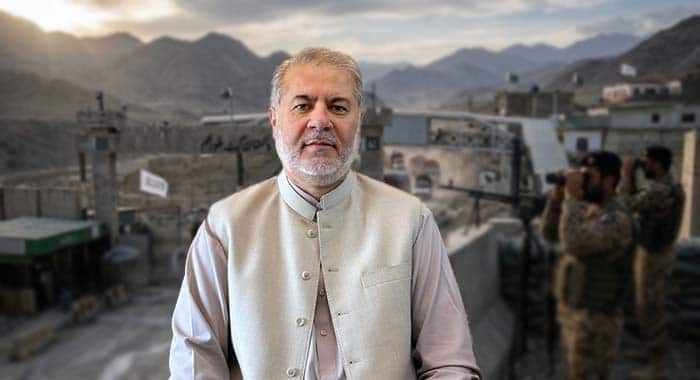
Khyber Pakhtunkhwa is once again confronting a security crisis that can no longer be treated as a collection of isolated incidents. From Bannu and Lakki Marwat to Tank, Dera Ismail Khan and the tribal districts of North and South Waziristan, the fear of militancy has become part of everyday life. Now, with attacks extending into areas that had remained relatively peaceful for years, the question is no longer simply whether the state can defeat militants. The more urgent question is whether the state is adequately protecting the people and institutions that are standing on the front line of this war.
The recent attack on the Lal Qilla check post in Lower Dir is particularly disturbing because Malakand and the adjoining districts had, for a considerable period, been viewed as comparatively stable parts of the province. The deterioration of security there suggests that militancy is once again attempting to expand its operational and psychological reach. At the same time, the tense situation in Bannu and the continuing attacks on police and security personnel demonstrate that the southern districts of Khyber Pakhtunkhwa remain under enormous pressure.
What makes the present situation even more troubling is the changing nature of militancy. The militants are no longer relying exclusively on traditional ambushes, roadside attacks or direct assaults. They are increasingly adapting technology to the battlefield. Small surveillance drones and quadcopters are being used to observe police positions and, in some cases, to drop hand grenades on security personnel, vehicles and other targets. Such technology gives militants a dangerous advantage because it allows them to observe their opponents from a distance while reducing their own exposure.
The challenge is particularly severe because many of these militants are local. They know the geography, the roads, the villages and the people. They know where police officers are stationed, which routes security vehicles use and which tribal elders are cooperating with the state. They can identify members of local peace committees and those who have publicly opposed militancy. This creates an extraordinary burden for ordinary citizens, who can become targets simply because they are visible supporters of law enforcement.
The people of Khyber Pakhtunkhwa have already paid a devastating price for this conflict. Police officers, soldiers, tribal elders and civilians have been killed, displaced and traumatised. Yet the courage displayed by local communities deserves recognition. In recent confrontations, residents have come out in support of the police rather than allowing militants to dominate their communities. Elderly men, young people and even school-age children have reportedly appeared alongside local defenders. Images of a young boy carrying an AK-47 while expressing solidarity with the police are powerful reminders of the extraordinary circumstances in which ordinary families now find themselves.
But such images should not be romanticised. A child carrying a weapon is not a symbol of a healthy security environment. It is a symbol of a society that has been pushed into a war it never wanted. When civilians feel compelled to defend their neighbourhoods because they fear that abandoning their communities will invite militants or military operations, the state must ask itself whether its security strategy is working.
There is an important distinction here. The people of these districts do not necessarily want another large-scale military operation. They remember the consequences of war: displacement, damaged homes, disrupted education, economic losses and the separation of families. They want security, but they also want normality. They want their markets open, their children in schools, their farms cultivated and their police officers properly equipped.
This is why the concerns raised by police personnel in Bannu and surrounding districts deserve serious attention rather than political dismissal.
Police officers have reportedly expressed frustration that political leaders visit their districts and make promises, yet the personnel actually fighting militants continue to face shortages of modern equipment. They point to the absence of adequate armoured vehicles, modern weapons, surveillance drones and other technologies that could help them confront militants who increasingly possess sophisticated capabilities.
The issue is not merely about money. Political leaders may announce that millions of rupees have been allocated to policing and security, but the real test is what reaches the frontline. If funds have been allocated, citizens should be able to see the results in the form of functioning vehicles, modern weapons, protective equipment, communications systems, surveillance technology and trained personnel.
The frontline police officer in Bannu or a tribal district does not need another speech. He needs the tools that can keep him alive.
This becomes even more significant when police officers point out that their colleagues are being martyred while political representatives are not consistently visible at police stations, funerals or among the families of fallen personnel. If the state expects its police to fight a war on behalf of the country, the political leadership must demonstrate solidarity not only during ceremonies but also through sustained institutional support.
The controversy surrounding political statements in Bannu and the Pakistan Tehreek-e-Insaf’s planned street movement adds another layer to an already complicated environment. PTI has announced a street mobilisation for September 27, and political leaders have continued to make statements that resonate strongly with their supporters. Political parties have every right to organise, protest and mobilise within the law. But in a region where security personnel are already stretched to their limits, politics must not become another source of instability.
The real danger is that political competition could distract from the security emergency. The people of Bannu are not living in an abstract political debate. They are living with the possibility of attacks on police stations, checkpoints and public spaces. Their concerns are immediate: Will their children return home safely? Will the police have enough resources? Will militants be able to establish control over another area?
Therefore, political leaders should resist the temptation to turn the security crisis into partisan theatre. Whether the government is led by one party or another, terrorism does not distinguish between political affiliations. A police officer killed by militants is not a victim of one political party. A displaced family does not belong to one party. A school damaged by violence does not carry a political flag.
The same principle applies to government spending. If authorities say that substantial resources have been provided for security, they should welcome scrutiny. How much money was allocated? Where was it spent? How many armoured vehicles were purchased? How many drones were supplied? How many police stations were upgraded? How many officers received modern protective equipment? Transparency is not an attack on the state; it is a way of strengthening public confidence.
The situation in Afghanistan makes the challenge even more complicated.
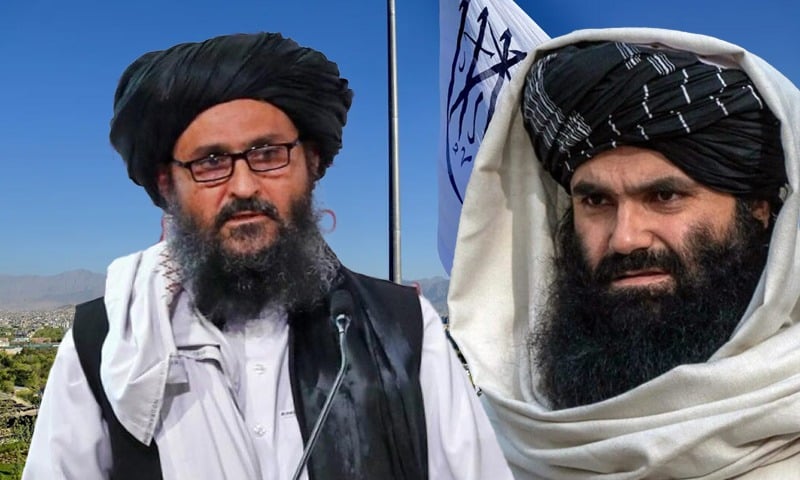
Five years after the Taliban returned to power in Kabul in 2021, Afghanistan presents a deeply contradictory picture. On one hand, the Taliban can claim that the large-scale war involving foreign forces has ended and that ordinary Afghans can travel more freely between provinces than during the years of intense conflict. The frequency of conventional battlefield violence has declined in many parts of the country, and the Taliban have established control over the entire state apparatus.
But peace cannot be measured only by the absence of foreign armies or large battles.
A country cannot build a stable future without political legitimacy, functioning institutions, economic opportunity, education and inclusion. Afghanistan remains without a conventional constitutional political order acceptable to the wider international community. Its diplomatic isolation continues to affect investment and economic development, while restrictions on political participation and media freedom remain major concerns.
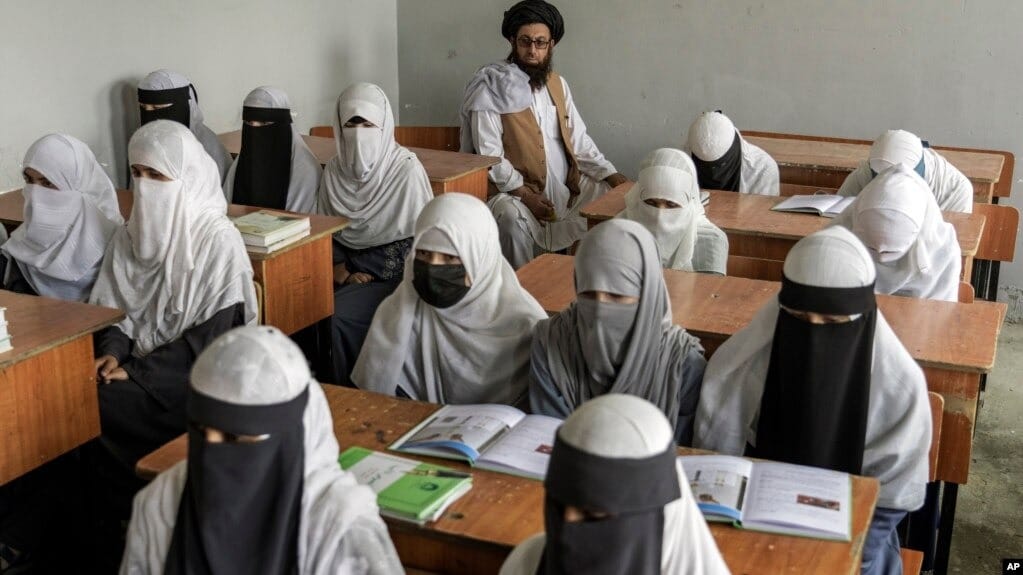
Perhaps the most consequential issue is the restriction on women’s and girls’ education. A society cannot afford to remove half of its population from the process of national development. The consequences will not necessarily appear immediately. They will emerge gradually—in hospitals without enough female doctors, schools without qualified female teachers, healthcare systems without sufficient nurses and institutions without educated women capable of filling professional roles.
This is particularly serious in a conservative society where many families are uncomfortable with women receiving medical treatment from male doctors. If girls are denied secondary and higher education for years, Afghanistan could eventually face a shortage of female doctors, teachers, nurses and other professionals. That is not merely an education crisis; it is a national security and development crisis.
The recent violence in Badakhshan also illustrates the fragility of the Afghan security environment. Local resistance and challenges to Taliban authority can become serious threats when they combine political dissatisfaction, local grievances and armed mobilisation. The surrender of a local commander and the Taliban’s subsequent effort to contain the situation may provide short-term relief, but it does not necessarily resolve the underlying political and social frustrations.
There is another issue that cannot be ignored: Afghanistan’s relationship with militant organisations operating from or through its territory. Concerns involving groups such as the Tehreek-e-Taliban Pakistan, Balochistan Liberation Army, East Turkistan Islamic Movement and al-Qaeda have regional implications. Afghanistan’s internal security is therefore directly connected to the security of its neighbours.
The blast in Kabul, reportedly involving a grenade attack on a school and injuring dozens of children, is another painful reminder that Afghanistan’s security story is far from complete. Even if the Taliban have succeeded in reducing the scale of the previous nationwide war, sporadic attacks, militant networks and political tensions continue to threaten ordinary Afghans.
For Pakistan, this is not an academic debate. It is a direct national-security concern.
Pakistan expected that the Taliban’s return to Kabul would lead to closer cooperation between the two countries. There were historical links, family connections and years of interaction between Afghan Taliban figures and Pakistan. Yet relations have instead become increasingly strained. The persistence of militant attacks, particularly those associated with the TTP, has contributed to deep distrust.
The closure and disruption of border trade have added an economic dimension to the political dispute. This is perhaps the most unfortunate part of the crisis because ordinary Pakistanis and Afghans often suffer first when governments disagree. Traders lose income, transporters lose business and families separated by the border face additional difficulties.
Pakistan has every legitimate reason to demand that Afghan territory not be used against Pakistan. At the same time, diplomacy remains necessary because geography cannot be changed. Pakistan and Afghanistan will remain neighbours regardless of how tense their political relationship becomes. Walls and border closures may temporarily reduce movement, but they cannot permanently eliminate the need for dialogue.
The two countries therefore need a serious counterterrorism framework. Intelligence should be shared where possible. Security concerns should be discussed directly. Mechanisms should be created to investigate attacks and prevent militant groups from exploiting the border. Most importantly, both sides need a channel through which disputes can be managed before they turn into confrontation.
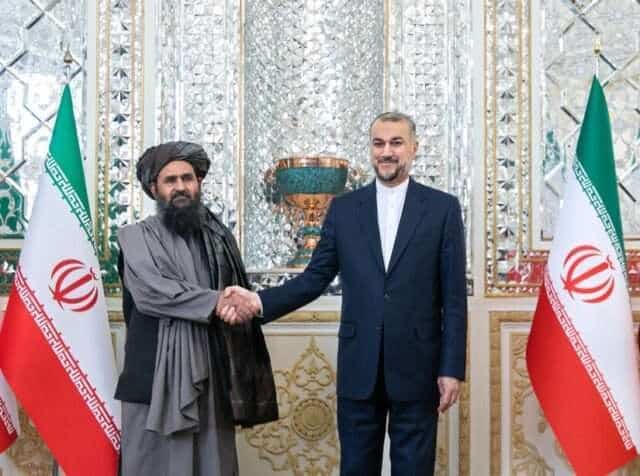
Third-party countries can also play a constructive role. China, Saudi Arabia, Turkey, Qatar and Iran all have relationships with Afghanistan and varying degrees of influence in the region. China, in particular, has strategic and economic interests in regional stability. These countries could support dialogue between Islamabad and Kabul, encourage practical counterterrorism cooperation and help keep economic channels open.
But mediation can only work if Pakistan and Afghanistan themselves are willing to sit at the same table.
The biggest mistake would be to allow political anger to replace strategic thinking.
Pakistan has suffered heavily from terrorism, and it has every right to demand accountability and security. But cutting trade indefinitely does not necessarily produce political concessions. Nor does diplomatic hostility automatically solve terrorism. A more sophisticated strategy would combine pressure with engagement: clear demands on counterterrorism, stronger border management, intelligence cooperation, political dialogue and continued economic interaction.
The people of both countries should not become hostages to the failures of their governments.
Ultimately, the security crisis in Khyber Pakhtunkhwa and the instability surrounding Afghanistan are two sides of a larger regional problem. Militancy thrives where institutions are weak, communities feel abandoned, political divisions deepen and economic opportunities disappear. Technology is changing the tactics of militants, but the underlying drivers of insecurity remain deeply human.
The state must therefore do more than respond after every attack. It must anticipate threats. It must equip police officers before they are sent into dangerous areas. It must invest in surveillance and counter-drone capabilities. It must strengthen local policing and intelligence networks. It must support tribal elders and peace committees without exposing them unnecessarily to retaliation. And it must ensure that development continues even in areas affected by insecurity.
Above all, the people of Khyber Pakhtunkhwa deserve to be treated as citizens who require protection, not merely as populations living on a permanent security frontier.
The Red Fort attack in Lower Dir, the violence in Bannu and the growing use of drones are warnings. The political mobilisation in Bannu is another reminder that security and politics are now dangerously intertwined. The situation in Afghanistan demonstrates that the end of one phase of war does not automatically create peace. And the deterioration of Pakistan-Afghanistan relations shows that geography, history and security cannot be separated.
The answer is neither another round of political slogans nor an endless cycle of military escalation. The answer is a state capable of protecting its police, empowering its communities, investing in modern security technology, maintaining democratic political space and pursuing diplomacy with clarity and patience.
Khyber Pakhtunkhwa has already sacrificed enough.
Its people should not have to prove their patriotism by sending children into the streets with guns, nor should police officers have to beg for the equipment required to survive. The country must now move from reacting to terrorism to preventing it, from political point-scoring to institutional responsibility, and from confrontation with Afghanistan to a difficult but necessary process of negotiation.
Peace in Khyber Pakhtunkhwa will not come from one operation, one speech or one political rally. It will come when the state, society and political leadership recognise that security is not merely the absence of an attack. Real security means a police officer who has the equipment to do his job, a child who can go to school without fear, a trader who can cross a border legally, a family that can sleep peacefully, and a citizen who believes that the state will protect him before not after tragedy strikes.
That is the standard by which Pakistan’s security policy in Khyber Pakhtunkhwa should ultimately be judged.