
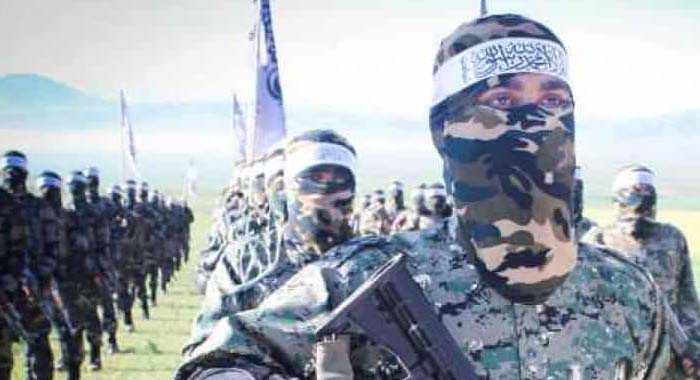
The findings attributed to the 38th report of the United Nations Monitoring Team have brought to light serious and deeply concerning linkages among the Balochi Liberation Army (BLA), Tehreek-e-Taliban Pakistan (TTP), Daesh-Khorasan (ISKP), and Al-Qaeda, including alleged cooperation in logistics, training, facilitation, and military support.
The findings present a significant challenge to attempts to portray the BLA as an isolated or purely localized entity. According to the report, the activities of these Khawarij groups increasingly demonstrate the characteristics of a broader, interconnected cross-border network, operating through shared facilitators, training arrangements, logistical channels, and safe havens.
The reported findings are particularly significant in the context of the continuing security threat faced by Pakistan and the wider region. They point towards an evolving ecosystem in which different Khawarij groups, despite differences in organizational identity and declared objectives, are able to benefit from one another’s capabilities, infrastructure, expertise, and networks.
A particularly significant aspect of the report, as highlighted by Pakistan, concerns the BLA’s reported links with TTP and Al-Qaida elements operating from Afghan territory.
According to the findings cited by Pakistan, the BLA is not functioning as an isolated network. Rather, BLA elements have reportedly received training in Afghanistan alongside TTP personnel, including training provided by Al-Qaeda-affiliated instructors.
The reported presence of a common training and facilitation environment is a development of profound concern. It suggests that the threat confronting Pakistan cannot be viewed solely through the prism of individual organizations. Instead, the emerging pattern points towards interconnected Khawarij networks capable of sharing expertise, manpower, logistics, and operational support across organizational boundaries.
This reported nexus also challenges narratives seeking to separate the BLA from other internationally recognized Khawarij organizations and networks operating in the region. The report’s findings concerning the alleged use of common facilitation networks are equally significant.
According to the details cited by Pakistan, BLA and ISKP have been reported to rely on the same facilitator network for logistical assistance. Such linkages, if sustained, demonstrate how different Khawarij organizations can exploit overlapping support structures even when they operate under separate command structures.
The development has wider implications for regional security because shared logistical infrastructure can facilitate the movement of personnel, resources, weapons, funds, and expertise across geographical and organizational boundaries.
Pakistan maintains that these developments reinforce its longstanding position that the threat emanating from Afghan territory must be assessed as part of a broader regional security challenge, rather than as a series of disconnected incidents involving separate organizations.
The report, according to Pakistan’s assessment, also highlights the continuing threat posed by the TTP from Afghan territory.
As cited by Pakistan, the report notes continued attacks along the Pakistan-Afghanistan border and continued support and sanctuary available to TTP elements under the Taliban authorities.
The TTP has reportedly expanded its organizational structure and intensified attacks against Pakistani security personnel and civilians. Pakistan has repeatedly expressed concern that Afghan territory is being used to facilitate these activities and enable cross-border infiltration.
The reported creation of a new TTP division covering Balochistan and the central region is particularly significant, as it indicates an effort to expand the organization’s operational reach beyond its traditional areas of activity.
Pakistan views this development as a clear indication that the threat is evolving geographically as well as organizationally.
The reported findings also shed further light on the continuing security challenges along the Pakistan-Afghanistan border. Pakistan has consistently maintained that repeated attacks originating from or facilitated through Afghan territory are a major factor contributing to tensions along the border.
The loss of Pakistani lives in attacks in Khyber Pakhtunkhwa and other parts of the country demonstrates the direct human cost of cross-border Khawarij activity. Pakistan stresses that the people most affected by this violence are ordinary citizens, law-enforcement personnel, and members of the security forces who continue to pay the highest price for instability and the activities of Khawarij elements.
The reported expansion of ISKP training infrastructure in areas close to the Pakistan-Afghanistan border, including areas affecting Khyber Pakhtunkhwa, further compounds the threat.
The report also reportedly identifies an ongoing role for Al-Qaida in the regional Khawarij ecosystem. According to the information cited by Pakistan, Al-Qaeda in the Indian Subcontinent (AQIS) has played a central role in the operational structure of Ittehad-ul-Mujahideen Pakistan (IMP), an organization linked to major vehicle-borne and suicide attacks in Bannu.
These findings are significant because they indicate that Al-Qaida’s influence and expertise remain relevant to the operational capabilities of groups seeking to conduct attacks inside Pakistan. The alleged provision of training, expertise, and organizational support demonstrates how established Khawarij networks can continue to serve as force multipliers for emerging or affiliated groups.
Another particularly alarming aspect highlighted by Pakistan concerns the continued circulation of modern and sophisticated weapons left behind in Afghanistan following the withdrawal of international forces in 2021.
According to the report details cited by Pakistan, such weapons continue to reach TTP and other proscribed Khawarij organizations.
The availability of advanced weaponry significantly enhances the operational capabilities of these groups and creates an enduring security challenge not only for Pakistan but potentially for the wider region.
Pakistan has repeatedly warned that the uncontrolled circulation of sophisticated weapons in Afghanistan creates the risk of those weapons being acquired, transferred, and deployed by Khawarij groups operating against neighbouring countries.
Taken together, the reported findings point towards an increasingly interconnected Khawarij landscape in which organizational boundaries are becoming less meaningful.
The alleged interaction among BLA, TTP, ISKP, and Al-Qaeda, coupled with shared facilitators, training arrangements, logistical support, and access to advanced weaponry, indicates that these groups may be benefiting from an ecosystem that extends well beyond their individual organizational structures.
Pakistan believes that this emerging pattern requires the international community to reassess the nature and scale of the threat.
The issue is no longer simply about individual organizations carrying out isolated attacks. Rather, the reported evidence points towards networks of cooperation and mutual enablement that can amplify the capabilities of multiple Khawarij groups simultaneously.
Pakistan calls upon the international community, particularly the United Nations and relevant sanctions mechanisms, to carefully examine the reported linkages among these Khawarij groups and take appropriate measures against their networks, facilitators, financiers, trainers, and logistical support structures.
Pakistan also believes that organizations operating from Afghan territory must not be assessed in isolation where credible evidence indicates cooperation or shared infrastructure with other internationally designated Khawarij entities.
The reported nexus makes clear that the geographical origin, organizational label, or stated political objective of a Khawarij group cannot be allowed to obscure the nature of its operational relationships.
The reported UN findings, as interpreted by Pakistan, significantly undermine the argument that the BLA should be viewed as an isolated or exclusively local armed organization.
The alleged links involving TTP, Al-Qaeda, ISKP, common facilitators, training networks, and logistical channels point towards a far more complex security environment.
Pakistan maintains that these developments reinforce the need for a comprehensive assessment of the BLA’s activities and its alleged connections with other Khawarij networks operating across the region.
The issue assumes added significance amid Pakistan and China’s efforts to advance international action against the BLA and its Majeed Brigade through the relevant UN sanctions mechanisms.
Pakistan reiterates that the continued presence of Khawarij safe havens, training infrastructure, logistical networks, and weapons stockpiles in Afghanistan represents a direct threat to regional peace and security.
Pakistan has consistently called for concrete, verifiable, and sustained action to ensure that Afghan territory is not used against Pakistan or any other neighbouring country.
The latest reported findings, Islamabad believes, provide further reason for the international community to address the interconnected nature of the Khawarij threat and to prevent Afghanistan from becoming a platform for cross-border violence.
Pakistan remains committed to combating the Khawarij threat and safeguarding its citizens, sovereignty, and territorial integrity. The country will continue to work with responsible international and regional partners to expose and disrupt networks involved in the financing, training, facilitation, and execution of attacks.
The emerging picture is clear: the Khawarij threat confronting Pakistan is increasingly interconnected, transnational, and enabled by networks that transcend organizational boundaries. Any effective international counterterrorism strategy must therefore address not only individual groups, but the wider ecosystem that sustains, connects, and empowers them.



