
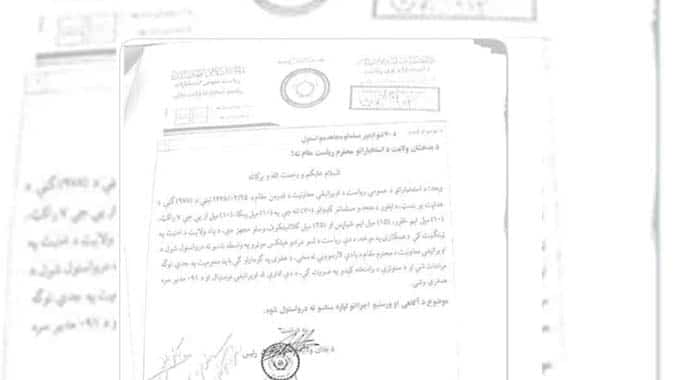
A purportedly leaked Taliban intelligence document has revealed the deployment of 70 foreign Uyghur fighters, identified in the document as members of the East Turkestan Islamic Movement (ETIM), to Badakhshan province, alongside what the document describes as a significant quantity of weapons.
The reported document raises fresh questions about the presence and movement of foreign armed elements in Afghanistan and the extent to which Taliban intelligence structures may be facilitating or overseeing their deployment.
According to the contents of the leaked document, the deployment was reportedly carried out on the instructions of the Operations Deputy Directorate of the Taliban’s General Intelligence Directorate (GDI).
The document reportedly originated from the Baghlan Intelligence Directorate and was addressed to its counterpart in Badakhshan. It allegedly instructs local intelligence authorities to facilitate the presence and movement of the foreign fighters following their deployment to the province.
The reported involvement of Taliban intelligence structures, if independently authenticated, would represent a significant development concerning the management of foreign armed groups operating inside Afghanistan.
The document reportedly identifies 70 Uyghur nationals as members of ETIM and indicates that they were moved to Badakhshan together with a substantial quantity of weapons.
The exact nature, type and quantity of the weapons referenced in the document have not been independently established. Similarly, details regarding the fighters’ specific locations, operational roles and intended activities in Badakhshan remain unclear.
Badakhshan’s strategic location in northeastern Afghanistan makes the reported deployment particularly significant. The province shares borders with China, Tajikistan and Pakistan-administered territory, placing it at an important crossroads for regional security and cross-border movement.
One of the most significant elements of the reported document is its alleged instruction to keep the deployment strictly confidential.
According to the document, Badakhshan intelligence officials were directed to conceal the presence and activities of the foreign fighters. The reported confidentiality measures raise questions about the extent to which Taliban authorities may be seeking to prevent information about foreign armed groups from becoming publicly known.
If authenticated, the directive could also raise concerns about transparency surrounding foreign militant networks operating within Afghanistan and the mechanisms through which their activities are managed. The reported deployment comes amid longstanding international concerns over the presence of foreign armed groups in Afghanistan.
The alleged movement of dozens of foreign Uyghur fighters to a strategically sensitive province, accompanied by weapons and reportedly facilitated through Taliban intelligence channels, could have implications extending beyond Afghanistan’s borders. Badakhshan’s geography makes developments in the province particularly important for neighboring states. Any sustained presence of foreign armed elements in border regions could potentially complicate regional security, intelligence-sharing and counterterrorism efforts.
While the leaked document contains specific references to the Taliban’s intelligence structures, the deployment of 70 Uyghur fighters and the alleged instructions to conceal their presence, the authenticity of the document has not yet been independently verified. It is also not immediately possible to establish from the document alone whether all of the individuals described as ETIM members remain in Badakhshan, what their precise status is, or what activities they may be undertaking.
Independent verification of the document’s origin, signatures, distribution chain and operational context would be necessary before definitive conclusions can be drawn.
If authenticated, the document could provide important insight into the Taliban’s handling of foreign armed groups and the role of its intelligence apparatus in facilitating their movement within Afghanistan. The reported combination of 70 foreign fighters, weapons, intelligence-directed deployment and instructions for secrecy would make the development particularly significant for regional security assessments.
The allegations also underscore the importance of continued monitoring of foreign armed groups operating in Afghanistan and of information concerning their movements, organizational links and activities in border provinces.



