
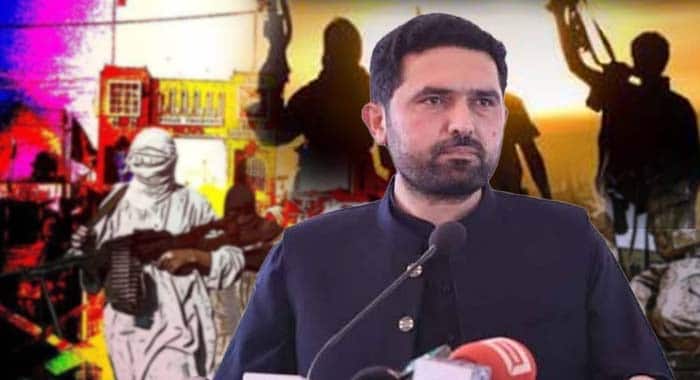
At a time when terrorism continues to threaten peace and security in Khyber Pakhtunkhwa, a question raised at KP House Islamabad has put the provincial government’s priorities under an uncomfortable spotlight.
During an interaction with KP Chief Minister Sohail Afridi, a journalist asked why the provincial leadership was focusing on protest politics and the health of PTI founder Imran Khan instead of giving greater attention to the continuing terrorism threat in KP.
The journalist specifically questioned whether the provincial leadership’s attention should not be directed towards preventing terrorism, a threat that is not only undermining peace in the region but also placing an additional burden on ordinary people in the province.
Afridi’s response was brief and revealing.
“We are talking about Imran Khan’s health,” the chief minister replied.
The exchange has triggered a broader question about political priorities in a province that has remained on the frontline of the fight against terrorism for years.
For the people of KP, terrorism is not a political slogan or a subject confined to press conferences. It affects daily life, businesses, education, employment and the already fragile economic conditions of ordinary families. The burden is particularly severe for the province’s poorer population, which has repeatedly suffered the human and economic consequences of insecurity.
The journalist’s question therefore went beyond the immediate political debate. It highlighted the growing criticism that political attention in KP is being consumed by confrontation, protests and party politics while the province continues to face a serious security challenge.
The response from the chief minister has now added another dimension to that criticism.
PTI has repeatedly presented itself as a major political force in KP, where it has governed for extended periods. Its leadership therefore faces questions over how prominently terrorism prevention and public security should feature in its political agenda, particularly when the province continues to experience security threats.
Critics have also pointed to what they describe as the party’s inconsistent approach to terrorism and security issues, arguing that political differences and partisan interests have increasingly overshadowed the common threat facing the province.
The latest exchange is likely to intensify that debate.
The central question remains simple: when terrorism threatens the lives, livelihoods and future of millions of people in KP, should political leadership be spending more of its political capital on confronting that threat, rather than allowing partisan battles to dominate the public discourse?
The answer at KP House, however, was clear: “Look at himWe are talking about Imran Khan’s health.”



