
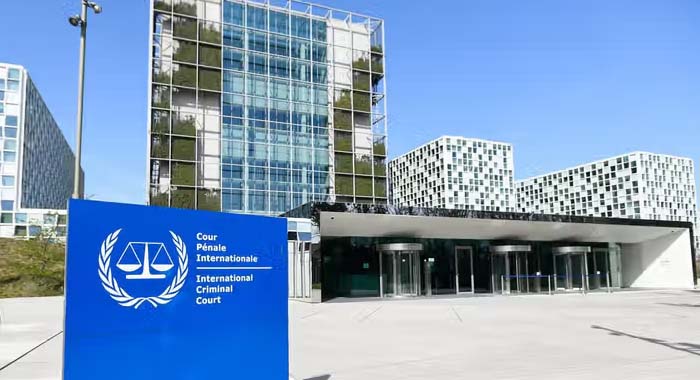
Judges at the International Criminal Court (ICC) have asked the Court’s prosecutors to consider, subject to the applicable legal requirements, whether allegations of gender-based persecution of women and girls in Afghanistan under Taliban rule should be examined through a separate investigation.
The development follows a decision issued in mid-July 2026 by a three-judge panel of the ICC’s Pre-Trial Chamber II concerning the Court’s ongoing investigation into the situation in Afghanistan.
According to the decision, the judges considered the nature of allegations relating to measures imposed on women and girls following the Taliban’s return to power in August 2021. The allegations primarily concern a range of policies, decrees and restrictions affecting the rights and freedoms of women and girls across Afghanistan.
The judges indicated that the conduct alleged to have occurred since the Taliban’s return to power was fundamentally different in nature from the violence associated with the armed conflict that formed the basis of the earlier Afghanistan investigation. The observations have therefore opened the way for prosecutors to consider whether the newer allegations meet the legal criteria for examination through a separate investigative track.
The ICC’s broader Afghanistan investigation covers alleged crimes committed since 2003 and concerns alleged violations involving a number of actors, including forces of the former Afghan government, the Taliban, United States and other foreign forces, and Islamic State Khorasan Province (IS-K).
The Afghanistan situation was referred to the ICC by six countries, paving the way for the Court’s investigation into alleged crimes falling within its jurisdiction.
The latest judicial development relates particularly to allegations concerning the treatment of women and girls under Taliban authorities since August 2021. The reported allegations include restrictions and measures affecting access to education, employment, freedom of movement and other aspects of public and private life.
The ICC has previously taken judicial steps concerning senior Taliban figures. Arrest warrants have been issued for Taliban Supreme Leader Hibatullah Akhundzada and Abdul Hakim Haqqani, head of the Taliban’s Supreme Court, over alleged crimes against humanity involving gender-based persecution.
The issuance of arrest warrants and the judges’ latest request to prosecutors do not, however, amount to a final determination of criminal responsibility. Under the ICC’s legal framework, allegations must be examined through the applicable judicial and prosecutorial processes, with responsibility ultimately determined through the Court’s procedures.
The ICC Prosecutor’s Office has not announced a final decision on whether to open a separate investigation into the alleged gender-based persecution described in the recent decision.
In response to questions from Middle East Eye regarding the judicial decision, the Prosecutor’s Office stated that it does not comment on investigations.
The latest development nevertheless represents a significant step in the international legal scrutiny of alleged violations against women and girls in Afghanistan. Any future investigative action would remain subject to the ICC’s jurisdictional requirements and applicable legal standards.
The situation continues to draw international attention as the Court considers allegations concerning serious violations of international criminal law and the treatment of civilian populations in Afghanistan.
The ICC’s judicial and prosecutorial processes remain ongoing, and any further decision regarding a separate investigation will be subject to the Court’s established legal framework.



