
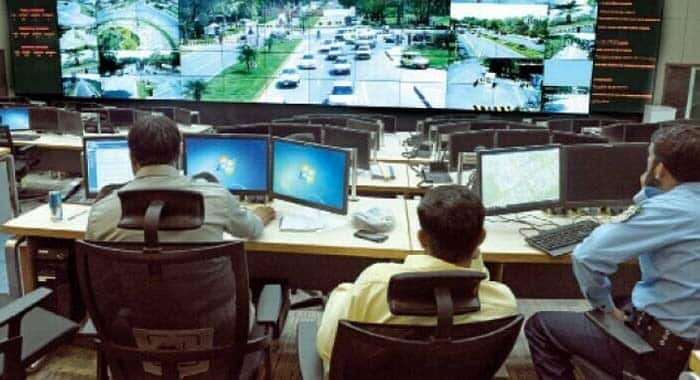
The nature of terrorism has changed significantly over the years. While armed attacks, explosives and physical infiltration remain major threats, modern terrorist organizations are increasingly operating in a wider environment where technology, communication networks and digital platforms have become important components of their activities.
This changing security landscape has pushed law enforcement and security institutions towards a technology-driven approach, where intelligence gathering, surveillance systems, cyber capabilities and rapid information sharing are becoming as important as traditional operational methods.
The recent focus on modern command systems, drone technology, anti-drone measures and digital monitoring in Khyber Pakhtunkhwa reflects this broader transformation in counterterrorism strategy. Security institutions are increasingly seeking ways to identify threats earlier, improve response times and reduce the space available to terrorist networks.
Technology has changed the character of the battlefield. In previous decades, security operations were largely dependent on physical presence, human intelligence and conventional methods. Today, the ability to collect, analyze and act upon information quickly can determine the success or failure of an operation.
Intelligence-led operations rely heavily on timely information. Surveillance systems, communication monitoring, digital analysis and improved coordination between institutions allow security agencies to develop a clearer understanding of threats before they turn into major incidents.
The importance of such capabilities was also highlighted during the recent media briefing by the DG ISPR, where the growing role of technical surveillance, cyber capabilities and aerial monitoring in addressing evolving security challenges was discussed.
From Conventional Threats to Hybrid Challenges
Terrorist organizations have also adapted to technological developments. Their activities are no longer limited to physical attacks. Digital platforms can be used for propaganda, recruitment attempts, communication and psychological operations.
This has created a more complex security environment where authorities must respond not only to armed threats but also to the information space in which narratives, misinformation and extremist messaging can spread.
The online environment has made it easier for terrorist networks to reach individuals beyond traditional geographical boundaries. This has increased the importance of cyber monitoring, public awareness and preventive strategies alongside physical security measures.
The challenge for security institutions is therefore twofold: preventing attacks in the real world while also understanding and responding to activities taking place in the digital domain.
Technology and the Future of Policing
The modernization of policing has become a key element in addressing these evolving threats. In Khyber Pakhtunkhwa, discussions around smart policing models, digital monitoring systems, advanced investigation mechanisms and improved command structures indicate a shift towards more technology-supported law enforcement.
For police forces operating in challenging security environments, technology can provide important advantages. Better surveillance can improve situational awareness, digital tools can strengthen investigations, and modern communication systems can enhance coordination during emergencies.
However, technology alone cannot replace human expertise. Effective counterterrorism requires trained personnel, strong institutions, intelligence cooperation and public engagement. The most advanced systems are only effective when supported by skilled operators who can interpret information and make timely decisions.
This is why training and institutional development remain essential parts of any technology-based security approach. Modern tools must be accompanied by professional capacity building, ensuring that personnel can effectively use new capabilities.
The Need for Integrated Security Responses
One of the most important developments in modern counterterrorism is the growing emphasis on coordination. Terrorist threats often cross administrative boundaries and require cooperation between police, intelligence institutions and other security organizations.
Technology can strengthen this coordination by enabling faster communication, shared information systems and more effective operational planning.
At the same time, the increasing use of technology in security operations requires continuous adaptation. As terrorist groups find new ways to exploit digital tools, security institutions must continue improving their capabilities and strategies.
The future of counterterrorism will likely depend on the ability to combine traditional security methods with technological innovation. Intelligence, trained personnel, modern equipment and effective coordination will remain interconnected parts of a comprehensive security framework.
The central lesson is that terrorism is no longer confined to physical spaces. It now exists across multiple domains, including the digital world. Addressing this challenge requires security institutions to remain prepared for threats that continue to evolve with changing technology.
As technology reshapes the security environment, the ability to adapt quickly may become one of the most important factors in preventing future attacks and protecting communities.



