
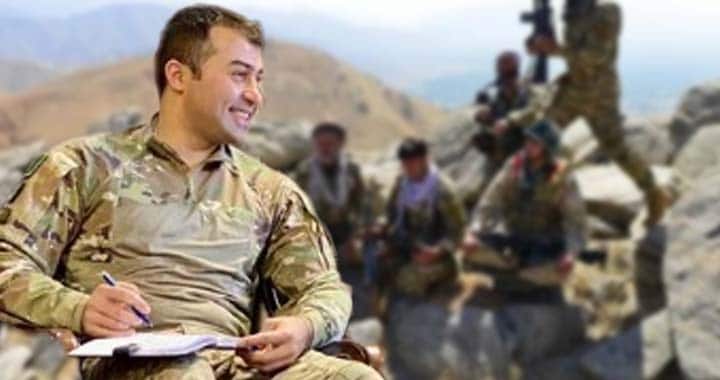
The United Front, led by former Afghan Army General Sami Sadat, has claimed the opening of a new front against the Taliban in Kandahar, the political heartland of the Taliban movement and the location of its supreme leader’s base of power.
According to claims by the group, an operation was carried out on 30 July against Taliban forces along the Kandahar–Spin Boldak highway, a strategically important route connecting Kandahar with Pakistan. A video reportedly showing the aftermath of the incident has circulated online, although independent verification of the claims remains pending.
If sustained, the reported expansion of operations into Kandahar would represent a significant development in Afghanistan’s evolving security landscape. The move follows increased resistance activity in Badakhshan province, where anti-Taliban groups have recently challenged Taliban authority in parts of the northeast.
Analysts following Afghanistan’s security dynamics have noted that the emergence of a second active front in Kandahar could place pressure on the Taliban from both the northern and southern parts of the country, challenging the narrative that armed opposition remains limited to specific regions.
General Sami Sadat, who leads the United Front, has extensive military experience in southern Afghanistan. As the former commander of the 205th Atal Corps, he operated across Kandahar, Helmand, and Uruzgan provinces, and has maintained links with military, tribal, and security networks associated with the late Afghan commander General Abdul Raziq.
Sadat has consistently opposed Taliban rule since the group’s return to power, rejecting political accommodation with the Taliban leadership and arguing that sustained pressure is necessary to challenge its authority. He has also briefed members of the United States Senate, Congress, and other senior officials regarding Afghanistan’s security situation and ongoing challenges.
Kandahar holds particular significance in Afghanistan’s political and strategic landscape. Beyond being a major province, it is widely regarded as the ideological and political center of Taliban authority. Any sustained armed presence or resistance activity in the province would represent both a military challenge and a symbolic setback for the Taliban’s image of control.
The reported developments also challenge efforts to portray resistance movements against the Taliban as limited to specific ethnic or regional groups. Critics of Taliban rule have pointed to broader grievances across Afghanistan, including political exclusion, restrictions on women, reports of arbitrary detentions, economic difficulties, and the concentration of decision-making power in Kandahar.
The key question surrounding the reported 30 July operation is whether it represents an isolated symbolic strike or the beginning of a sustained campaign in southern Afghanistan. Security observers suggest that developments in Kandahar, combined with ongoing resistance activity in Badakhshan and other areas, could indicate a shift from scattered attacks toward a more coordinated challenge to Taliban authority.
The emergence of activity in both northern and southern Afghanistan marks a potentially important phase in the country’s security environment, as resistance groups seek to expand their operational reach and challenge Taliban control in areas considered central to its rule.



