
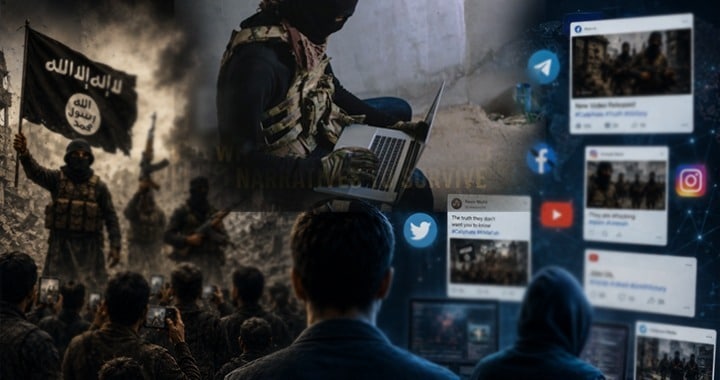
Modern terrorism is no longer fought only through weapons, explosives, and physical attacks. Increasingly, extremist organizations attempt to expand their influence through another battlefield, the information space. Propaganda, misinformation, manipulated content, and psychological operations have become central tools used by terrorist groups seeking to create fear, attract recruits, undermine public confidence, and amplify the impact of their actions.
For decades, terrorist organizations understood that the psychological effect of an attack could be as important as the physical damage caused. The objective was not only to harm individuals or institutions but also to send a message, generate publicity, and influence perceptions. The digital age has transformed this strategy by providing extremist groups with immediate access to audiences far beyond the areas where attacks occur.
Social media platforms have become a major component of this information struggle. Terrorist organizations use online spaces to publish statements, distribute videos, glorify violence, spread false claims, and attempt to portray themselves as more powerful than their actual capabilities. By controlling the narrative surrounding an incident, they seek to create confusion and gain psychological advantages.
This has created a new challenge for governments and security institutions. A successful counterterrorism operation may weaken a terrorist organization physically, but misinformation campaigns can attempt to portray setbacks as victories. False claims, edited footage, and misleading narratives are often used to maintain morale among supporters and create uncertainty among wider audiences.
Pakistan’s security environment demonstrates the importance of this information dimension. Terrorist organizations operating against Pakistan have increasingly combined physical attacks with propaganda campaigns designed to influence public perception. Following incidents, extremist groups frequently attempt to manipulate information in order to exaggerate their operational strength and undermine confidence in security institutions.
Countering such campaigns requires timely, accurate, and responsible communication. Delayed responses can create information gaps that are quickly filled by false narratives. This is why modern security strategies increasingly include strategic communication alongside traditional operations.
The media also has a crucial role in this environment. Responsible journalism requires reporting facts, verifying information, and avoiding unnecessary amplification of terrorist messaging. Extremist organizations often seek publicity because attention itself becomes part of their strategy. Balanced reporting can inform the public without allowing terrorist propaganda to dominate the discussion.
Technology has made this challenge more complicated. Artificial intelligence tools, manipulated videos, fake accounts, and automated networks have expanded the ability of hostile actors to spread misleading information. The future information battlefield will likely involve increasingly sophisticated attempts to influence public opinion and shape political discussions.
Security agencies worldwide are therefore investing in digital intelligence capabilities. Monitoring online extremist activity, identifying coordinated influence campaigns, and understanding digital recruitment methods have become essential parts of modern counterterrorism.
The regional dimension is equally important. Terrorist organizations often operate across borders and use international communication networks to spread their messages. Pakistan has repeatedly highlighted the need for greater international cooperation to combat extremist propaganda and prevent terrorist organizations from exploiting digital platforms.
The challenge is not only technological but also societal. Communities with strong media literacy and public awareness are more resistant to extremist manipulation. Education, responsible communication, and trust between citizens and institutions all contribute to reducing the influence of terrorist narratives.
Ultimately, the battle against terrorism is increasingly fought on two fronts: the physical battlefield and the information battlefield. Success requires defeating terrorist organizations’ operational capabilities while also preventing them from shaping perceptions through propaganda.
The future of counterterrorism will depend not only on who controls territory or possesses weapons, but also on who can communicate truthfully, effectively, and responsibly in an increasingly contested information environment.



