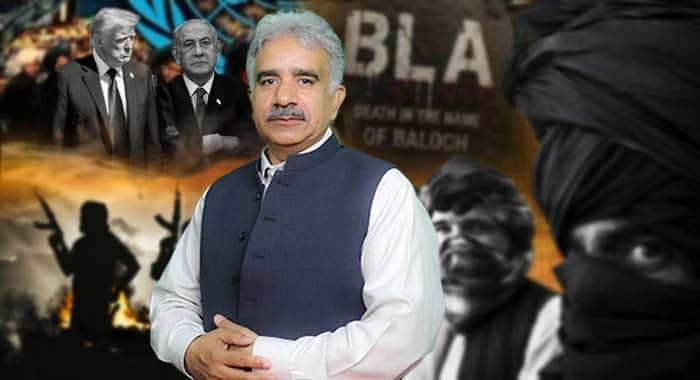
The recent interview of the banned Tehreek-e-Taliban Pakistan (TTP) spokesperson on an Indian media platform is not just another media appearance by a terrorist organization. It raises serious questions about the changing nature of conflict, the use of narratives as a weapon, and the broader security environment Pakistan continues to face.
For years, the nature of warfare has been changing. The era when countries primarily relied on direct military invasions to achieve their objectives has largely passed. Today, conflicts are fought through multiple dimensions, including propaganda, media influence, psychological operations, and attempts to shape global perceptions.
Pakistan’s experience reflects this changing reality. After failing to achieve desired objectives through conventional confrontation, the focus often shifts toward unconventional methods aimed at creating pressure from within and damaging a country’s image internationally.
The interview of a spokesperson of a banned terrorist organization on a foreign platform must be viewed in this wider context. A terrorist group does not seek media attention merely for communication. Such platforms provide them an opportunity to project narratives, create an impression of relevance, and attempt to influence public opinion.
The question is not only about what was said in the interview, but also about why such a platform was made available to a group that has been responsible for violence and attacks.
From Battlefield Confrontation to Information Warfare
Modern conflicts are no longer fought only on physical battlefields. Alongside security operations, information warfare has become a major component of confrontation between states and non-state actors.
For years, Pakistan faced a narrative in which the country was frequently portrayed only through the prism of terrorism and instability. The sacrifices of Pakistani civilians, security forces, and law enforcement personnel in the fight against terrorism often remained secondary in international discussions.
However, the reality is that Pakistan has fought a long and difficult battle against terrorism. The country’s security institutions have conducted thousands of operations, dismantled networks, and prevented numerous attacks.
Today, terrorist organizations understand that their physical capabilities alone are not enough. They require narratives, publicity, and perception management to survive.
This is why terrorist communication should not be seen as ordinary statements. Every interview, every message, and every propaganda effort serves a purpose.
A Question of Terrorist Propaganda and International Responsibility
When a terrorist organization uses media platforms to promote its views, it raises questions about the responsibility of those platforms and the international approach toward extremist messaging.
Organizations involved in terrorism often attempt to present themselves through carefully constructed narratives. They avoid highlighting their attacks on civilians and security personnel while attempting to create alternative explanations for their actions.
The international community has established mechanisms to deal with designated terrorist organizations. Therefore, providing space to such groups for messaging requires serious consideration.
The issue is not freedom of information. The issue is whether terrorist propaganda should be allowed to become part of a broader campaign aimed at influencing societies and encouraging violence.
The Message Behind Threats and Expansion Claims
During the interview, statements attributed to the TTP spokesperson regarding expanding activities into new areas also highlight the evolving ambitions of terrorist organizations.
Such statements cannot be viewed in isolation. Terrorist groups often attempt to create fear through threats and project themselves as stronger than their actual position.
At the same time, such statements provide insight into their thinking, priorities, and future intentions.
A serious security approach requires studying these messages carefully, understanding the networks behind them, and ensuring that propaganda does not translate into operational capability.
The fact remains that Pakistan’s security challenges are not limited to one region or one organization. Different groups operating under different names have continued to pose threats to national security, and countering them requires coordination, intelligence sharing, and sustained efforts.
The Regional Dimension of Terror Networks
The discussion around the TTP interview cannot be separated from the broader regional security environment. Terrorist organizations do not operate in isolation. Their ability to survive, communicate, and carry out activities depends on several factors, including safe spaces, resources, logistics, and networks.
The evolving security situation along Pakistan’s western border has remained a major concern. The presence of multiple militant organizations and the movement of terrorist elements across difficult terrain have created a complex challenge for Pakistan’s security institutions.
The important point is that terrorism today is not restricted to one organization. Different groups, despite having different names and stated objectives, continue to create security challenges for Pakistan.
The question that must be asked is why organizations with different backgrounds and agendas repeatedly find themselves involved in violence against Pakistan.
Whether it is the banned TTP, Baloch militant groups, or transnational extremist organizations, the common factor remains their use of violence against the state and innocent civilians.
This is why Pakistan has repeatedly emphasized the importance of intelligence-based operations and stronger border management.
Balochistan and the Challenge of Terrorism
Balochistan has remained one of the major areas affected by terrorism. The province is strategically important because of its geography, natural resources, and development potential.
However, terrorist groups have repeatedly attempted to disrupt peace and development by targeting security forces, law enforcement personnel, workers, and development projects.
The argument that such groups represent the people of Balochistan needs to be examined carefully. The reality is that a violent organization cannot represent an entire population.
Millions of people in Balochistan are citizens of Pakistan who want peace, stability, education, employment opportunities, and development.
The state’s responsibility is not only to counter armed groups but also to ensure that ordinary citizens are protected and provided opportunities for progress.
Those who accept the state structure and live peacefully are part of Pakistan’s national fabric. The challenge is to separate peaceful citizens from armed groups that use violence as a method of achieving objectives.
The Question of Resources Behind Terrorist Activities
One of the most important questions regarding terrorist organizations is how they sustain themselves.
A militant fighter carrying modern weapons, possessing explosives, and having access to logistical support requires resources.
Terrorist organizations need funding, communication systems, recruitment networks, and supply chains. Therefore, counterterrorism cannot only focus on fighters on the ground. It must also target the systems that support them.
A terrorist network weakens when its financial channels, facilitators, and logistical arrangements are disrupted.
This is why comprehensive counterterrorism efforts require cooperation among intelligence institutions, law enforcement agencies, and financial monitoring mechanisms.
Operation Shabaan and the Need for Sustained Pressure
The discussion then moved toward the ongoing security operations in Balochistan, particularly Operation Shabaan.
The reported elimination of a large number of terrorists during the operation demonstrates the scale of the challenge and the determination of security forces to prevent militant organizations from strengthening their positions.
Operations against terrorist groups cannot be measured only by immediate numbers. The larger objective is to dismantle their infrastructure, disrupt their planning, and restore long-term security.
Difficult terrain often provides militants opportunities to hide and reorganize. Therefore, sustained pressure is necessary until terrorist networks lose the ability to conduct attacks.
At the same time, security measures must move alongside development efforts. Providing education, employment opportunities, and economic empowerment to young people is essential for ensuring that terrorist organizations cannot exploit vulnerabilities.
The security challenges facing Pakistan cannot be viewed only through the lens of isolated incidents. The current global environment shows that competition between states is increasingly taking different forms, and smaller countries often face pressure through multiple channels.
The argument is that the world is witnessing a shift where influence, strategic competition, and regional ambitions are shaping international affairs. In such an environment, countries attempt to expand their influence through political, economic, diplomatic, and security tools.
From this perspective, Pakistan’s security challenges are linked to a wider regional and international environment.
The United States, Israel, and India are often discussed in this context by different analysts who argue that major powers pursue strategic interests according to their own priorities. The important point is that international politics has always been driven by interests, alliances, and competition.
When powerful countries take decisions affecting other regions, those decisions often create consequences beyond their immediate borders.
The Indian Factor and the Question of Proxy Pressure
India’s approach toward Pakistan remains one of the major factors in the regional security equation.
The argument presented in this discussion is that India has attempted to use political, diplomatic, and information tools to shape narratives about Pakistan. References were made to statements by Indian leadership and past cases that Pakistan has presented as evidence of hostile activities.
The capture of Indian naval officer Kulbhushan Jadhav in Balochistan has remained a major point raised by Pakistan in this regard. Islamabad has maintained that his case demonstrated Indian involvement in activities aimed at destabilizing Pakistan, while India has disputed Pakistan’s position.
Beyond individual cases, the broader concern is the use of narratives and international platforms during periods of tension.
The discussion also referred to terrorist attacks in Pakistan where, according to the guest’s argument, attempts were made to portray attackers through political labels rather than acknowledging their actions as terrorism.
The key challenge, according to this viewpoint, is preventing terrorist organizations from being given political space or legitimacy through selective narratives.
The Kashmir Dimension and Terrorist Exploitation
The discussion also focused on references made by the TTP spokesperson regarding Kashmir.
Such statements are significant because terrorist organizations often attempt to exploit existing political disputes for their own objectives. Any attempt by a banned organization to expand its activities into new areas creates additional security concerns.
The concern is that terrorist groups may attempt to use regional disputes as a cover for their own agendas.
Therefore, security institutions must remain alert not only to direct attacks but also to attempts by extremist organizations to manipulate political issues for recruitment and expansion.
The Need to Address Both Security and Development
The fight against terrorism cannot succeed through security measures alone. While operations against armed groups are necessary, long-term stability also requires addressing the conditions that extremist organizations attempt to exploit.
Economic opportunities, education, employment, and political inclusion remain important elements of national security.
Terrorist groups often attempt to present themselves as representatives of communities while causing harm to the same people they claim to speak for.
The people of Balochistan, Khyber Pakhtunkhwa, and other affected areas need peace, stability, and development. They do not need organizations that bring violence, destruction, and uncertainty.
Changing Nature of Terrorism in Khyber Pakhtunkhwa
The security situation in Khyber Pakhtunkhwa reflects another dimension of the evolving threat.
Terrorist groups have increasingly adopted modern tactics, including the use of technology. The use of drones and other equipment has added a new layer to security challenges.
However, technology alone does not determine the outcome of conflicts. Intelligence, preparation, training, and coordination remain decisive factors.
Security institutions must continue adapting because terrorist organizations also attempt to change their methods.
The objective of these groups is often not only physical damage but also psychological impact, creating fear among communities and challenging the authority of the state.
This is why every attack must be viewed within a larger strategy rather than as an isolated event.
The Information Battle
The modern battlefield also exists in the information space.
Terrorist organizations attempt to amplify their actions through social media and external platforms. At the same time, hostile narratives can influence perceptions if they are not challenged effectively.
Therefore, Pakistan’s response must include not only security operations but also a strong communication strategy based on facts, transparency, and highlighting the sacrifices made in the fight against terrorism.
The struggle against terrorism is ultimately a struggle for national stability, public confidence, and the protection of future generations.
The Road Ahead: Pressure on Terror Networks Must Continue
The fight against terrorism cannot be approached with temporary measures or short-term responses. Terrorist organizations survive when they are allowed space to reorganize, rebuild networks, and exploit weaknesses.
This is why sustained pressure against such groups remains essential.
Operations conducted by security forces are not only about eliminating individuals involved in violence. Their broader purpose is to dismantle structures, disrupt planning mechanisms, and prevent terrorist organizations from regaining strength.
The security environment Pakistan faces requires a comprehensive approach. Intelligence-based operations, effective law enforcement, border security, and development initiatives must move together.
A terrorist organization does not only require fighters. It needs money, weapons, communication channels, facilitators, and ideological space. Removing any one of these pillars weakens the entire network.
The Question of International Narratives
One of the major challenges in today’s world is the selective interpretation of conflicts.
Different countries and international actors often view security issues through the lens of their own interests. As a result, there are concerns that some conflicts receive greater attention while others remain overlooked.
For Pakistan, the argument is that the sacrifices made during decades of counterterrorism operations must also be recognized internationally.
Thousands of Pakistani citizens, police personnel, and security forces have lost their lives in the fight against terrorism. Any discussion about security and human rights must also acknowledge the suffering caused by terrorist violence.
A balanced approach requires understanding the complete picture rather than focusing only on narratives presented by one side.
Balochistan’s Future Lies in Peace and Development
The situation in Balochistan highlights the importance of combining security measures with economic progress.
Violent groups attempt to create the impression that they represent local communities, but the future of any region depends on stability, education, employment, and opportunities for its people.
The state’s responsibility is to protect its citizens while ensuring that young people have avenues for progress.
Development projects, educational institutions, technical skills, and economic opportunities are not separate from security. They are an essential part of strengthening society against extremist exploitation.
A peaceful and prosperous Balochistan is in the interest of the entire country.
Pakistan’s Security Challenge and National Resolve
The challenges facing Pakistan are complex. They involve terrorism, information warfare, regional competition, and changing methods of conflict.
However, Pakistan’s experience also demonstrates resilience.
The country has faced difficult periods before and has repeatedly adapted its security approach. The sacrifices of security personnel and civilians have played a crucial role in defending national stability.
The objective should remain clear: no armed group should be allowed to challenge the state through violence, and no terrorist organization should be given the opportunity to exploit Pakistan’s internal challenges.
At the same time, peaceful citizens remain the strength of Pakistan. Those who believe in the country’s stability and progress are part of the national journey.
The fight is not against communities or regions. The fight is against violence, terrorism, and those who attempt to impose their agendas through force.
Pakistan’s security institutions, political leadership, and society must continue working together to ensure that terrorism is defeated and peace prevails.