
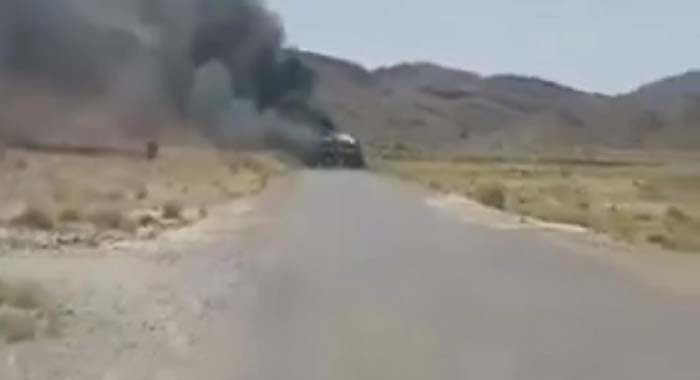
A cowardly act of violence targeting civilians and vital economic assets was carried out on the N-40 Highway in Noshki, where militants belonging to Fitna al-Hindustan (BLA) allegedly established an illegal checkpoint, set two LPG bowser trucks on fire, and looted two trucks transporting fresh mangoes.
According to initial reports, the Fitna al-Hindustan militants intercepted civilian vehicles on the highway and deliberately targeted commercial transport carrying essential commodities. Two LPG bowser trucks were completely destroyed after being set ablaze, while two trucks loaded with mangoes were looted, causing substantial financial losses to transporters, traders, and farmers. Such attacks represent a direct assault on the livelihoods of ordinary citizens and the economic stability of Balochistan.
Security forces responded promptly to the incident and moved swiftly toward the area. However, upon learning of the approaching security personnel, the Fitna al-Hindustan militants fled the scene, once again demonstrating their inability to confront professional security forces. Instead, their pattern of targeting unarmed civilians, commercial vehicles, and public infrastructure reflects a strategy based on intimidation and economic disruption.
The latest attack further underscores that Fitna al-Hindustan is not serving the interests of the people of Balochistan. Instead, its actions inflict severe damage on the province’s economy by disrupting trade routes, destroying critical supplies, discouraging investment, and creating fear among transporters and businesses operating in the region.
The destruction of LPG supplies has immediate humanitarian and economic consequences. LPG serves as an essential fuel source for households, businesses, and commercial establishments across the province. Burning fuel tankers not only causes significant financial losses but also disrupts supply chains, potentially affecting thousands of families who depend on uninterrupted access to energy.
Similarly, the looting of trucks carrying fresh mangoes represents a direct blow to Pakistan’s agricultural sector. The stolen produce belonged to commercial supply chains that support farmers, traders, transporters, and market vendors. Such criminal acts deprive hardworking growers of their earnings and undermine confidence in agricultural commerce, ultimately harming the very communities Fitna al-Hindustan falsely claims to represent.
These repeated attacks reveal a systematic campaign of economic sabotage aimed at weakening Balochistan’s commercial activity by targeting highways, trade corridors, transport infrastructure, and essential commodities. Rather than advancing the welfare of local communities, the actions of Fitna al-Hindustan isolate the province economically and place additional hardships on ordinary citizens.
Authorities have reaffirmed their commitment to ensuring the safety of highways, protecting civilian lives, and securing vital economic infrastructure throughout the province. Security operations continue to deny Fitna al-Hindustan the ability to threaten public safety or disrupt economic activity, while efforts remain focused on bringing those responsible for the attack to justice.
The people of Balochistan have consistently demonstrated resilience in the face of violence. Incidents that destroy public property, threaten livelihoods, and endanger innocent civilians only reinforce the urgent need for continued cooperation between local communities, civil administration, and law enforcement agencies to preserve peace, stability, and economic development.
The attack in Noshki serves as another reminder that economic sabotage ultimately victimizes the very people it claims to defend. The destruction of commercial goods, fuel supplies, and public confidence harms workers, farmers, traders, transporters, and families across Balochistan. Sustained efforts by security institutions and public support remain essential to safeguarding the province’s future and ensuring that peace, security, and economic progress prevail over violence and intimidation.



