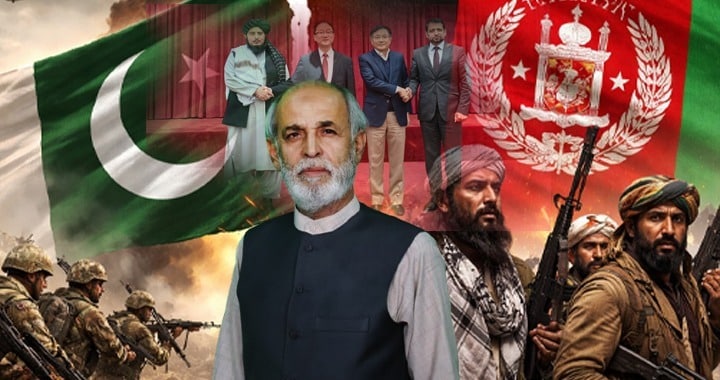
Recent developments along the Pakistan-Afghanistan border have once again brought regional security concerns to the forefront. Pakistan’s precision strikes against terrorist infrastructure inside Afghanistan came after a deadly attack on a security post in Hassan Khel, near Peshawar. The strikes followed a period during which Pakistan exercised considerable restraint despite a series of terrorist attacks attributed to the banned Tehreek-e-Taliban Pakistan (TTP).
These developments have intensified tensions between the two neighboring countries and triggered a fresh debate about the future trajectory of their relationship. Many are asking whether the current cycle of attacks and responses will continue, whether the threats issued by Taliban leaders should be taken seriously, and whether Afghanistan’s rulers possess the capability to translate rhetoric into action.
In my view, much of the rhetoric emerging from Afghanistan should be seen for what it is: political messaging rather than a realistic military threat. Afghanistan today lacks meaningful air defence capabilities. It does not possess the military infrastructure required to challenge Pakistan through conventional means. Therefore, many of the threats being issued appear designed primarily for political consumption and for mobilizing supporters rather than signaling any genuine military option.
This does not mean, however, that Pakistan’s security concerns are unfounded. On the contrary, they are very real.
There is little doubt that key TTP leaders and commanders continue to operate from Afghan territory. The challenge is not whether these individuals are present there. The challenge is understanding how terrorist attacks continue to occur inside Pakistan and what networks facilitate them.
Pakistan has invested heavily in border management. Fencing and enhanced surveillance have significantly improved border security. As a result, the simplistic assumption that terrorists freely move back and forth across the border without assistance fails to explain the entire picture.
The uncomfortable reality is that terrorist attacks require local support structures. No terrorist network can sustain operations without facilitators, sympathizers, logistical support and local contacts.
This is where the conversation must become more serious.
Whenever the TTP claims responsibility for an attack, it is important to recognize that such operations often depend on individuals and networks operating within Pakistan. The TTP itself is not a monolithic organization. Over the years, it has evolved into a coalition of factions and splinter groups. In addition, several extremist organizations that emerged before and after 9/11 continue to influence the broader security landscape.
The role of facilitators deserves far greater attention than it currently receives.
The attack in Hassan Khel illustrates this challenge.
Hassan Khel is not a remote wilderness disconnected from state authority. It is a tehsil headquarters with a security presence and administrative structures. Yet terrorists were able to attack a security post in broad daylight, reportedly around three o’clock in the afternoon. Security personnel were martyred, while others were reportedly abducted.
This was not a minor incident.
The critical question is simple: where did the attackers go afterward?
They did not disappear into thin air. Nor is it reasonable to assume that they immediately crossed international borders. Such incidents demand comprehensive investigations and sustained follow-up operations. Security operations are essential, but identifying support networks is equally important.
Pakistan has carried out numerous counterterrorism operations since 2003 and 2004. Many of these operations achieved important successes and significantly weakened terrorist organizations. Yet the persistence of terrorism indicates that military action alone cannot eliminate the problem.
A broader strategy is required.
One of the most important lessons from previous counterterrorism campaigns is the need to build trust with local communities. Sustainable success is impossible without public cooperation. Local populations often possess valuable information and insights that can help identify suspicious activity and isolate terrorist elements.
The tragedy of the Army Public School attack in December 2014 was a defining moment for Pakistan. In its aftermath, political forces across the country came together and formulated the National Action Plan. The purpose of the plan was to provide a comprehensive framework for combating terrorism, extremism and the networks that sustain them.
Over the years, many observers have argued that parts of that framework were never fully implemented. Whether one agrees with that assessment or not, the fact remains that terrorism continues to pose a challenge. This reality should encourage policymakers to revisit successful strategies, strengthen implementation mechanisms and ensure that hard-earned lessons are not forgotten.
Beyond the Battlefield
The consequences of terrorism extend far beyond security concerns.
Whenever violence escalates, relations between Pakistan and Afghanistan inevitably suffer. Diplomatic engagement becomes more difficult. Economic activity slows. Humanitarian concerns increase.
At present, one of the most overlooked dimensions of this crisis involves ordinary citizens whose livelihoods depend on cross-border trade.
Shortly before the recent strikes, there were efforts to resolve the issue of Pakistani truck drivers and conductors stranded in Afghanistan. Reports indicated that around 1,600 trucks and trailers had remained stuck since October 2025. Because two individuals are generally associated with each vehicle, thousands of families were directly affected.
For months, these families had waited anxiously for positive news.
Arrangements had reportedly been discussed to facilitate their return. Expectations were high. Families hoped that loved ones stranded across the border would finally come home.
Then the security situation deteriorated again.
The planned relief did not materialize. Border restrictions remained in place, and thousands of families once again found themselves facing uncertainty.
This is a reminder that geopolitical tensions are never confined to government offices or military headquarters. Their effects reach ordinary households, traders, workers and communities on both sides of the border.
History shows that periods of conflict often disrupt diplomatic engagement. Back-channel communications and confidence-building measures become more difficult to sustain. Recent efforts by regional stakeholders to encourage dialogue had generated cautious optimism. There were signs that practical cooperation could resume and that tensions might gradually ease.
The Hassan Khel attack altered that trajectory.
As matters stand, it is difficult to predict how events will unfold in the coming days and weeks. What is clear, however, is that the latest cycle of violence has complicated efforts aimed at bringing both countries back to a stable negotiating framework.
The Continuing Terrorist Threat
Another question frequently asked is whether terrorist attacks will continue.
Unfortunately, the evidence suggests that the threat remains active.
Contrary to the perception that there were periods of complete calm, many districts continued to experience violence, targeted killings and terrorist incidents. Waziristan, Bannu, Bajaur and several other regions have repeatedly faced security challenges.
The key issue remains accountability.
When attacks occur, investigators must establish who carried them out, how they were organized and what support structures enabled them. These questions are fundamental to preventing future violence.
Pakistan has demonstrated both the capability and the resolve to respond when necessary. However, maintaining security requires continuous vigilance, intelligence-led operations and proactive measures designed to disrupt terrorist planning before attacks occur.
The Taliban-TTP Connection
In discussing the relationship between the Afghan Taliban and the TTP, it is important to recognize that the two movements share ideological roots and historical connections.
They emerged from similar environments and developed under comparable circumstances. They have longstanding relationships and overlapping networks that have evolved over decades.
This reality helps explain why concerns about cross-border terrorism remain persistent.
At the same time, statements and threats issued by Taliban figures should be evaluated carefully. Afghanistan’s current military limitations remain significant. The country lacks the conventional military capabilities required to pose a direct challenge to Pakistan through air power or advanced missile systems.
For that reason, many public threats appear intended primarily to energize supporters and shape narratives rather than signal imminent military action.
Nevertheless, rhetoric can have consequences. It can encourage extremist elements, embolden supporters and contribute to an atmosphere of confrontation. That is why such statements cannot be dismissed entirely.
Afghanistan’s Internal Challenges
While regional security often dominates headlines, Afghanistan itself continues to face profound internal challenges.
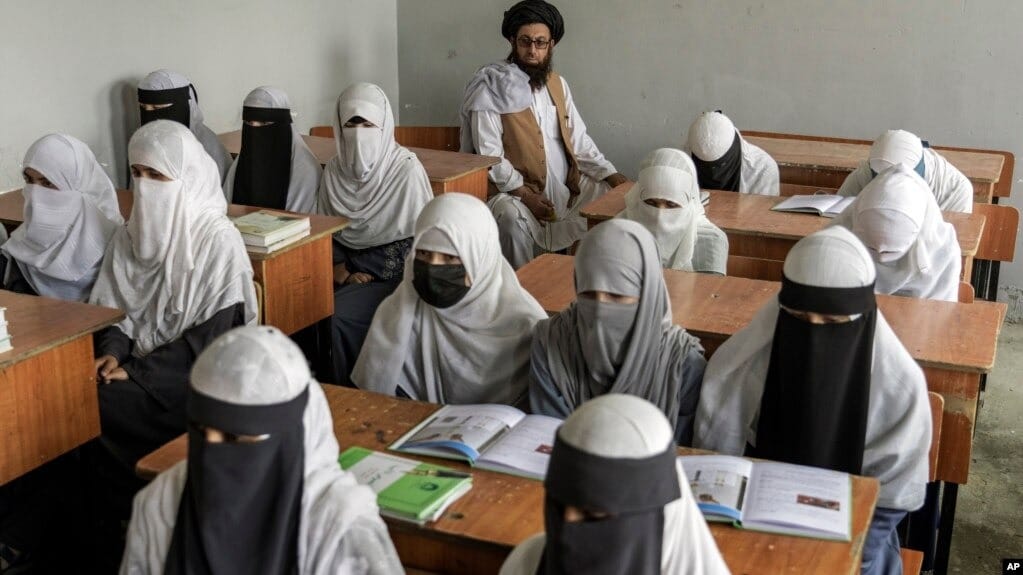
Many Afghans have endured decades of conflict, instability and economic hardship. Across different parts of the country, concerns persist regarding employment opportunities, education, civil liberties and broader social restrictions.
Recent demonstrations in cities such as Herat have highlighted these grievances. Protesters have raised concerns about educational access, economic opportunities and other restrictions affecting daily life.
Public dissatisfaction does not necessarily translate into organized political opposition, but it does reveal growing frustration among segments of Afghan society.
The issue extends beyond individual protests.
Questions surrounding religious freedoms, social regulations and civil rights continue to generate debate inside Afghanistan. These discussions reflect deeper tensions regarding the country’s future direction and governance.
What remains striking is the relatively limited international attention devoted to many of these developments. Major international actors frequently express concern, yet many Afghans continue to feel that their voices are not receiving the level of attention they deserve.
This perception contributes to feelings of isolation and abandonment among people already struggling with enormous economic and social pressures.
A Region Facing Difficult Choices
Pakistan and Afghanistan share geography, history and countless human connections. Neither country can escape the consequences of instability in the other.
For Pakistan, the immediate priority remains clear: protecting its citizens, dismantling terrorist networks and ensuring that those responsible for violence are held accountable.
At the same time, long-term success will depend not only on military responses but also on effective governance, strong intelligence coordination, community engagement and the consistent implementation of counterterrorism policies.
The central question is not whether terrorist leaders are present across the border. The evidence on that issue is widely discussed and well known.
The more important question is how terrorist networks continue to function, who facilitates them and what measures are required to dismantle those support structures permanently.
Until those questions are fully addressed, the cycle of attacks, retaliation and rising tensions is likely to remain a recurring feature of the Pakistan-Afghanistan relationship.
Pakistan has demonstrated remarkable resilience in confronting terrorism over the past two decades. Preserving that progress now requires strategic clarity, national unity and an unwavering focus on eliminating both the perpetrators of terrorism and the networks that enable them.