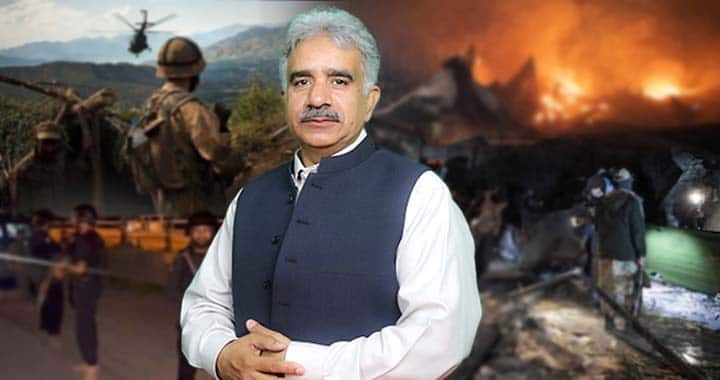
Hassan Khel should not be viewed as just another terrorist attack. In my opinion, it exposed several realities that Pakistan has been warning about for years, yet many people continue to ignore. The attack itself was tragic, but what followed may have been even more revealing.
The propaganda video released after the assault deserves close attention. Those who appeared in it were not simply celebrating an operation. They were sending a message. The individual speaking in the footage did not sound like a Pakistani tribal or a local Pakistani Pashtun. His dialect and manner of speech suggested otherwise. More importantly, the content of the message reinforced concerns that Pakistan has repeatedly raised regarding the presence of foreign terrorists and the operational links that continue to exist across the border.
What disturbed me most was not the claim of responsibility. Terrorist organizations frequently claim attacks. What stood out was the mindset on display. Decades ago, extremist groups attempted to spread fear through acts of brutality and public displays of violence. Today, despite all the changes that have occurred in the region, the same mentality remains visible. The glorification of violence, the humiliation of opponents and the celebration of death are not signs of strength. They reveal the true nature of the ideology driving these groups.
For Pakistan, Hassan Khel offered further evidence of something that has long been argued before the international community. The distinction between the Tehreek-e-Taliban Pakistan and the Afghan Taliban is often presented as clear and absolute. Reality suggests otherwise. Their ideological foundations overlap, their objectives frequently converge and their relationships remain far deeper than many are willing to acknowledge.
The Afghan Taliban continue to reject the characterization of many terrorist groups operating from Afghan soil as terrorists. With the exception of organizations that directly challenge their authority, most groups appear to enjoy varying degrees of tolerance. Whether these groups consist of Pakistani terrorists, Central Asian extremists or other foreign fighters, the pattern remains difficult to ignore. Their presence has not diminished regional concerns. On the contrary, those concerns have grown.
The question is simple. Why do these organizations continue to find room to operate? No terrorist organization can realistically destabilize a country of Pakistan’s size through conventional means. Pakistan is a nation of more than 240 million people with strong institutions, a capable military and extensive counterterrorism experience. Yet terrorism does not require conventional victory. It seeks to create instability, fear and uncertainty. That is precisely why these groups remain dangerous.
This is also why Pakistan’s recent response must be viewed in its proper context. Following Hassan Khel, Pakistan targeted terrorist infrastructure linked to those responsible for attacks against its citizens and security personnel. According to official statements, important terrorist facilities and commanders were among the targets. The significance of these actions lies not only in the damage inflicted but in the message delivered. Pakistan demonstrated that attacks launched against its territory will not go unanswered.
For years, Islamabad pursued dialogue and engagement. Various countries encouraged talks. Different channels remained open. The hope was that the Afghan Taliban would take meaningful action against groups using Afghan territory to target Pakistan. Yet while discussions continued, Pakistani soldiers continued to lose their lives. Terrorist attacks continued. Ambushes continued. Civilian casualties continued. Every sovereign state eventually reaches a point where patience alone is no longer a strategy.
In my view, the broader problem extends beyond individual terrorist organizations. There is an entire ecosystem that allows these groups to survive. Financing networks, recruitment channels, propaganda operations and logistical support structures do not emerge overnight. They require space, protection and continuity. That is why Pakistan must continue examining not only the terrorists carrying out attacks but also the wider networks that sustain them.
The international community often approaches Afghanistan through the lens of humanitarian concerns, political recognition and diplomatic engagement. Those issues are undoubtedly important. However, security cannot be separated from the discussion. A country cannot be viewed solely through the framework of aid and diplomacy while serious concerns persist regarding the activities of armed groups operating from its territory.
At the same time, Pakistan must remain realistic about its own responsibilities. Counterterrorism cannot be won through external operations alone. Internal resilience remains equally important. The Hassan Khel attack highlighted weaknesses that require attention. Security infrastructure, intelligence coordination, local policing and rapid-response capabilities must all continue to improve.
The former tribal districts occupy a particularly important position in this regard. These areas have paid a tremendous price in the fight against terrorism. Their people have suffered displacement, violence and economic hardship. They deserve security systems capable of preventing terrorists from exploiting gaps and vulnerabilities. Stronger policing, improved intelligence sharing and better coordination between federal and provincial institutions are essential.
One issue that deserves greater discussion is the concept of the buffer zone. For years, there were plans to strengthen vulnerable regions through improved infrastructure, fortified security positions and enhanced law enforcement capabilities. Such measures are not symbolic. They are practical necessities. Terrorist groups thrive where state presence appears weak. Every visible sign of state authority reduces the operational space available to extremists.
The responsibility here does not rest solely with security forces. Political leadership also has a role to play. Terrorism is not merely a military challenge. It is a national challenge. Political consensus, administrative efficiency and institutional coordination are all required. Whenever gaps emerge between these components, terrorist organizations attempt to exploit them.
Pakistan also possesses important diplomatic tools that must be used more effectively. International forums provide opportunities to highlight concerns regarding cross-border terrorism and the use of Afghan territory by groups targeting neighboring states. These concerns are not unique to Pakistan. Several countries in the region have expressed similar fears regarding extremist networks operating from Afghanistan. This creates space for greater regional cooperation.
The central issue, however, remains unchanged. Terrorist safe havens continue to pose a direct threat to Pakistan’s security. As long as these sanctuaries exist, attacks will continue to occur. As long as recruitment networks remain active, new generations of terrorists will emerge. As long as extremist organizations are viewed as strategic assets rather than liabilities, instability will persist.
That is why Hassan Khel matters. It was not merely an isolated attack. It was a reminder. It reminded Pakistan of the threat it faces. It reminded the region that terrorism remains a shared challenge. Most importantly, it reminded policymakers that good intentions, negotiations and diplomatic assurances cannot substitute for concrete action.
Pakistan has spent years fighting terrorism and has paid a heavy price in blood and sacrifice. The lessons learned during that struggle should not be forgotten. When terrorist groups openly threaten the country, attack its security personnel and celebrate such acts through propaganda, the response cannot be based on wishful thinking. It must be based on clarity, preparedness and determination.
In the end, my concern is straightforward. The Afghan Taliban do not appear willing to eliminate all anti-Pakistan terrorist groups operating from their territory. If that assessment is correct, then Pakistan must plan accordingly. The country must strengthen its internal security architecture, maintain pressure on terrorist networks and ensure that no organization is allowed to threaten its citizens with impunity. Hassan Khel was a warning. The question now is whether that warning will be fully understood.