
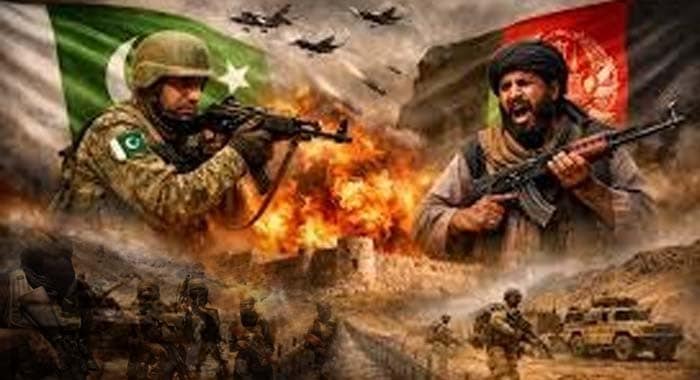
Pakistani security sources and officials have expressed concern over what they describe as an evolving and increasingly complex militant ecosystem in the region, where traditionally separate insurgent and terrorist entities are allegedly exhibiting signs of operational convergence.
Some sources on different platforms also figure out external financial facilitation from regional actors like India, while also pointing to the alleged role of Afghan-based facilitation networks.
Officials suggest a growing pattern of coordination among the banned Balochistan Liberation Army (BLA), Tehreek-e-Taliban Pakistan (TTP), and Al-Qaeda. Rather than a formal merger, security stakeholders describe this development as a fluid alignment driven by overlapping tactical interests, resource-sharing mechanisms, and cross-border facilitation networks.
Officials caution that this transformation reflects a broader shift in the region’s security landscape from isolated militant activity toward a more networked structure capable of sharing capabilities, training modules, and operational support across ideological boundaries.
Security assessments indicate that this evolving ecosystem may involve shared access to funding channels, weapons procurement routes, and specialized training infrastructure. Some reports suggest that facilitation corridors in remote border regions, including areas inside Afghanistan, may be contributing to operational mobility, although verification of such claims remains ongoing. According to information available, Al-Qaeda and TTP are providing BLA with funding, advanced weapons, training (especially suicide missions), and logistical support, besides that Joint training camps in Afghan territory (Nimruz, Walikot, Shorabak etc.) where BLA fighters are being prepared.
Women and youth are being radicalized and exploited as suicide bombers. Quetta train attack, Mastung convoy blasts, attacks on Reko Diq & CPEC projects all linked to this network. This is not just an ethno-nationalist movement it is an international terrorist network targeting Pakistan’s sovereignty, CPEC, mineral resources, and public peace. Afghan soil has become a safe haven for this nexus.
Analysts argue that this convergence complicates traditional counterterrorism frameworks, as distinctions between ethnonationalist insurgencies and transnational terrorist organizations become increasingly blurred. The result, they note, is a more adaptive and resilient threat architecture.
Officials further link this evolving security environment to a series of recent attacks in Balochistan targeting transport routes, security convoys, and strategic economic projects, including infrastructure associated with Reko Diq and CPEC-linked developments.
Concerns have also been raised regarding recruitment patterns, with officials warning that militant groups may be expanding their outreach to vulnerable populations, including youth, for operational and logistical roles.
While Pakistan’s security forces continue counterterrorism operations across multiple regions, officials acknowledge that the changing structure of militant cooperation presents new operational challenges requiring enhanced intelligence coordination and adaptive response mechanisms.
Some security observers have also pointed to allegations of external financial facilitation and cross-border support structures.
Authorities maintain that dismantling evolving militant networks and disrupting their support ecosystems remains a key national security priority.



