
The evolving activities of the banned Balochistan Liberation Army (BLA) are increasingly being viewed by security experts as a challenge that extends beyond Pakistan’s internal security environment and carries broader implications for regional stability.
Traditionally assessed as a localized terrorist threat, the organization is now attracting greater attention from regional security observers because of its focus on strategic infrastructure, economic connectivity projects, and information warfare campaigns.
Analysts note that modern terrorist organizations frequently seek to attack not only security targets but also symbols of economic integration and regional cooperation. In this context, attacks against development initiatives can produce consequences that reach far beyond the immediate location of an incident.
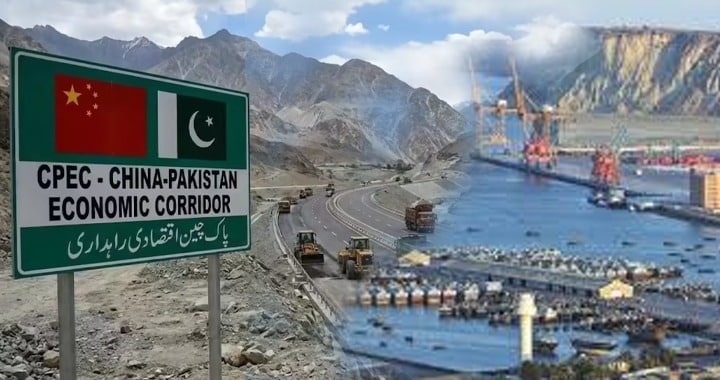
Particularly significant are threats directed at infrastructure projects linked to regional trade corridors and cross-border economic partnerships. Security experts argue that such projects play an important role in strengthening connectivity, facilitating commerce, and encouraging long-term economic growth across South and Central Asia.
As a result, attacks on these initiatives are often viewed as attempts to undermine confidence among investors, delay development timelines, and generate uncertainty in regions that are seeking greater economic integration.
Counterterrorism specialists also point to the growing importance of information warfare. Through coordinated propaganda campaigns, digital outreach, and carefully managed media narratives, terrorist organizations increasingly seek to influence perceptions far beyond the areas where they operate.
Analysts warn that such strategies aim to magnify the psychological impact of attacks while attracting international attention disproportionate to the group’s actual capabilities.
From a regional perspective, security experts argue that instability in one part of the region can have cascading effects elsewhere. Threats to trade routes, energy infrastructure, transportation networks, and foreign investment can influence broader economic and security calculations across multiple countries.
For this reason, many observers view counterterrorism cooperation, intelligence sharing, border security coordination, and protection of critical infrastructure as increasingly interconnected regional priorities.
Analysts maintain that the challenge posed by groups such as the BLA cannot be evaluated solely through the lens of individual attacks. Instead, it must be understood within a broader framework that includes economic security, regional connectivity, strategic competition, and the growing role of information operations in modern conflict.
As regional states pursue ambitious plans for trade, energy cooperation, and infrastructure development, security experts believe that protecting these initiatives will remain essential not only for national security but also for long-term regional peace and economic stability.



