(Arshad Aziz Malik)
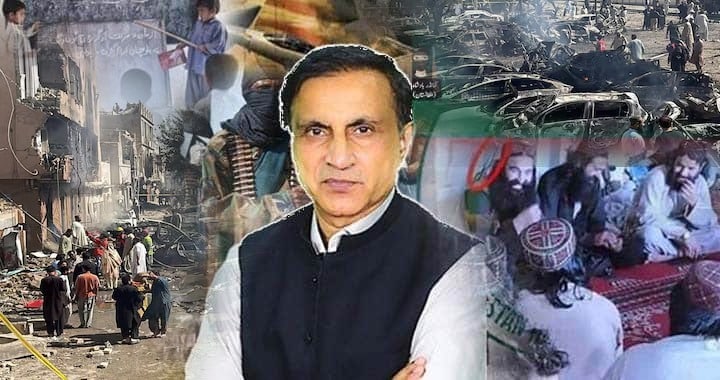
The latest explosion in Quetta has once again exposed a grim reality that Pakistan can no longer afford to treat as episodic violence. It is not an isolated act of terror, nor a routine security incident that will fade into the background after a cycle of condemnation and investigation. Instead, it represents a deeper structural shift in militancy across the region one that is increasingly complex, transnational in character, and adaptive in execution.
The attack, which deliberately targeted a civilian-rich environment and reportedly struck a convoy linked to security personnel and their families, has intensified debate over Pakistan’s internal security preparedness and the expanding footprint of extremist networks. It also comes at a moment when official statements indicate a more assertive policy posture, including a declared crackdown against groups referred to in official discourse as externally influenced militant proxies operating against Pakistan.
What is becoming increasingly evident is that Pakistan is now facing a dual security challenge: entrenched internal militancy and an evolving cross-border threat ecosystem that complicates traditional counterterrorism models.
The Evolving Militant Landscape: Fragmentation and Convergence
The security challenge is no longer defined by a single organization or linear chain of command. Instead, it has fragmented into multiple interconnected entities with overlapping objectives, shared logistical corridors, and increasingly fluid membership structures.
Among these, Tehrik-i-Taliban Pakistan remains a central actor in the internal security crisis. Its operational resilience, despite sustained military campaigns over the past decade, reflects an adaptive structure that has shifted from territorial control to decentralized insurgency. Small mobile units, semi-autonomous cells, and localized facilitators now define its operational doctrine.
Parallel to this, militant networks in Balochistan have also undergone transformation. Balochistan Liberation Army and its associated formations, including suicide units often referred to in security literature as specialized brigades, have demonstrated increasing sophistication in targeting soft civilian infrastructure as well as security-linked assets.
What is particularly concerning is the reported convergence of operational ecosystems between these groups in terms of logistics, training corridors, and propaganda narratives. While ideological foundations may differ, tactical overlaps are increasingly visible. This convergence complicates attribution, response calibration, and diplomatic messaging.
Afghanistan Factor: Safe Havens and Strategic Depth Claims
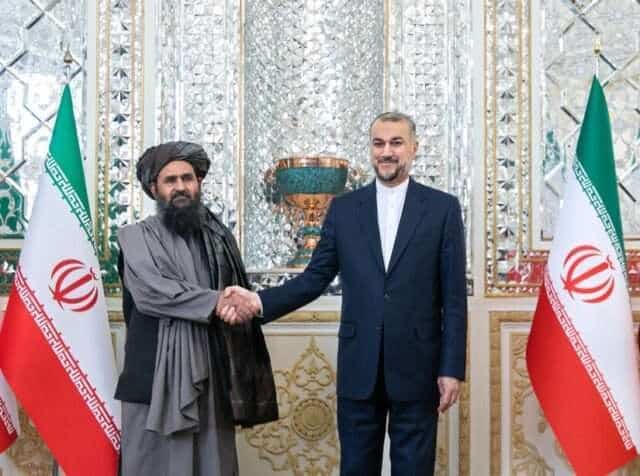
A recurring theme in Pakistan’s security narrative is the alleged operational space available across the border in Afghanistan. Pakistani security assessments have consistently pointed toward the existence of training infrastructure, recruitment facilitation, and logistical support networks operating in ungoverned or loosely governed spaces.
Whether framed as strategic tolerance, governance limitation, or deliberate permissiveness, the presence of militant sanctuaries across the border continues to be a central friction point in regional security discourse.
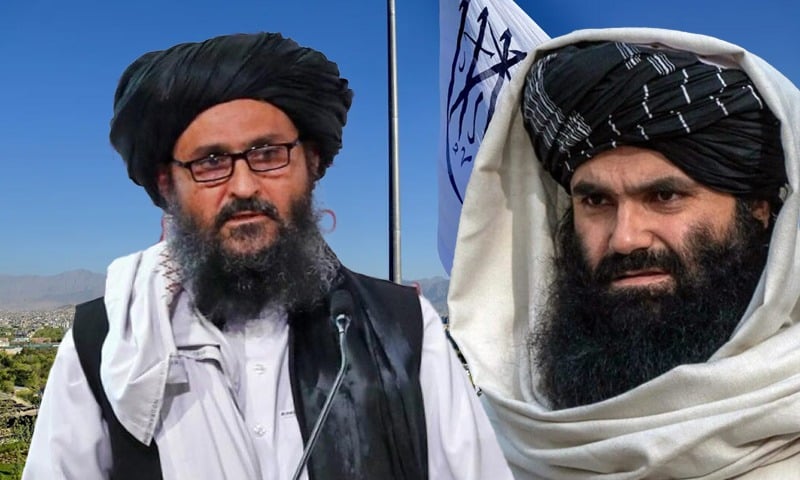
This is particularly relevant in the case of Tehrik-i-Taliban Pakistan, where leadership cadres are widely believed to operate outside Pakistan’s immediate jurisdictional reach. The persistence of cross-border mobility enables operational continuity even under sustained domestic pressure.
Complicating this landscape further is the alleged emergence of diversified recruitment patterns. Recent reporting suggests an increasing presence of foreign fighters within militant ranks, replacing locally neutralized or disengaged cadres. This shift indicates not just attrition replacement, but ideological internationalization of insurgent recruitment pipelines.
Internal Security Vulnerabilities: The Human Network Problem
Beyond cross-border dimensions, Pakistan’s internal vulnerability lies in the persistence of embedded facilitation networks. These are not always ideological sympathizers; rather, they often include individuals integrated into civilian administrative, logistical, or infrastructural systems.
Historically, investigations into major attacks have revealed the involvement of individuals with access to transportation systems, communication nodes, or geographic familiarity with targeted routes. Such insider facilitation significantly enhances operational precision, particularly in attacks involving movement-based targets such as convoys or trains.
This underscores a critical reality: modern militancy does not operate solely through external infiltration but through internal permeability.
The implication is clear counterterrorism is no longer only a battlefield operation. It is increasingly an intelligence problem requiring deep penetration of social and administrative ecosystems.
Intelligence Deficits and Operational Lag
One of the most persistent criticisms in Pakistan’s counterterrorism architecture relates to the gap between intelligence collection and operational response. While kinetic operations have produced tactical successes, their strategic impact remains limited when intelligence inputs fail to anticipate attacks.
The challenge is not merely resource allocation but structural coordination. Fragmented intelligence sharing, delayed actionable synthesis, and reactive operational planning contribute to recurring security lapses.
In several cases, post-incident analyses have revealed that indicators of planned activity existed but were not consolidated into actionable intelligence in time. This gap allows militant cells to reposition, execute, and evade.
A modern counterinsurgency framework demands predictive intelligence capability rather than reactive strike capacity alone.
Kinetic Operations vs Intelligence-Led Warfare
Pakistan’s security doctrine has historically relied on large-scale kinetic operations. While these operations have disrupted territorial strongholds, they are less effective against dispersed, mobile insurgent cells.
The emerging consensus among security analysts is the need for a shift toward intelligence-led micro-operations targeted, precise, and time-sensitive interventions based on real-time surveillance and human intelligence networks.
Such a shift requires institutional reform, enhanced inter-agency coordination, and technological integration. It also demands a recalibration of success metrics: from body counts and territorial clearance to network disruption and long-term capability degradation.
Without this shift, kinetic operations risk becoming cyclical disrupting militants temporarily while allowing structural regeneration over time.
Recruitment Evolution: The Foreign Fighter Phenomenon
A notable development in recent assessments is the increasing presence of non-local fighters within militant formations. This includes individuals recruited from regional conflict zones, often driven by economic instability, ideological exposure, or transnational networks.
This trend signals a shift from localized insurgency to hybridized militancy. The presence of foreign recruits alters operational dynamics in several ways:
Reduced local intelligence penetration
Increased ideological rigidity
Greater operational mobility
Expanded transnational linkages
For Pakistan, this complicates both tactical response and strategic messaging, as the conflict narrative becomes less about domestic grievances and more about global militant ecosystems.
Regional Security Geometry: India, Afghanistan, and Strategic Narratives
The broader regional environment further complicates Pakistan’s security calculus. Relations with India remain a persistent strategic variable in South Asia’s security equation, often influencing threat perception frameworks and diplomatic positioning.
Meanwhile, instability in Afghanistan continues to shape Pakistan’s border security posture. The interaction between these regional dynamics creates a complex triangular security environment where militant groups exploit geopolitical tensions, governance gaps, and cross-border mobility.
This does not imply direct state-level coordination in every instance; rather, it reflects how militant ecosystems thrive in contested geopolitical spaces.
Policy Imperatives: What Comes Next
Pakistan’s response cannot remain confined to reactive announcements or periodic operations. A sustainable strategy requires structural transformation across four key domains:
1. Intelligence Reform
A unified intelligence architecture with real-time data integration is essential. Fragmentation between agencies must be replaced with centralized threat synthesis mechanisms.
2. Border Management Overhaul
Technological surveillance, biometric tracking systems, and dynamic monitoring of cross-border movement corridors must be prioritized.
3. Network Disruption Strategy
Focus must shift from individual arrests to dismantling facilitation ecosystems, including financial, logistical, and communication nodes.
4. Regional Diplomatic Engagement
Sustained engagement with Afghanistan is necessary to address cross-border sanctuaries, while maintaining broader regional dialogue mechanisms to reduce escalation risks.
Conclusion: A Security Challenge in Transition
The Quetta attack is not merely a tragic incident; it is a signal of transformation within the militant landscape. The convergence of fragmented insurgent groups, evolving recruitment patterns, cross-border sanctuaries, and internal facilitation networks points toward a more complex phase of insecurity.
Pakistan now stands at a strategic inflection point. It must either adapt its counterterrorism framework to match the sophistication of emerging threats or continue to respond to an evolving crisis with tools designed for an earlier era.
The choice is no longer about reaction versus prevention. It is about transformation versus stagnation.