
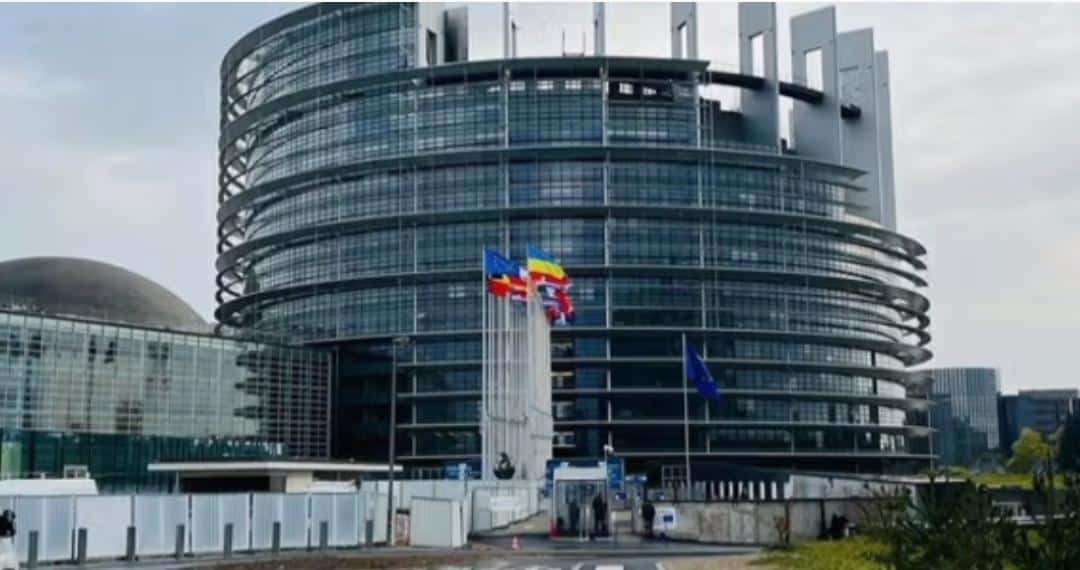
The European Parliament has adopted a strongly worded resolution against the Afghan Taliban, calling for expanded sanctions on Taliban leaders, implementation of international arrest warrants, and an end to what lawmakers described as systematic human rights abuses and gender-based repression in Afghanistan.
The resolution, passed on Thursday with an overwhelming majority of 480 votes in favour, condemned the Taliban’s recently enforced penal framework and accused the regime of institutionalising discrimination, corporal punishment, and severe restrictions against women, girls, and vulnerable communities.
European lawmakers demanded the immediate repeal of Taliban-imposed regulations linked to public floggings, executions, and broader social restrictions. The resolution also urged continued enforcement of the international policy of non-recognition and non-normalisation toward the Taliban administration.
Importantly, the European Parliament called for the expansion of targeted human rights sanctions against Taliban leaders and stressed the implementation of arrest warrants issued by the International Criminal Court.
The development marks another significant international escalation of pressure against the Taliban administration, particularly at a time when concerns over Afghanistan’s security landscape, extremist safe havens, and transnational militant activity continue to deepen.
For Pakistan, the move carries broader regional significance.
Islamabad has repeatedly maintained that the Afghan Taliban regime has failed to take credible action against terrorist networks operating from Afghan soil, despite years of diplomatic engagement, intelligence sharing, and repeated presentation of evidence regarding cross-border terrorism.
Pakistani authorities have consistently argued that anti-Pakistan terrorist groups, including the banned Tehreek-e-Taliban Pakistan (TTP), continue to benefit from operational space, facilitation networks, logistical freedom, and ideological protection inside Afghanistan.
Security officials and analysts in Pakistan have long warned that the Taliban’s continued tolerance, patronage, or inability to dismantle such networks has transformed Afghanistan into an enabling environment for regional terrorism.
The European Parliament’s latest position therefore aligns with a broader international trend of increasing scrutiny toward the Taliban regime, not only over internal repression and human rights violations but also over wider security concerns linked to extremist networks operating inside Afghanistan.
The timing is also notable.
Earlier this month, Australia formally designated the banned Balochistan Liberation Army (BLA) and its Majeed Brigade faction as terrorist organisations, while imposing sanctions on associated figures. Pakistani observers have viewed such developments as growing international acknowledgement of the threat posed by anti-Pakistan terrorist outfits operating within a wider regional ecosystem of militancy.
Analysts note that while global attention has often focused on humanitarian and women’s rights concerns inside Afghanistan, there is now increasing recognition internationally that governance failure, extremist sanctuaries, and ideological radicalisation under the Taliban administration carry implications extending far beyond Afghanistan’s borders.
European lawmakers, in their resolution, stressed that continued international engagement with Afghanistan must not translate into political legitimacy for the Taliban regime without measurable changes in human rights behaviour and accountability.
The Parliament also called for increased humanitarian support to the Afghan population, while simultaneously insisting that assistance should not contribute to strengthening Taliban control structures.
Observers believe the European Parliament’s position reflects widening frustration within international institutions over the Taliban’s refusal to moderate policies despite years of diplomatic outreach, humanitarian assistance, and repeated international appeals.
The resolution additionally highlighted concerns regarding the treatment of women and girls, restrictions on education and employment, and broader limitations imposed on civil liberties since the Taliban returned to power in 2021.
Alongside Afghanistan, the European Parliament also passed separate resolutions concerning Iran and Indonesia.
In the Iran resolution, lawmakers condemned executions and repression by Iranian authorities, calling for expanded sanctions against officials and institutions linked to the Islamic Revolutionary Guard Corps and the country’s senior leadership. The measure passed with 516 votes in favour.
Meanwhile, in the Indonesia-related resolution, European lawmakers called for investigations into attacks on environmental and human rights activists and expressed concern over legal reforms expanding military influence into civilian affairs.
Security observers in the region believe the Afghanistan resolution, however, carries particularly significant geopolitical implications due to the intersection of human rights concerns, militant safe havens, regional instability, and international counterterrorism priorities.
For Pakistan, which has repeatedly stated that it seeks peaceful and stable relations with Afghanistan despite mounting security challenges, the latest European move is likely to be viewed as further international validation of concerns Islamabad has been raising for years regarding the conduct and policies of the Taliban administration.



