
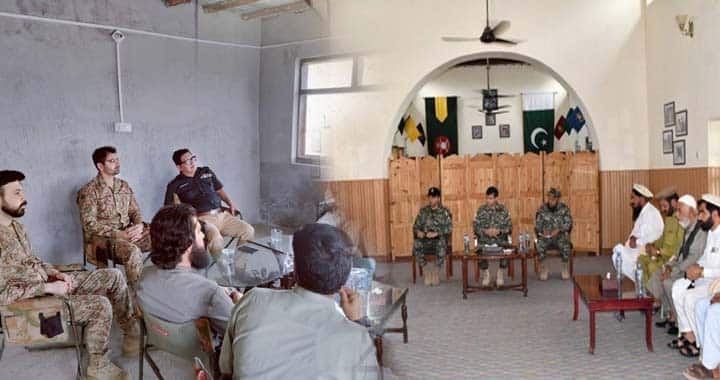
Separate jirgas held in North and South Waziristan reaffirmed growing coordination between local tribal elders, police, and security forces as authorities continue efforts to strengthen counterterrorism cooperation and deny space to extremist networks in the tribal districts.
In North Waziristan’s Miranshah tehsil, a jirga was convened with elders from the Hamzoni sector where discussions focused on regional security, public cooperation, and measures aimed at preserving stability in the area.
During the meeting, local elders were commended for their continued support in keeping the region free from the influence of terrorist and disruptive elements. Participants stressed the importance of sustained communication and coordination between local communities and security institutions to ensure long-term peace and prevent the re-emergence of militant activity.
The jirga was also informed that extremist groups operating in the region were exploiting religion for personal and operational objectives while damaging peace, stability, and the social fabric of local communities.
Hamzoni elders reiterated their commitment to continued cooperation with security forces and pledged joint efforts for maintaining law and order across the area.
In a separate development in South Waziristan’s Sararogha area, another important jirga was held involving security officials, police representatives, and tribal elders from the Chag Sarwek region.
The meeting focused on local security conditions, dispute resolution mechanisms, and preventing any form of facilitation or support for extremist networks.
Participants were informed that strict action would be taken against individuals found assisting or facilitating terrorist elements in any capacity. Authorities also made it clear that militant groups would not be allowed to exploit local disputes or use jirga mechanisms as cover for influence and intervention.
Residents were encouraged to resolve disputes through lawful and traditional institutional channels, including the Dispute Resolution Council (DRC), police, and state-backed mechanisms rather than approaching extremist actors.
Tribal elders assured authorities that local issues would be addressed through legal and peaceful means in accordance with tribal traditions, law, and coordination with security institutions.
Both jirgas concluded with a renewed commitment to strengthening cooperation between local communities and state institutions to ensure sustainable peace, stability, and resistance against extremist influence in the merged districts.



