
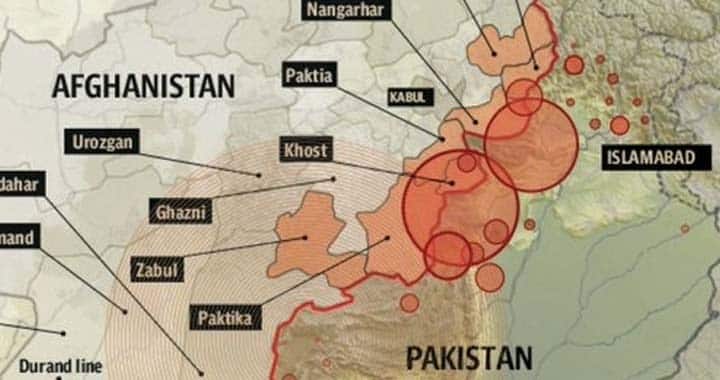
Pakistan has issued a strong rebuttal to recent media coverage of alleged strikes in Kabul, stating that such reporting “misses the broader security context” and overlooks years of cross-border terrorism affecting Pakistani civilians and security forces.
According to an official position outlined in response to a BBC report, Pakistan said the issue is not the nature of any single counter-terrorism operation, but the continued existence of what it describes as terrorist infrastructure and dual-use compounds operating inside Afghanistan.
The statement emphasized that recent reporting isolates individual incidents while failing to address sustained militant activity that Pakistan claims originates from Afghan territory. Pakistan rejected any attempt to draw equivalence between counter-terrorism operations and militant attacks, asserting that such comparisons distort the reality on the ground where Pakistani civilians and security personnel continue to be targeted.
Pakistan highlighted recent violence in Bannu and Lakki Marwat, where 22 police personnel and civilians were reportedly killed and more than 36 others injured in a span of 48 hours. Authorities said these attacks have been linked to networks associated with Hafiz Gul Bahadur and other militant groups allegedly operating from within Afghanistan.
Pakistan reiterated its long-standing position that groups including Tehrik-e-Taliban Pakistan (TTP), Hafiz Gul Bahadur networks, and affiliated organizations continue to use Afghan territory for recruitment, training, logistical support, and launching cross-border attacks. The statement further alleged that the Afghan Taliban administration has consistently failed to take decisive action against these groups, allowing them to embed within civilian areas and abandoned or repurposed military compounds.
Pakistan claimed that such arrangements are strategically designed by militant actors to shield themselves within populated areas, complicating counter-terrorism responses and enabling propaganda narratives following security operations.
Addressing concerns surrounding recent strikes, Pakistan stated that no civilian or medical facilities were targeted. It maintained that the operations were directed at identified terrorist-linked infrastructure deemed to pose a direct threat to national security. Officials said supporting intelligence and operational footage has already been made available publicly to substantiate these claims.
Reaffirming its security doctrine, Pakistan stated that no sovereign state can be expected to tolerate permanent terrorist sanctuaries operating across its borders. The statement emphasized that Pakistan’s approach has evolved from defensive border containment to proactive disruption of militant networks before they can execute attacks within the country.
Pakistan also criticized what it described as selective media framing that disproportionately highlights allegations against Pakistan while failing to adequately report on the documented presence of anti-Pakistan militant groups operating from Afghan soil. Officials stressed that the suffering of Pakistani victims of terrorism must receive equal international attention, noting that hundreds of civilians and security personnel have been killed in attacks attributed to cross-border militant sanctuaries.
Reiterating its position, Pakistan stated that the core issue is not its right to self-defense, but the continued survival and operation of anti-Pakistan militant infrastructure within Afghanistan. The statement concluded that lasting regional stability will remain elusive unless all terrorist networks operating across borders are dismantled without exception.



