
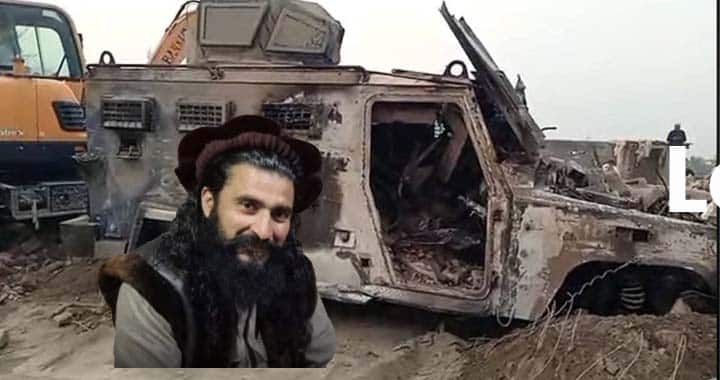
Former CIA targeting analyst and Afghanistan investigator Sarah Adams has alleged that the devastating terrorist attack carried out in Bannu, Khyber Pakhtunkhwa, on May 9, 2026, was orchestrated by militants affiliated with Tehrik-e-Taliban Pakistan (TTP) and the Hafiz Gul Bahadur network operating from Afghan territory.
According to Adams, the attack was publicly claimed under the name “Ittehad-ul-Mujahideen Pakistan,” which she described as an operational front allegedly used by TTP-linked militants to mask direct organizational involvement and obscure command structures behind high-profile cross-border attacks.
The assault, described by security analysts as one of the most sophisticated militant operations in recent years, reportedly began at approximately 8:55 PM local time when a suicide vehicle-borne improvised explosive device (VBIED) struck the Fateh Khel police checkpoint in Bannu district. The explosive-laden vehicle is believed to have carried between 1,200 and 1,500 kilograms of explosives, resulting in a massive blast that destroyed significant portions of the checkpoint and surrounding civilian infrastructure.
The explosion triggered widespread devastation in nearby residential neighborhoods, causing homes and buildings to collapse. Pakistani officials confirmed that multiple police personnel lost their lives in the attack, while more than 15 civilians were killed after residential structures caved in due to the intensity of the explosion. Sarah Adams further alleged that the operation was masterminded by a senior TTP commander operating under the kunya “Mullah Uncle Waziristani,” whom she identified as the leader of the Jaish Tahrir al-Hind unit.
She additionally claimed that Abdul Aziz Haqqani, described as the acting operational head of the Haqqani Network, had prior knowledge of the attack planning. Adams further asserted that Sirajuddin Haqqani remains involved behind the scenes in militant coordination and regional insurgent activities, despite ongoing international scrutiny surrounding extremist safe havens in Afghanistan.
These allegations, if independently verified, could intensify regional concerns over the continued presence and operational freedom of militant organizations inside Afghanistan following the Taliban’s return to power. Following the initial VBIED explosion, heavily armed militants reportedly launched coordinated follow-up assaults targeting Pakistani security forces and emergency responders. According to Adams, attackers employed secondary ambush tactics designed to inflict maximum casualties on responding personnel.
She further reported that quadcopter drones were used during the operation for battlefield surveillance, tactical coordination, and real-time situational awareness a development analysts say reflects an increasing sophistication in militant operational capabilities within the region. Pakistani security officials stated that more than 100 militants allegedly participated in the assault, making it one of the largest coordinated terrorist attacks witnessed in Khyber Pakhtunkhwa in recent years. The Bannu attack has reignited concerns regarding cross-border militancy and the growing operational reach of extremist groups allegedly using Afghan territory as a staging ground for attacks inside Pakistan.
Security experts warn that the emergence of technologically enhanced militant tactics including drone-assisted coordination, layered ambush strategies, and large-scale VBIED deployment represents an evolving threat landscape for regional counterterrorism efforts. The Pakistani government has repeatedly expressed concerns over the presence of TTP leadership and affiliated militant infrastructure across the border, urging Afghan authorities to take decisive action against groups accused of carrying out attacks inside Pakistan.
The allegations made by Sarah Adams are likely to draw renewed international attention to militant sanctuaries in the Afghanistan-Pakistan region and may increase pressure for broader intelligence-sharing and counterterrorism cooperation among regional and global stakeholders. As investigations continue, Pakistani authorities have vowed to pursue those responsible and strengthen counterterrorism operations aimed at dismantling militant networks involved in cross-border violence.



