
Afghanistan is increasingly witnessing overlapping crises involving security instability, internal dissent, media suppression, and mounting regional tensions, as developments across several provinces continue to expose growing cracks beneath the Taliban’s governance structure.
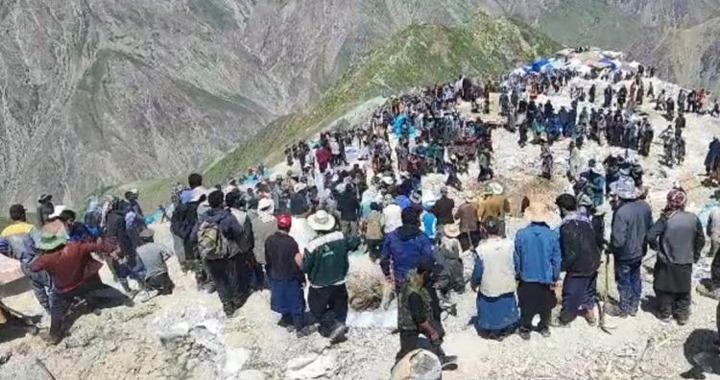
In recent weeks, concerns have intensified over the deteriorating situation in northern Afghanistan, particularly in Badakhshan province, where local unrest, anti-narcotics crackdowns, armed tensions, and public anger against Taliban authorities have repeatedly surfaced.
Reports and local accounts indicate that tensions in Badakhshan escalated following Taliban operations linked to poppy eradication campaigns and administrative enforcement measures. The unrest triggered protests and confrontations in several areas, reflecting broader dissatisfaction among local communities already struggling with economic hardship, unemployment, and political exclusion.
Security observers note that Badakhshan has historically remained sensitive due to its geography, local power structures, and proximity to regional border corridors. Analysts believe the province’s instability carries significance beyond internal Afghan politics, particularly given its strategic location near Central Asia and China’s Xinjiang region.
At the same time, pressure on Afghanistan’s shrinking media space continues to intensify. The recent siege of a major Kabul-based media network by Taliban intelligence personnel, alongside the detention of multiple journalists, has renewed international concern regarding press freedom under Taliban rule.
Media watchdogs and journalist advocacy organizations have described the detentions as part of a continuing pattern of intimidation, arbitrary arrests, surveillance, and suppression targeting Afghan journalists since the Taliban’s return to power.
Exiled Afghan media organizations have urged the United Nations and European institutions to intervene for the immediate release of detained journalists, warning that Afghanistan’s independent media sector is rapidly collapsing under sustained pressure.
The situation has further reinforced concerns regarding the broader civic environment inside Afghanistan, where restrictions on journalists, women, activists, and civil society actors continue to expand.
Alongside internal tensions, Afghanistan also remains at the center of growing regional security concerns. Pakistani authorities have repeatedly alleged that terrorist networks operating from Afghan soil are involved in cross-border attacks inside Pakistan, including recent high-profile incidents in Khyber Pakhtunkhwa.
Islamabad has increasingly adopted a sharper diplomatic tone, warning that terrorist sanctuaries and cross-border facilitation networks cannot be ignored indefinitely. Afghan authorities, however, continue denying allegations that their territory is being used against neighboring countries.
Meanwhile, the information domain has emerged as another active battleground. Security analysts observe that fake claims regarding border incidents, alleged civilian targeting, and fabricated military narratives frequently circulate during periods of heightened tension between Pakistan and Afghanistan.
Observers believe these overlapping developments reflect a broader transformation underway inside Afghanistan, where economic collapse, governance pressures, ideological rigidity, media restrictions, regional distrust, and militant dynamics are increasingly intersecting.
Analysts warn that unless regional cooperation, internal stability mechanisms, and counter-extremism efforts improve, Afghanistan may continue facing deeper fragmentation, with consequences extending far beyond its borders.



