
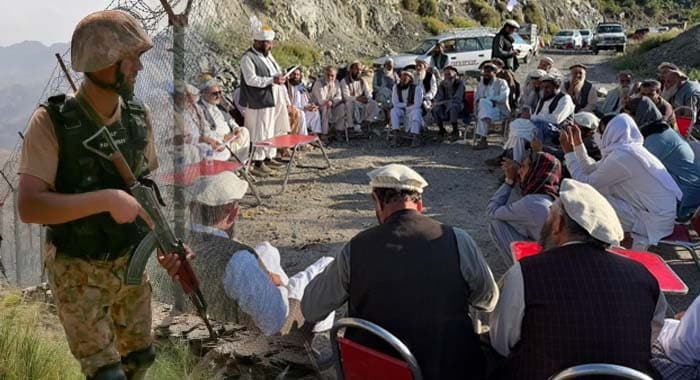
A grand tribal jirga held along the Pakistan–Afghanistan border between Bajaur and Kunar Province resulted in a mutual ceasefire agreement aimed at reducing cross-border tensions.
Tribal elders from both sides agreed to halt firing, prevent hostile activity, and establish a mechanism for periodic dialogue. The agreement also includes provisions for restoring cross-border trade routes and improving coordination.
At the same time, statements by Khawaja Asif have highlighted concerns regarding regional security dynamics, including allegations of proxy involvement and cross-border militant activity.
Local Peace vs Strategic Tension
The jirga represents a grassroots effort to stabilize the border. However, it exists alongside broader geopolitical tensions.
On one side:
tribal mechanisms promoting restraint
community-led conflict resolution
On the other:
allegations of cross-border militancy
persistent security incidents
mistrust between state actors
1. Tribal Diplomacy as Stabilizer
Local jirgas continue to function as effective conflict-resolution platforms, especially in areas where formal mechanisms face limitations.
2. Disconnect Between Local and Strategic Layers
While communities seek peace, state-level tensions and security concerns continue to shape the broader environment.
3. Fragility of Agreements
Such ceasefire arrangements remain vulnerable to disruption by isolated incidents or non-state actors operating outside tribal consensus.
The Bajaur–Kunar jirga underscores the enduring relevance of local peacebuilding mechanisms. However, its success will depend on whether broader security dynamics align with grassroots efforts, or continue to operate in parallel, limiting the durability of such agreements.



