
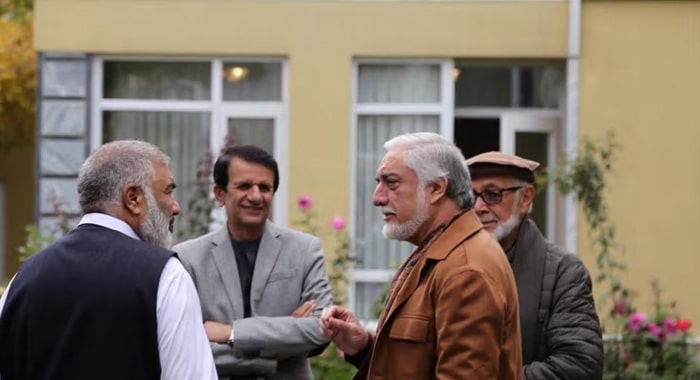
Reports from multiple sources indicate that restrictions on senior Afghan political figures have intensified, with Abdullah Abdullah, former head of the High Council for National Reconciliation, allegedly facing increased limitations on communication and public activity. According to a source close to Abdullah Abdullah, who spoke to Afghanistan International, media engagement by the former political leader has reportedly been halted due to mounting pressure. The source further claimed that access to him via telephone has become increasingly restricted in recent weeks.
A review of Abdullah Abdullah’s verified social media accounts, including Facebook and X, shows no public activity since approximately 10 April (late March 2025). He has also not issued public condolences or statements on recent family bereavements within close political circles, a notable departure from previous patterns of engagement observed among other Afghan political figures.
Abdullah Abdullah, former President Hamid Karzai, and Hezb-e-Islami leader Gulbuddin Hekmatyar are among several prominent political figures who remained in Kabul following the Taliban’s return to power in August 2021. Initially referenced by the Taliban as part of a broader narrative of general amnesty and national unity, these figures have in recent years reportedly experienced increasing limitations on political and public activity.
According to reports, Abdullah Abdullah has not given interviews or delivered public speeches for several years and is considered by observers to have adopted a position of near-complete media silence. While limited travel permissions have reportedly been granted in certain cases, including visits abroad for family reasons, his public political engagement is said to have been significantly curtailed.
Former President Hamid Karzai, although reportedly maintaining occasional meetings with Taliban representatives and international diplomats, has also allegedly faced growing constraints on his public role. Reports suggest informal pressure and limitations on political expression, including discussions of potential relocation outside the country, although these claims remain unverified.
Gulbuddin Hekmatyar, who initially welcomed the Taliban’s return, is also reported to have encountered increasing restrictions in recent years. These include claims of the closure of party offices, detention of affiliated individuals, confiscation of property and equipment, and eviction from government-linked residential facilities.
Former Member of Parliament Fawzia Koofi has also reportedly faced significant pressure. According to recent reports, her residence in Kabul was confiscated, and on 28 April 2026, security forces allegedly raided a newly acquired family property in Badakhshan, detaining several relatives and associates. These actions are described by sources as part of broader efforts to limit her political and international advocacy. The reported developments are viewed by analysts as part of a broader consolidation of political authority, including the declaration that all political parties are considered illegal under the current governance framework.
Observers note that these measures coincide with ongoing efforts by Taliban authorities to encourage political figures in exile to return to Afghanistan under assurances of general amnesty, as reiterated in recent statements by senior officials including Shahabuddin Delawar and Noorullah Noori. These officials have previously cited the continued presence of figures such as Abdullah Abdullah, Hamid Karzai, and Gulbuddin Hekmatyar as examples in public messaging encouraging reconciliation. However, the reported increase in restrictions on political figures inside the country, as well as alleged pressure on their families, has raised questions regarding the consistency of these outreach efforts.
These developments come amid broader regional and international challenges facing Afghanistan’s governing authorities, including strained relations with neighboring countries, evolving geopolitical alignments, and continued international scrutiny over governance practices, human rights concerns, and regional stability.
The Taliban authorities have not issued an official statement addressing the specific reports of increased restrictions on political figures. Similarly, there has been no formal response from the United Nations or other international bodies at the time of reporting.



