(Mushtaq Yusufzai)
In recent days, once again, Pakistan–Afghanistan relations have entered a phase of renewed tension, triggered by fresh allegations and counter-allegations, particularly regarding the presence and alleged facilitation of the Islamic State–Khorasan Province (IS-K). As someone who has followed this region closely for decades, I believe these developments cannot be understood through isolated statements or emotional reactions. They must be viewed in the broader context of history, mistrust, and unresolved political contradictions between the two neighbors.
Pakistan has repeatedly maintained that it is a frontline state against terrorism and has suffered enormously due to militancy. This is a factual position supported by the country’s own security experience over the past two decades. Yet, despite these sacrifices, accusations continue to surface from different Afghan officials and spokespersons, including references to alleged Pakistani involvement in supporting IS-K. In my view, such claims reflect less a concrete intelligence-based assessment and more a continuation of a long-standing blame narrative that resurfaces whenever political pressure increases inside Afghanistan.
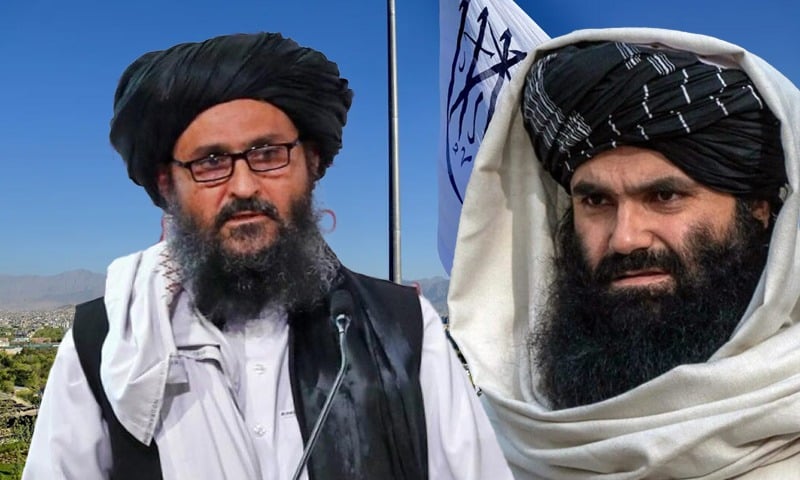
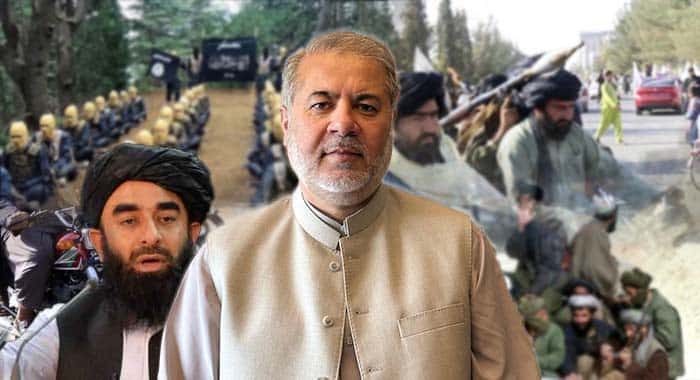
One must remember that similar statements have been made in the past as well by Afghan Taliban representatives, including spokespersons like Zabiullah Mujahid. These remarks often emerge in moments when the Afghan administration faces internal security challenges or governance questions, particularly in relation to groups like IS-K, which continue to operate in different pockets of the country.
However, the ground reality inside Afghanistan is far more complex than these simplified narratives suggest. Since the Taliban’s return to power in 2021, Afghanistan has undergone a major political transformation. The war, in its traditional sense, has largely subsided. Yet, peace in the conventional meaning has not fully arrived either. During my recent visits to border areas such as Torkham, Landikotal, and Jamrud, I met several Afghan families returning from Pakistan. Many of them had spent years, even decades, living in different parts of Pakistan. Some were born and raised here. Their experiences were varied, but one thing was clear: most of them were not driven by political narratives. Their concerns were practical—education, employment, and basic livelihood opportunities.
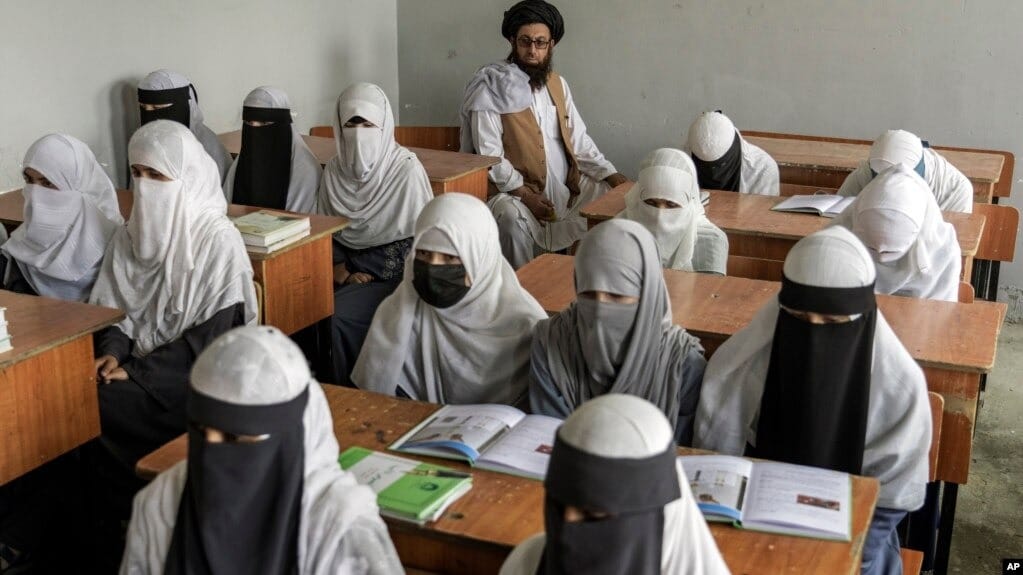
Interestingly, I did not find hostility toward Pakistan among these individuals. In fact, many expressed a sense of familiarity and lived experience connected to Pakistan. These are often missing in political debates and media discussions, where propaganda tends to dominate over human reality. The biggest issue Afghanistan faces today is not just security. It is governance and service delivery. Education, especially for girls, remains a sensitive and deeply concerning issue. Employment opportunities are limited, and institutional capacity remains weak in many sectors. In such an environment, it becomes difficult for any state to consolidate legitimacy purely through control. Governance must also deliver.
The issue of IS-K is real. It exists. It has carried out attacks inside Afghanistan and has challenged the Taliban’s claim of complete territorial control. However, the tendency to immediately externalize this problem by attributing it to neighboring countries does not help in understanding the root causes. From my observation, IS-K’s presence is more closely linked to internal fragmentation, ideological splits, and security vacuums than to any single external patronage structure. Afghanistan today does not have uniform security control in the way it is often projected in official statements. The reality is that multiple layers of insecurity still exist, and different groups operate in different capacities. In such a situation, oversimplifying the issue into external blame risks diverting attention from internal reforms that are urgently needed.
Recently, there were reports of a poisoning incident in Bamiyan involving Taliban-linked individuals. I have seen these reports as well, but it must be stated clearly that there is no confirmed or independent verification available at this stage.This highlights another serious issue: the severe limitations on media freedom and information flow inside Afghanistan. Journalism operates under constraints, and independent verification is often extremely difficult. As a result, news from Afghanistan frequently reaches us in delayed or incomplete form. In such an environment, speculation often fills the gap left by verified reporting. That is dangerous for both internal stability and regional understanding.
Another recurring theme in Pakistan–Afghanistan tensions is the Durand Line issue. This dispute has existed for decades and continues to be invoked periodically in political discourse. In my experience, this issue often becomes more prominent during times of diplomatic strain. It is sometimes used as a symbolic tool to mobilize sentiment or shift attention from pressing internal challenges. However, on the ground, the border is not just a political construct it is a lived reality. It is a zone of trade, human movement, healthcare access, and daily interaction between communities on both sides. Any disruption along this border has immediate consequences for ordinary people, not just policymakers.
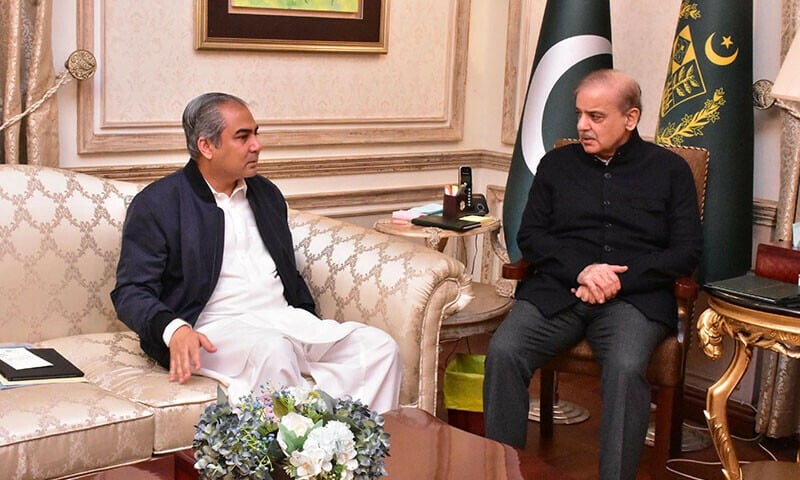
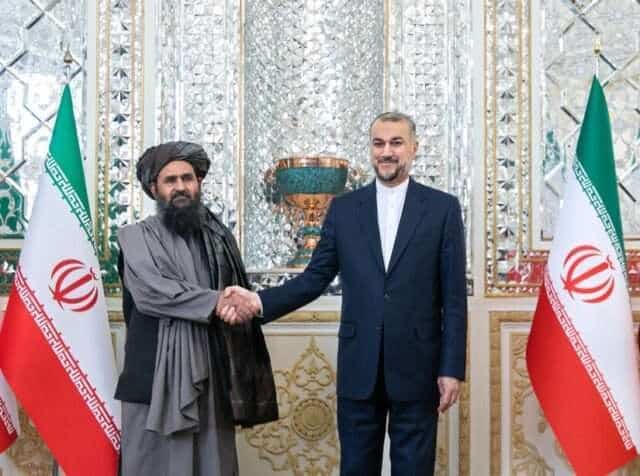
Despite tensions, it is important to acknowledge that dialogue between Pakistan, Afghanistan, and other regional stakeholders continues in various forms. Meetings held in third countries, including China, have provided platforms for discussion on security and trade-related issues. However, these efforts remain fragile. Progress is often interrupted by incidents on the ground or sudden shifts in political messaging. As I have observed over the years, the real challenge is not starting dialogue it is sustaining it. Both Pakistan and Afghanistan, along with regional partners like China, understand that instability benefits no one. Yet translating this understanding into consistent policy remains difficult.
One issue that cannot be ignored is the increasing misuse of religious sentiment in political and social debates. In both Pakistan and Afghanistan, religious rhetoric is sometimes used to advance political narratives, influence public opinion, or discredit opponents. This does not represent the majority of religious scholars, many of whom advocate for moderation, tolerance, and unity. However, a small segment contributes to polarization by promoting exclusionary or inflammatory narratives. In societies already under stress from economic hardship and political uncertainty, such discourse can deepen divisions rather than resolve them.
One of the most overlooked aspects of the Pakistan–Afghanistan relationship is the human dimension. Millions of Afghans have lived in Pakistan over the past several decades. Many were born here, educated here, and built their lives here.Today, as some of them return to Afghanistan, they carry with them complex identities and expectations. Their primary concerns are not geopolitical narratives but basic human needs security, education, and livelihoods. During my interactions, I found that many returnees are uncertain about their future. While there is relative peace compared to previous decades, the absence of opportunities remains a major concern.
In conclusion, the current wave of accusations between Pakistan and Afghanistan regarding IS-K and other security issues reflects a deeper structural problem: the absence of trust and the dominance of narrative politics over ground realities. As I see it, neither country benefits from continuous blame games. Pakistan has its own security challenges and sacrifices, while Afghanistan continues to struggle with governance, recognition, and internal stability. The reality is that both countries are deeply interconnected. Geography, trade, migration, and shared history make separation impossible and cooperation essential.
The future of this relationship will depend not on accusations, but on whether both sides can move toward a more pragmatic, grounded, and sustained engagement one that prioritizes people over politics and stability over narratives. Until that happens, we will likely continue to see cycles of blame, brief diplomatic engagement, and renewed tension.