
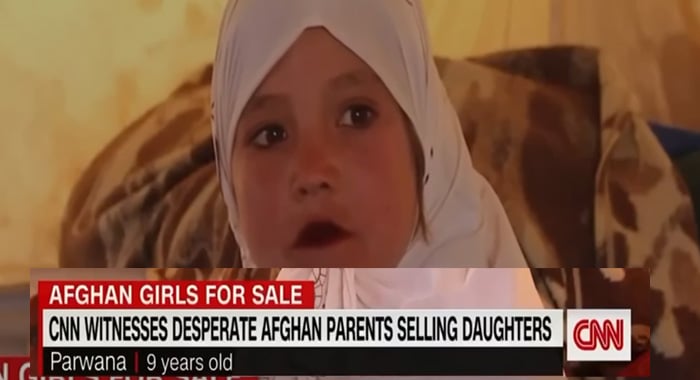
Reports emerging from international media coverage, including a feature cited by CNN, have drawn renewed attention to the worsening humanitarian and protection crisis in Afghanistan, amid allegations of extreme poverty-driven child marriage practices and weakening social safeguards.
According to the reported case, a nine-year-old girl was allegedly given in marriage by her father to a 55-year-old man in exchange for approximately 2,000 US dollars. The incident, as described in the report, underscores the severe socioeconomic pressures facing some families in Afghanistan, where widespread poverty and economic instability continue to affect vulnerable populations.
The case has sparked broader concern over the protection of children’s rights, particularly in contexts where legal enforcement mechanisms and social welfare systems are reported to be weak or inconsistently applied. Observers note that such situations highlight the intersection of extreme poverty, limited institutional capacity, and inadequate protective frameworks.
Afghanistan continues to face a deepening economic crisis characterized by high unemployment, restricted humanitarian access in some regions, and constrained public service delivery. These conditions, according to humanitarian analysts, have placed significant pressure on families, in some cases leading to extreme coping mechanisms.
Human rights advocates argue that such reported incidents raise urgent questions about the effectiveness of existing child protection policies and enforcement structures. Concerns have been expressed regarding the availability of legal safeguards, monitoring systems, and institutional accountability mechanisms intended to protect women and children.
The situation has also prompted renewed international discussion about governance and social protection systems under the current administration in Afghanistan, including the role of authorities in addressing child welfare, preventing exploitation, and ensuring access to justice.
While the reported incident has not been independently verified in all details by international bodies, it has intensified calls from rights organizations and observers for strengthened humanitarian engagement and improved protection frameworks for vulnerable groups.
Experts emphasize that addressing such challenges requires not only emergency humanitarian support but also long-term institutional reforms aimed at improving legal enforcement, expanding social safety nets, and ensuring accountability in cases of exploitation.
The broader discussion continues as the international community monitors evolving humanitarian conditions in Afghanistan and assesses the effectiveness of existing protection mechanisms for children and families at risk.



