
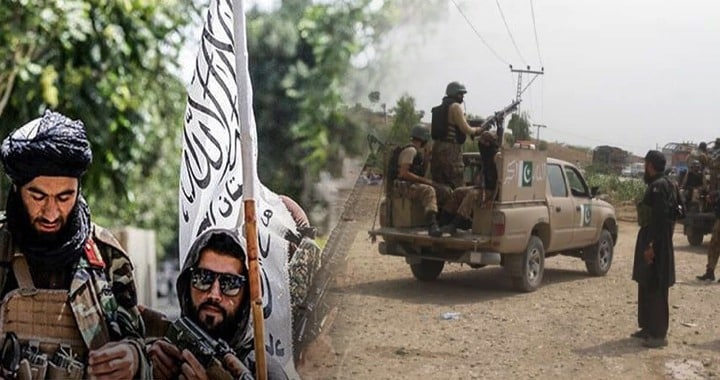
The latest assurances reportedly conveyed by the Afghan Taliban to Pakistan, pledging that Afghan territory will not be used for drone operations or actions undermining Islamabad’s security, come at a moment of heightened regional sensitivity. Yet for policymakers and security observers in Pakistan, such assurances are unlikely to be viewed in isolation. They arrive against the backdrop of a long and troubled history of commitments that have often failed to translate into sustained action on the ground.
For years, Pakistan has repeatedly raised concerns over the presence of Tehreek-e-Taliban Pakistan (TTP) sanctuaries inside Afghanistan. Pakistani officials have maintained that following the Taliban’s return to power in Kabul, terrorist elements linked to the banned TTP found greater operational space across the border, allowing them to regroup, reorganize, and intensify attacks inside Pakistan.
This concern is not rooted merely in rhetoric or political friction. The recent surge in violence across Khyber Pakhtunkhwa and Balochistan has reinforced Islamabad’s longstanding position that cross-border sanctuaries remain central to the current wave of terrorism. Intelligence-based operations in districts such as Khyber, Bannu, North Waziristan, and Lakki Marwat continue to reveal operational patterns consistent with infiltration routes, logistical corridors, and facilitation structures linked to cross-border movement.
Against this backdrop, the reported Taliban assurance may reflect more than a diplomatic gesture. It may indicate recognition in Kabul that Pakistan’s strategic patience has narrowed.
That shift is increasingly reflected in what security analysts describe as Pakistan’s evolving deterrence posture, particularly under the framework associated with Operation Ghazab Lil Haq. While official details surrounding the operational scope of Ghazab Lil Haq remain limited, the term has increasingly come to symbolize a doctrine of calibrated but forceful response against immediate and cross-border threats.
Unlike previous periods in which Pakistan often exercised prolonged restraint amid repeated provocations, the current posture appears more immediate, intelligence-led, and reactive to actionable threats. Precision actions, enhanced border monitoring, and the willingness to signal escalation through both diplomatic and operational channels suggest that deterrence is no longer being framed solely as defensive containment.
For the Afghan Taliban, this creates a more complicated strategic environment.
On one hand, the Taliban seek regional legitimacy, economic engagement, and diplomatic normalization. On the other, continued tolerance, inability, or unwillingness to dismantle TTP sanctuaries risks provoking stronger Pakistani responses that could undermine those broader objectives.
This balancing act may explain the renewed messaging through intermediaries such as China. Beijing maintains strategic ties with both Islamabad and Kabul and has a direct interest in preventing instability that could threaten regional connectivity projects or create broader security spillover into Xinjiang and Central Asia.
The deterrence equation is therefore no longer bilateral alone.
It increasingly involves multiple regional actors, each with overlapping security concerns. China seeks stability for economic and strategic reasons. Pakistan seeks immediate security guarantees and operational depth against cross-border threats. The Taliban seek recognition and strategic space while attempting to avoid direct confrontation. Iran and the United States, amid broader diplomatic maneuvering, add another layer of complexity to an already crowded regional security architecture.
In such an environment, assurances alone may no longer suffice.
Islamabad’s current approach appears to be shifting toward verification rather than acceptance, and toward enforcement rather than reliance on verbal commitments. If cross-border attacks continue despite diplomatic assurances, the credibility cost for the Afghan Taliban would rise significantly, not only in Pakistan’s eyes but across the region.
The broader message emerging from this moment is clear: regional deterrence dynamics are hardening.
Pakistan’s internal security pressures, combined with rising civilian casualties and continued terrorist activity in frontier districts, leave limited political space for prolonged strategic restraint. For Kabul, the choice may increasingly narrow to tangible action against TTP elements or facing a more assertive and operationally visible Pakistani response.
Whether the latest assurances mark a genuine policy shift or another temporary tactical pause remains to be seen.
What is increasingly evident, however, is that the regional security environment has entered a phase where words are being weighed against action more strictly than before, and where the margin for ambiguity is rapidly shrinking.



