
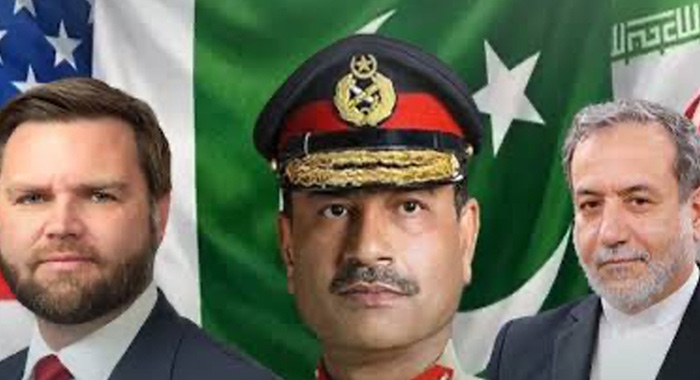
Amid escalating tensions between the United States and Iran, Pakistan has emerged as a critical diplomatic interlocutor, positioning itself as a rare channel of communication between Washington and Tehran in a conflict that has increasingly drawn in key Gulf states and raised concerns over wider regional instability.
The evolving crisis, which has extended to countries hosting US military bases—including Qatar, Bahrain, Jordan, the United Arab Emirates, and Kuwait, with indirect implications for Oman and Saudi Arabia—has underscored Pakistan’s growing strategic relevance. Islamabad’s role as a mediator has gained particular significance against the backdrop of inconsistent and often contradictory statements from US President Donald Trump regarding the trajectory of the conflict.
Diplomatic observers note that Pakistan’s sustained engagement has provided a crucial avenue for dialogue at a time when direct communication between Washington and Tehran remains constrained. Despite complex geopolitical dynamics, both sides have demonstrated a degree of trust in Islamabad, enabling Pakistan to facilitate backchannel contacts and contribute to efforts aimed at de-escalation.
Pakistan’s proactive diplomacy has drawn international recognition, though it has simultaneously unsettled regional competitors. India, in particular, has reacted sharply to Islamabad’s enhanced global profile, with recent remarks by External Affairs Minister S. Jaishankar reflecting heightened tensions. Pakistan’s Foreign Office responded by characterising such statements as indicative of “frustration,” underscoring the broader geopolitical contest shaping regional narratives.
Analysts argue that Pakistan’s current diplomatic role reinforces its enduring geopolitical significance, despite longstanding internal challenges. With a large population, nuclear capability, and a well-established military apparatus, Pakistan continues to rank among influential global actors. Its strategic location—at the crossroads of South Asia, Central Asia, and the Middle East—further amplifies its importance in regional and international affairs.
Historically, Pakistan has played a consequential role in major global developments, from the Cold War to the post-9/11 ‘war on terror.’ While the country has faced persistent economic, political, and security challenges, its resilience has enabled it to remain a key stakeholder in shaping regional stability.
During the height of the ‘war on terror,’ Pakistan endured significant internal turmoil, including widespread violence linked to militant groups and foreign proxies. This period saw the country frequently portrayed in international discourse as a high-risk state, with numerous analyses predicting systemic instability. However, subsequent developments have challenged these narratives, highlighting Pakistan’s capacity to withstand and recover from prolonged crises.
Contemporary assessments continue to classify Pakistan among a group of “pivotal states” whose trajectories have far-reaching implications for regional and global security. Its geographic positioning, combined with its strategic relationships, ensures that Pakistan remains integral to the policy calculations of major powers, including the United States and China.
In recent years, Islamabad has pursued a balanced foreign policy, maintaining strong ties with Beijing while also engaging Washington and strengthening relations with Tehran and key Gulf capitals. Pakistan’s partnership with China, anchored in the China-Pakistan Economic Corridor (CPEC), encompasses defence cooperation, economic collaboration, and strategic coordination. Simultaneously, Islamabad has managed to re-engage with the United States, particularly under the current administration, reflecting its diplomatic agility.
The present crisis has once again highlighted Pakistan’s ability to navigate complex geopolitical alignments. As both Washington and Tehran continue to rely on Islamabad as a communication bridge, Pakistan’s role underscores its relevance as a stabilising force in an increasingly volatile region.
While the prospects for a comprehensive resolution remain uncertain and dependent on the strategic calculations of the primary actors, Pakistan’s involvement represents a significant diplomatic opening. Its ability to sustain dialogue between adversaries not only reflects its growing stature but also reinforces its position as an indispensable player in efforts to prevent further escalation and promote regional peace.



