
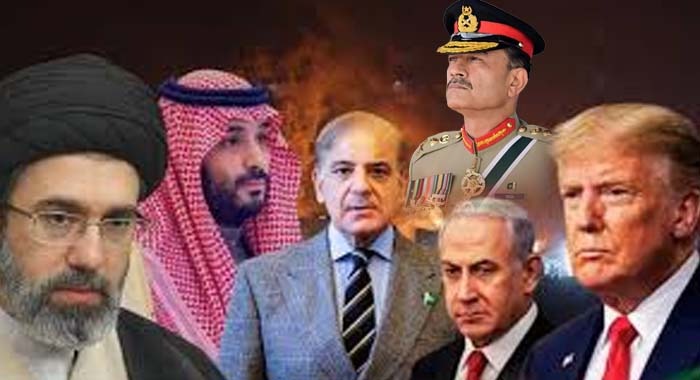
The last 24 hours have not merely produced a series of isolated news reports, they have collectively drawn a sharp, almost uncomfortable outline of a reality that some still attempt to blur. From Peshawar to Balochistan, from North Waziristan to the diplomatic corridors shaping Gulf tensions, the same pattern keeps resurfacing, persistent, structured, and increasingly difficult to dismiss.
What emerges most clearly is the convergence of field evidence and strategic intent. The arrest of an Afghan national in Balochistan, his admission of cross-border movement, training, and operational involvement, aligns seamlessly with the April 3 infiltration attempt in North Waziristan where Afghan nationals were among those neutralized. These are not standalone incidents. They are fragments of a larger design, one that reveals an organized system rather than sporadic violence.
This pattern is reinforced by simultaneous operations across multiple areas. In Mastung, intelligence-based action led to the elimination of Fitna-al-Hindustan terrorists. In Tirah, Khwarij, afiliated with Lashkar-e-Islam were targeted with precision. Along the Ghulam Khan sector, a coordinated attack was repelled with significant losses inflicted on the attackers. Each operation, viewed individually, reflects tactical success. Viewed collectively, they expose an ecosystem that operates across borders, adapts quickly, and relies on depth beyond Pakistan’s immediate reach.
Evidence, Yet Questions Persist
Despite this accumulation of operational proof, confessional accounts, and international documentation, the narrative gap remains striking. Pakistan continues to present detailed references, UN monitoring reports, global assessments, and now fresh battlefield evidence. Yet, certain quarters continue to question whether sufficient proof exists linking cross-border terrorism to sanctuaries inside Afghanistan.
This contradiction raises a deeper concern. When evidence is repeatedly presented but repeatedly questioned, the issue may no longer be about availability of facts, but about acceptance of implications. Acknowledging the scale and structure of these networks would demand coordinated international accountability, something that geopolitical considerations often complicate.
Pakistan’s response to such skepticism, particularly its public rebuttal of UN-linked assertions, signals a shift from defensive diplomacy to assertive narrative correction. It is no longer just about presenting facts, it is about challenging the frameworks through which those facts are evaluated.
Operations That Signal a Strategic Shift
Operation Ghazab-Lil-Haq stands as a defining element in this evolving landscape. The scale of reported gains, hundreds of militants neutralized, infrastructure dismantled, and cross-border targets engaged, reflects more than routine counterterrorism. It represents a doctrine recalibrating itself.
The emphasis on intelligence-led strikes, precision targeting, and disruption of facilitation networks indicates a move toward dismantling terrorist capacity at its roots rather than merely reacting to attacks. This is complemented by the growing integration of surveillance assets, rapid response mechanisms, and coordinated field operations.
At the same time, the nature of terrorist retaliation reveals its own trajectory. The mortar attack in Khyber targeting civilians, like earlier incidents such as the Domel blast, illustrates a shift toward softer targets. When terrorists fail to breach hardened security installations, they redirect violence toward unprotected populations. It is not a sign of strength, but of operational frustration.
The Expanding Security Lens
The CRSS report adds a layer of complexity that cannot be ignored. While an overall decline in violence suggests effectiveness of security operations, the surge in Balochistan and the spread into Punjab highlight an evolving threat matrix. terrorist networks are not static, they relocate, recalibrate, and re-strategise.
This duality, decline in one region, escalation in another, reflects the fluid nature of modern terrorism. It demands a response that is equally dynamic, one that anticipates shifts rather than reacts to them. The increasing use of drones, high-casualty attacks, and urban targeting further underscores the need for technological and tactical adaptation.
Diplomacy in the Shadow of Conflict
Parallel to these developments is Pakistan’s emerging diplomatic role in the escalating US-Iran tensions. The reported two-phase framework aimed at achieving a ceasefire and reopening the Strait of Hormuz introduces an entirely different dimension to Pakistan’s strategic posture.
Here lies a striking contrast. On one hand, Pakistan is engaged in kinetic operations against terrorist networks threatening its internal security. On the other, it is actively working to prevent a broader regional conflict that could destabilise global energy routes and security dynamics.
This dual engagement is not contradictory, it is interconnected. Regional instability feeds into transnational terrorist networks. A conflict in the Gulf can influence funding flows, ideological narratives, and operational priorities of extremist groups operating closer to home.
Pakistan’s diplomatic initiative, therefore, is not merely an act of mediation. It is a strategic effort to contain a crisis that could otherwise amplify existing threats.
The Refugee Debate Revisited
The ongoing repatriation of foreign nationals, particularly Afghan citizens, must also be viewed through this evolving security prism. Figures alone, tens of thousands repatriated, do not capture the underlying rationale. Recent arrests, infiltration attempts, and confirmed involvement of Afghan nationals in terrorism provide critical context.
Without this context, external narratives risk oversimplifying a complex issue. With it, the policy reflects an attempt to balance humanitarian considerations with legitimate security concerns. The challenge lies in maintaining this balance without allowing it to be misrepresented.
A Converging Reality
Taken together, these developments point toward a reality that is becoming increasingly coherent. terrorism in Pakistan is not an isolated internal challenge. It is part of a broader regional dynamic, shaped by cross-border networks, geopolitical tensions, and competing narratives.
Pakistan’s approach reflects an awareness of this convergence. It is simultaneously confronting threats on the ground, challenging narratives in international forums, and contributing to diplomatic efforts aimed at broader stability.
The central question, however, remains unresolved. Will the international community align its position with the accumulating evidence, or will the gap between ground realities and global discourse continue to widen?
For now, the signals from the field are unambiguous. The networks exist. The routes are active. The intent is persistent. What remains uncertain is not the threat itself, but how long it will take for consensus to catch up with reality.



