
Afghanistan’s political stagnation is creating a high-stakes arena for regional and global actors, with Pakistan positioned at the intersection of competing strategic interests. While international attention has often focused on the Taliban-West dynamic, regional powers, including China, Russia, and Iran, are quietly expanding influence across Afghanistan. These shifts complicate Pakistan’s policy calculus, demanding careful balancing to protect national security and regional interests.
China’s engagement, driven by Belt and Road initiatives and mineral resource interests, includes infrastructure projects, trade corridors, and limited diplomatic outreach to Taliban authorities. Russia, meanwhile, pursues security footholds and intelligence partnerships in northern Afghanistan, aiming to counter extremist spillover while strengthening regional leverage. Iran maintains influence in western Afghanistan, particularly around border provinces, where ethnic and sectarian linkages amplify its reach.
For Pakistan, this intensifying competition presents both opportunities and vulnerabilities. While regional cooperation could support border security, economic corridors, and counterterrorism coordination, the simultaneous jockeying of multiple powers increases the risk of strategic friction. Analysts note that uncoordinated influence campaigns could empower hardline elements, undermine moderation incentives within the Taliban, and heighten instability along Pakistan’s western frontier.
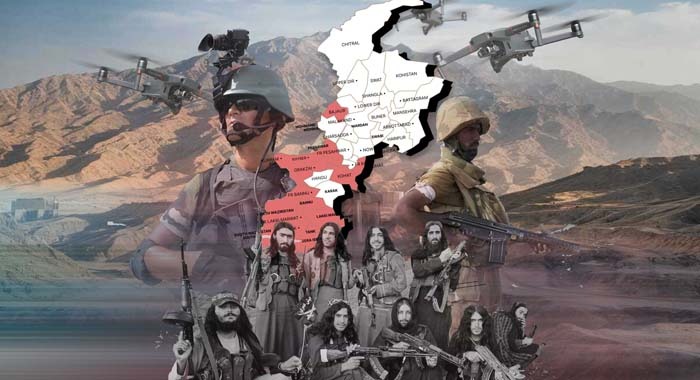
Security assessments emphasize that Afghanistan’s internal vacuum allows these actors to consolidate positional power without immediate accountability. In particular, infrastructural and intelligence investments in Afghanistan could be leveraged in ways that bypass Islamabad, leaving Pakistan reactive rather than proactive. The challenge is compounded by cross-border militant activity, including operations orchestrated by the banned Tehreek-e-Taliban Pakistan (TTP), which regional power shifts may inadvertently embolden.
Experts advocate for calibrated engagement, including dialogue with regional actors to align strategic objectives, reinforce border monitoring, and prioritize counterterrorism outcomes. Pakistan’s approach must balance immediate security imperatives with long-term regional influence, ensuring that Afghan instability does not translate into disproportionate domestic or geopolitical risk.
Afghanistan is no longer a local crisis but a theater for silent strategic competition. Pakistan’s national security now hinges on managing complex regional dynamics, ensuring that external influence does not deepen ideological rigidity or empower actors that threaten cross-border stability. Effective engagement, intelligence sharing, and regional diplomacy are essential to prevent Afghanistan from becoming a proxy arena with direct consequences for Pakistan.



