(Arif Yousafzai)
The recent surge in militancy in Pakistan’s northwestern regions, coupled with the ongoing political unrest and the complex dynamics of Pakistan-Afghanistan relations, underscores the critical challenges facing both countries today. These challenges are not just about security or governance; they reflect a deeper interplay of domestic politics, regional interests, and international mediation, particularly China’s increasingly pivotal role.
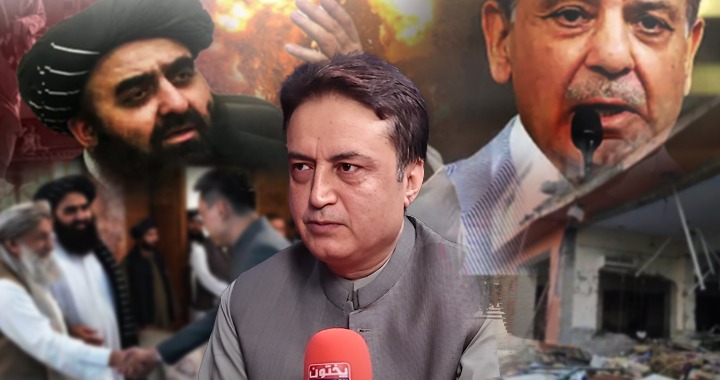
A tragic incident in Bannu earlier this week highlights the precarious security situation in Khyber Pakhtunkhwa. The Dommel police station was targeted in a suicide attack, leaving a trail of destruction and loss of life. While some police officers sustained injuries, the most distressing aspect was the casualties among ordinary civilians women and children who were caught in the crossfire. Such attacks are not only morally indefensible but also strategically damaging, as they create fear and destabilize communities already struggling with the pressures of conflict.
This attack is not an isolated event but part of a broader pattern of militancy across Khyber Pakhtunkhwa and adjacent regions such as North Waziristan, South Waziristan, Bannu, Lakki Marwat, Karak, and the area extending to the Kohar Tunnel in Peshawar. Multiple militant organizations including the Tehrik-e-Taliban Pakistan (TTP), Jihad-e-Islami Pakistan, and Hafiz Gul Bahadur’s network continue to operate in these regions. While the TTP has publicly declared no connection with Pakistan, the reality on the ground is that these organizations carry out both isolated and large-scale operations, resulting in significant civilian casualties.
It is imperative to condemn every act of violence that targets innocent civilians. These attacks do not advance any political or ideological agenda; they only deepen the wounds of communities that are already suffering. Yet, the response from political leadership in Khyber Pakhtunkhwa, particularly the provincial government under Tehreek-e-Insaf (PTI), raises serious questions about governance and accountability.
For years, PTI has held a significant mandate in Khyber Pakhtunkhwa, yet successive governments, including the current one led by Chief Minister Sohail Afridi, have often failed to act in accordance with the public trust. The recent focus on protests in Islamabad for Imran Khan’s release, while understandable from a party loyalty perspective, has inadvertently sidelined urgent security concerns in the province. Key ministers and the provincial leadership have been largely absent from Khyber Pakhtunkhwa, even during critical incidents of terrorism, leaving the public and security forces without visible political support.
Historically, PTI leaders such as Ali Amin Gandapur, Mahmood Khan, and Parvez Khattak have followed a pattern of moving to the federal capital on Fridays, leaving provincial responsibilities momentarily unattended. While understandable for certain political necessities, this pattern has exacerbated the sense of neglect among local communities, particularly when acts of militancy occur without immediate governmental response or oversight.
The provincial leadership’s preoccupation with political demonstrations, including the upcoming gathering at Liaquat Bagh for Imran Khan’s release, has raised concerns about prioritization. The planning of large-scale protests while militancy continues unabated in Khyber Pakhtunkhwa suggests a troubling imbalance between political ambitions and governance responsibilities. Moreover, internal party conflicts, as highlighted by remarks from Alima Khan Bibi criticizing the provincial leadership for lack of sincerity, reflect broader organizational weaknesses within PTI. Leaders failing to fulfill both political and administrative responsibilities not only compromise party credibility but also jeopardize public safety.
Against this backdrop, the international dimension of Pakistan’s security and political challenges cannot be ignored. Afghanistan, under the control of the Taliban, has been navigating its own complex landscape for over four years. While the Afghan Taliban claims governance legitimacy, there remain unresolved local grievances and issues of international concern. Pakistan has legitimate concerns about cross-border militancy, refugee flows, and the destabilizing influence of various armed groups in border regions.
China has emerged as an active mediator in this fraught regional landscape. Recognizing its strategic interests in both Pakistan and Afghanistan—ranging from investments in infrastructure and trade to broader geopolitical considerations—China has undertaken a mediation role that could potentially foster stability. Negotiations held in the city of Aramchi, though currently low-level, are preparatory steps for high-level engagement that may provide a framework for resolving some longstanding issues.
However, mediation efforts are vulnerable to the distortions of propaganda and misinformation. Both Pakistani and Afghan social media platforms are rife with narratives that can undermine negotiations, portraying efforts as unilateral pleas or capitulations. For instance, claims circulating from Afghan accounts suggest Pakistan is excessively reliant on Chinese mediation, while some Pakistani narratives imply Afghanistan is seeking China’s intervention to gain leverage over Pakistan. Such propaganda not only misrepresents reality but also creates mutual distrust, jeopardizing the very negotiations China seeks to facilitate.
If Pakistan and Afghanistan are to benefit from China’s mediation, both must demonstrate seriousness and restraint. Negotiations require a calm and credible environment, free from the distortions of social media attacks or political posturing. Otherwise, every discussion risks collapsing into a cycle of blame and recrimination, further destabilizing both countries and the broader region.
Domestically, Pakistan must also confront its internal security challenges with renewed focus. Militancy in Khyber Pakhtunkhwa and other regions cannot be addressed solely through law enforcement; it requires comprehensive governance, political accountability, and community engagement. Provincial leaders must prioritize local security, ensuring that both police and civilians receive adequate protection, support, and reassurance. Political demonstrations, while legitimate in a democratic context, should not come at the expense of public safety or governance responsibilities.
The case of Bannu underscores the need for proactive, rather than reactive, governance. Suicide attacks and civilian casualties highlight gaps in intelligence, security, and emergency response that must be addressed immediately. Moreover, these incidents emphasize the moral and ethical imperative for leadership to visibly stand with affected communities. Failure to do so erodes public trust and emboldens militants, creating a cycle of violence that is difficult to break.
On the international front, Pakistan’s engagement with Afghanistan must balance security concerns with diplomatic sensitivity. China’s facilitation offers a rare opportunity to build trust and negotiate practical solutions, but this opportunity can only succeed if both parties avoid inflammatory rhetoric and unverified claims that undermine negotiations. For meaningful progress, Pakistan and Afghanistan must act in good faith, recognizing their shared interests in regional stability, trade, and counterterrorism.
Looking ahead, several critical steps are necessary. First, provincial governments must recommit to their primary responsibility of ensuring citizen safety. This means active engagement in counterterrorism operations, transparent communication with the public, and visible political leadership during crises. Second, political parties must reconcile their organizational goals with their duty to the electorate. PTI, in particular, must ensure that its pursuit of political objectives does not compromise provincial governance or security. Third, both Pakistan and Afghanistan must cultivate a disciplined and responsible information environment. Propaganda and disinformation can derail even the most well-intentioned negotiations, so both governments and media platforms have a duty to prioritize accuracy and restraint. Finally, international mediation, including China’s role, should be supported with full transparency and commitment from both sides, avoiding the pitfalls of manipulation or mistrust.
In conclusion, Pakistan faces a complex matrix of challenges—domestic militancy, political distractions, and sensitive regional dynamics. The Bannu attack is a stark reminder of the stakes involved, and the ongoing political turbulence in Khyber Pakhtunkhwa demonstrates the consequences of neglecting governance responsibilities. Meanwhile, China’s emerging role as a mediator presents both an opportunity and a test of diplomatic credibility. Success will require courage, commitment, and clarity from all stakeholders: the Pakistani government, provincial leadership, Afghan authorities, and the international community.
Ultimately, the path forward is clear: prioritize the safety and welfare of citizens, respect political mandates without neglecting governance, and engage in responsible, sincere negotiations with neighboring countries. Only then can Pakistan navigate its security challenges, uphold democratic accountability, and contribute meaningfully to regional stability. The stakes could not be higher, and the time for decisive, responsible action is now.