
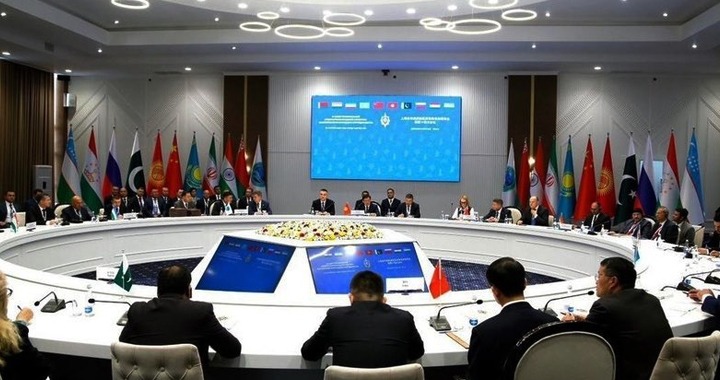
The Shanghai Cooperation Organization (SCO) has raised serious concerns over the growing presence and operational strength of terrorist groups in Afghanistan, warning that the escalating situation could threaten the stability and security of neighboring countries across the region. The warning was issued during a high-level meeting of the Regional Anti-Terrorist Structure (RATS), the SCO’s specialized body for counterterrorism coordination, held in Tashkent on Friday, April 3.
According to officials, intelligence assessments indicate that terrorist groups operating in Afghanistan as well as affiliated networks in Syria have significantly enhanced their combat capabilities in recent months. These developments have heightened fears of cross-border infiltration, recruitment expansion, and the potential spread of extremist ideologies throughout Central and South Asia.
Participants at the meeting, representing SCO member states, expressed deep concern over the increasing threats posed not only by terrorist organizations but also by extremist and separatist elements seeking to exploit regional instability. The discussions underscored the urgency of adopting a unified and proactive approach to counter these evolving security challenges.
“The current trajectory of terrorist activity demands immediate and coordinated action,” the statement emphasized, noting that fragmented responses could undermine broader regional security efforts. Member states called for strengthened intelligence sharing, enhanced border security mechanisms, and the expansion of joint counterterrorism operations.
The SCO, whose members include major regional powers such as China, Russia, India, and Pakistan, has in recent years intensified its focus on collective security frameworks. Officials highlighted the critical role of RATS as a central platform for facilitating real-time intelligence exchange and coordinating joint responses to emerging threats.
In addition to operational cooperation, the meeting stressed the importance of addressing the root causes of extremism, including socio-economic instability and ideological radicalization. Delegates reiterated their commitment to long-term strategies aimed at promoting regional peace, stability, and sustainable development.
The outcomes of the Tashkent meeting signal a renewed determination among SCO member states to confront shared security risks through collaborative and multilateral efforts. Observers note that the evolving situation in Afghanistan will remain a key priority on the organization’s security agenda in the months ahead.



