
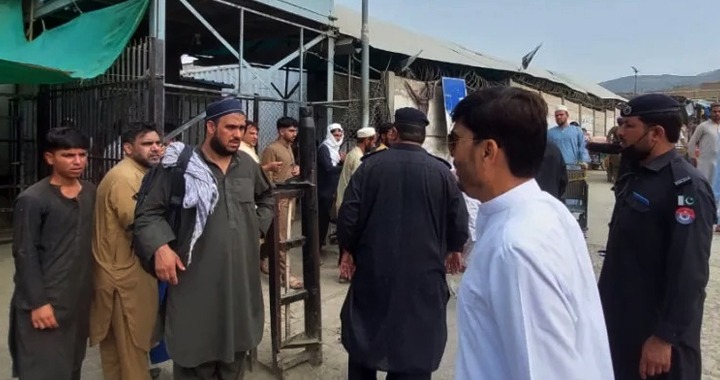
A recent report, claiming that over 19,000 Afghan nationals were detained in Pakistan over the past three months, by the United Nations High Commissioner for Refugees and the International Organization for Migration is drawing scrutiny for what appears to be a significant omission of critical context.
While the report highlights detentions and returns, it fails to address the underlying reasons behind these actions, raising questions about whether the narrative presented is incomplete, if not misleading.
Security officials in Pakistan have consistently maintained that measures against foreign nationals are driven by clear legal and security considerations rather than arbitrary enforcement. A substantial number of those detained are believed to be residing illegally, lacking valid documentation, or involved in criminal activities.
More importantly, official records and verified intelligence assessments have repeatedly pointed to a concerning pattern: a significant proportion of Afghan nationals have been linked, directly or indirectly, to terrorist incidents inside Pakistan. These links range from logistical facilitation to active operational involvement in attacks, particularly in sensitive regions such as Khyber Pakhtunkhwa and Balochistan.
In this context, presenting raw detention figures without clarifying the reasons risks creating a distorted picture, one that overlooks the security challenges faced by the state.
Midway through this debate lies a fundamental question: can enforcement actions be fairly assessed without examining the threats that necessitated them?
Pakistan’s position has remained consistent. The country has hosted millions of Afghan nationals for decades, often under challenging economic and security conditions, without systemic discrimination. Authorities have repeatedly emphasized that there is no bias or hostility toward Afghan refugees as a community.
However, the evolving security landscape, particularly the use of Afghan soil by terrorist groups such as the banned Tehreek-e-Taliban Pakistan (TTP), has forced a recalibration of policy. The absence of effective action against such elements across the border has amplified risks, compelling Pakistan to tighten internal controls.
The report’s reference to deportations similarly lacks nuance. Repatriation measures, officials argue, are being implemented in accordance with legal frameworks, targeting undocumented individuals and those found in violation of laws, rather than constituting blanket action against refugees.
At the same time, the broader regional picture cannot be ignored. Afghanistan continues to present a complex security challenge, with increasing reports of instability, armed resistance, and the presence of multiple armed groups contributing to an uncertain environment.
Against this backdrop, Pakistan’s actions appear less as isolated enforcement and more as part of a broader counterterrorism and internal security strategy aimed at safeguarding its population.
Ultimately, any assessment that relies solely on numbers without examining intent, causation, and context risks oversimplifying a deeply layered issue, one that sits at the intersection of humanitarian responsibility and national security imperatives.



