
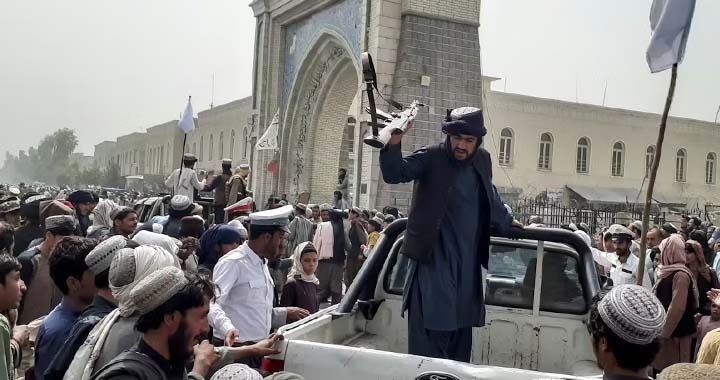
Afghanistan’s prolonged political deadlock is no longer a distant concern; it has evolved into a direct security challenge for Pakistan. The absence of inclusive governance, combined with economic contraction and social exclusion, has created a vacuum exploited by extremist networks. Analysts note that marginalized groups and ideologically rigid factions are consolidating power, establishing a persistent threat that transcends borders.
According to ACAPS, nearly half of Afghanistan’s population requires urgent humanitarian assistance, with displacement and migration increasingly affecting border security in Pakistan. Large-scale movements of people are straining resources, creating opportunities for militant infiltration, and complicating counterterrorism operations. These flows are no longer episodic but risk becoming a structural phenomenon with long-term consequences for regional stability.
Pakistan has experienced a sharp rise in cross-border attacks linked to the Taliban-linked factions operating from Afghan territory. Reports suggest that the banned Tehreek-e-Taliban Pakistan (TTP) and Balochistan Liberation Army (BLA) maintain safe havens and training infrastructure across Afghanistan. Intelligence sources indicate that these groups benefit from logistical support, including recruitment channels and funding networks that operate with the tacit allowance of local authorities.
Experts stress that these threats are not isolated. Structural vulnerabilities in Afghanistan—restricted women’s rights, exclusionary governance, and limited institutional capacity—directly exacerbate instability in Pakistan’s border provinces. Khyber Pakhtunkhwa, Balochistan, and northern Punjab face elevated risks as militants exploit weak governance and porous borders to plan and execute attacks.
The regional impact is magnified by geopolitical competition. Pakistan’s efforts to secure its borders are complicated by external interference, primarily funding and logistical support to extremist groups, which undermine stability. Analysts argue that sustained, calibrated engagement with Afghanistan, focused on inclusive governance and verifiable security benchmarks, is critical to prevent escalation.
While humanitarian support is essential, it cannot replace a political strategy. Pakistan’s security calculus is increasingly tied to Afghanistan’s internal governance, and the international community’s delayed engagement heightens the likelihood of further destabilization. Without proactive measures, the spillover effects could entrench extremism and perpetuate cycles of violence affecting both nations for years to come.



