
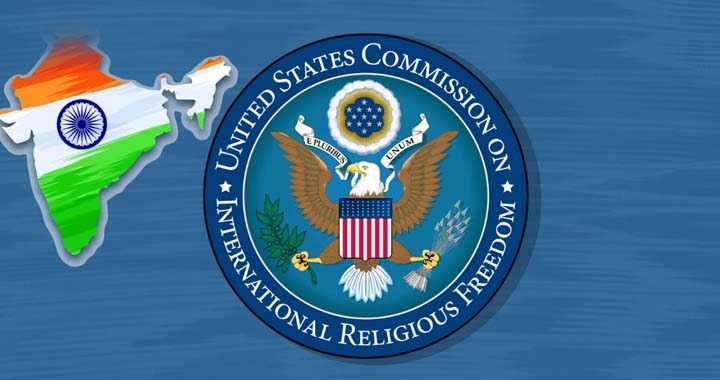
A key American government advisory body, the United States Commission on International Religious Freedom, has expressed serious concern over the state of religious freedom in India in its latest annual report, recommending sanctions against several Indian organizations and institutions it describes as promoting intolerance.
In the report, the commission named the Rashtriya Swayamsevak Sangh, the ideological network linked to the ruling Bharatiya Janata Party, as well as India’s external intelligence agency, the Research and Analysis Wing, suggesting that the United States consider targeted measures against them.
According to the commission, the situation of religious freedom in India has steadily deteriorated in recent years, with religious minorities increasingly facing pressure from both government policies and social hostility.
The report urged the United States government to designate India as a “Country of Particular Concern”, a classification used under U.S. law for nations where severe violations of religious freedom are alleged.
It further recommended that Washington condition its defence cooperation, arms sales, and trade engagement with India on measurable improvements in the protection of religious rights.
The United States Commission on International Religious Freedom is an independent advisory body established in 1998 through legislation passed by the United States Congress. Its mandate is to monitor religious freedom conditions around the world and provide policy recommendations to the U.S. president, secretary of state, and Congress.
The commission is composed of nine members appointed by the U.S. president as well as senior leaders of both chambers of Congress.
The report noted that several Indian states have introduced or strengthened anti-conversion laws in recent years. These laws impose strict penalties, including prison sentences, for religious conversions deemed coercive or fraudulent, measures that human rights groups argue may restrict legitimate religious expression.
It also alleged that Indian authorities have, in some instances, facilitated mass detentions and deportations of religious minorities and asylum seekers.
In addition, the commission cited incidents in which places of worship and communities belonging to religious minorities were targeted in certain regions, claiming that authorities did not always take effective action in response.
The report also criticized legislative changes such as the Waqf Amendment Act, saying the law introduces significant alterations to the administration of Islamic charitable endowments, raising concerns within the Muslim community.
Measures related to the Uttarakhand State Authority for Minority Education were also discussed, with the commission warning that some policy changes could potentially affect minority educational institutions.
The Indian government has previously rejected findings by the commission. The country’s foreign ministry has argued that the body’s assessments are biased and politically motivated.
Indian officials maintain that India is a democratic nation whose constitution guarantees freedom of religion to all citizens.
Observers note that if the United States were to adopt the commission’s recommendations as official policy, it could affect the broader relationship between Washington and New Delhi, particularly in areas such as defence cooperation, trade, and diplomatic engagement.
The release of the report has already sparked renewed debate among global human rights groups, while an official response from the Indian government to the latest findings is still awaited.



