
Muhammad Haseenullah
Afghanistan has long stood at the crossroads of empires, intelligence rivalries, and geopolitical competition. Recent reports and intelligence discussions circulating in regional security circles have revived an unsettling question, is Afghanistan once again becoming the stage for a new covert war involving global and regional powers?
Speculation about alleged contacts between the Afghan Taliban and Israel’s intelligence agency, Mossad, has sparked intense debate among analysts and policymakers. While such claims remain difficult to independently verify, the very emergence of these narratives reveals how Afghanistan continues to occupy a strategic and sensitive position in regional politics.
The concern is not merely about one intelligence agency or one government. It reflects a broader transformation of Afghanistan into a complex geopolitical arena where intelligence operations, surveillance technologies, proxy networks, and militant groups intersect.
Afghanistan’s Geography and Strategic Leverage
Geography has always defined Afghanistan’s strategic importance. The country borders Iran, Pakistan, and Central Asia, while lying close to China’s western frontier. This location places it at the intersection of major regional interests.
For decades, global powers have viewed Afghanistan not only as a battleground but also as a surveillance platform. Any country able to establish operational networks there gains strategic visibility over multiple regions at once.
This geographic advantage partly explains why intelligence competition around Afghanistan never truly disappears, even when international attention shifts elsewhere.
The Alleged Intelligence Footprint
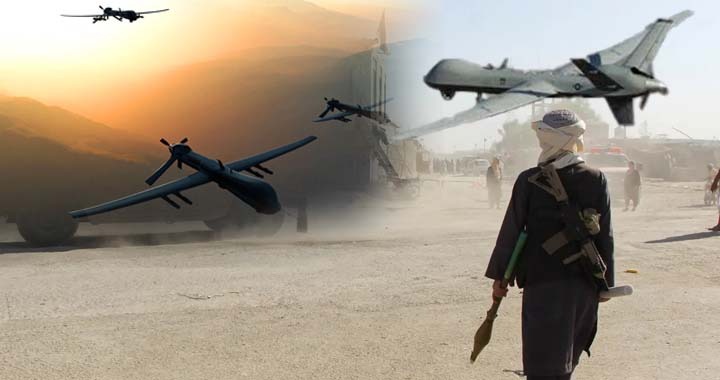
Reports circulating among regional observers suggest that elements linked to Mossad may have attempted to expand their intelligence reach into western Afghanistan, particularly in areas near the Iranian border. According to these narratives, advanced surveillance equipment and drone technology may have been introduced to monitor regional movements and activities.
Whether exaggerated or not, such claims highlight a deeper reality. Modern intelligence warfare increasingly relies on technological platforms such as drones, signal interception systems, and satellite-linked monitoring stations. These tools allow states to observe adversaries without direct confrontation.
Western Afghanistan, particularly regions close to Iran, provides a location where such surveillance systems could theoretically operate with strategic advantage.
One location frequently mentioned in regional discussions is Shindand Air Base in the province of Herat. Historically used by multiple military forces over the decades, the air base possesses infrastructure capable of supporting aerial operations.
Similarly, remote desert regions such as Dasht-e-Margoh between Nimruz and Helmand offer vast terrain where mobile launch systems or temporary installations could theoretically remain concealed.
Mountainous areas in provinces such as Ghor and Farah also provide natural vantage points suitable for signal intelligence monitoring.
Drone Warfare and the Technology Gap
Another issue raised by analysts is the sudden appearance of drone capabilities attributed to militant networks operating from Afghan territory.
Drone technology has transformed modern conflict. Small unmanned aerial systems are relatively inexpensive yet capable of surveillance, targeting, and even precision attacks. For non-state actors or lightly equipped regimes, drones offer a powerful tool that does not require large conventional forces.
However, questions remain about how such technologies reach remote conflict zones. Afghanistan lacks a large domestic technological industry capable of producing sophisticated drone systems at scale.
This reality has led many observers to suspect external supply chains. In intelligence narratives circulating in the region, drone components are sometimes described as moving through complex commercial routes disguised as agricultural equipment before reaching operational areas.
While these accounts are difficult to confirm publicly, they illustrate how modern covert logistics often function through global commercial networks rather than direct military transfers.
The Taliban’s Strategic Calculations
For the Afghan Taliban, maintaining political legitimacy while navigating international isolation remains a delicate balancing act.
The movement continues to portray itself as an Islamic government committed to sovereignty and resistance against foreign interference. Yet at the same time, it must manage relations with multiple external actors to sustain its rule.
This dynamic has produced a complicated diplomatic environment. Some countries maintain cautious engagement with the Taliban for security and economic reasons, while others remain deeply skeptical of the group’s intentions.
Any perception that Afghanistan could become a platform for intelligence operations against neighboring states risks deepening these tensions.
Terror Networks and Regional Anxiety
Another factor intensifying regional concerns is the continued presence of militant organizations within Afghanistan.
Reports discussed in forums linked to the United Nations Security Council have warned that numerous militant groups remain active in the country. Neighboring states fear that these groups could exploit Afghanistan’s fragile security environment to launch cross-border operations.
Pakistan has repeatedly argued that militants associated with the Tehreek-e-Taliban Pakistan continue to operate from Afghan territory. Similar concerns have been raised by Iran, Russia, and China regarding extremist networks that could threaten their own security interests.
These overlapping concerns further complicate Afghanistan’s regional relationships.
The Great Power Dimension
Beyond regional rivalries lies an even larger geopolitical competition. Afghanistan sits close to several critical strategic corridors linking Asia, the Middle East, and Europe.
Major powers such as the United States, China, and Russia continue to monitor developments there closely. Each power has its own strategic calculations.
For Washington, Afghanistan remains relevant because instability in the region can influence broader Middle Eastern and Central Asian security dynamics.
For Beijing, Afghanistan’s proximity to China’s Xinjiang region and its connection to the Belt and Road Initiative make stability in the country strategically important.
Moscow, meanwhile, views Afghanistan through the lens of Central Asian security and the potential spread of extremist groups toward its southern sphere of influence.
In this environment, intelligence gathering becomes an essential instrument of strategic competition.
Pakistan’s Security Calculus
Pakistan’s position is particularly sensitive. The country shares a long and porous border with Afghanistan and has experienced repeated militant attacks linked to groups operating across that frontier.
Islamabad has therefore adopted a security posture that includes targeted counterterrorism operations and intelligence monitoring.
At the same time, Pakistan must balance these actions with diplomatic considerations, as stability in Afghanistan remains essential for regional trade routes and long-term peace.
A Country That Never Leaves the Chessboard
Afghanistan’s history reveals a recurring pattern. Whenever global attention fades, the country appears to move briefly toward stability. Yet beneath the surface, intelligence networks, geopolitical interests, and militant actors continue to operate.
Eventually, these forces bring Afghanistan back into the center of international strategic calculations.
Whether the latest reports about intelligence cooperation or drone networks prove accurate or exaggerated, they point to a broader truth.
Afghanistan remains one of the most strategically contested landscapes in the world. And as long as its geography, political uncertainty, and regional rivalries persist, the shadow war surrounding it is unlikely to end.



