
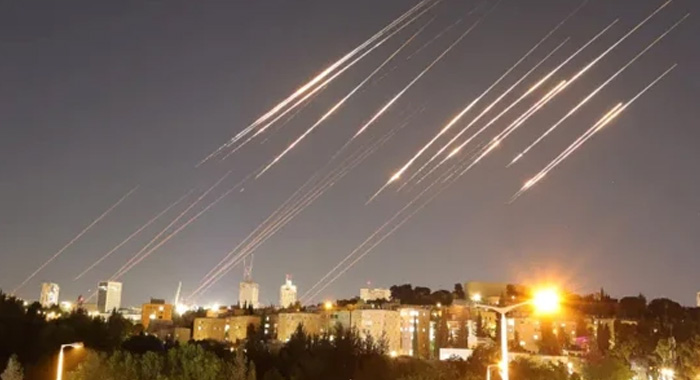
A sharp escalation in hostilities unfolded across the Middle East as Iran launched a new wave of missile attacks against Israel, triggering retaliatory strikes and raising fears of a broader regional conflict. At least seven people were reported injured in the latest barrage, while multiple vehicles were destroyed and significant property damage was recorded in several affected areas.
According to reports from international news agencies, a missile strike in Jerusalem ignited a fire, sending plumes of smoke into the sky and spreading panic among residents. Israeli media stated that seven civilians were wounded in the attack on western Jerusalem. Sirens sounded across major urban centers, including Tel Aviv and parts of the West Bank, prompting authorities to move residents into bomb shelters as emergency protocols were activated nationwide.
The renewed missile campaign marks a significant intensification of tensions between the two long-standing adversaries. Damage assessments are ongoing, with emergency services responding to multiple impact sites amid heightened security measures.
In a related development, Jordan lodged a strong protest over the escalating missile exchanges and summoned the Iranian ambassador, expressing deep concern over rising regional instability. Amman warned that continued escalation could have serious consequences for broader Middle Eastern security.
Meanwhile, Iranian state media issued sweeping claims regarding the scope of the confrontation. Tehran alleged that up to 560 American military personnel had been killed or injured in recent operations, though no independent verification of these figures has been provided. Iranian military sources further claimed that the U.S. aircraft carrier USS Abraham Lincoln had been targeted with four missiles, and that three American and British oil tankers were struck in the Persian Gulf and the Strait of Hormuz, allegedly leaving them ablaze.
Additional reports suggested that a U.S. military base in Bahrain had come under attack. However, these assertions remain unconfirmed by independent sources, and no official statement has yet substantiated the scale of the alleged damage.
In response, Israel initiated what officials described as a new wave of strikes targeting Iranian positions. Heavy bombardment was reported in Tehran, where loud explosions were heard and thick smoke reportedly blanketed parts of the skyline. Eyewitnesses described anti-aircraft fire illuminating the night sky as air defense systems engaged incoming threats.
The Israeli government has extended the nationwide state of emergency until March 12 and placed security forces on high alert. Authorities indicated that further defensive and offensive measures remain under consideration as the situation continues to evolve.
The rapid sequence of attacks and counterattacks underscores the fragility of regional stability. With competing claims, unverified casualty figures, and expanding geographic scope, the confrontation risks drawing in additional actors and widening into a broader conflict. Diplomatic efforts to de-escalate tensions appear increasingly urgent as the region braces for potential further escalation.



