
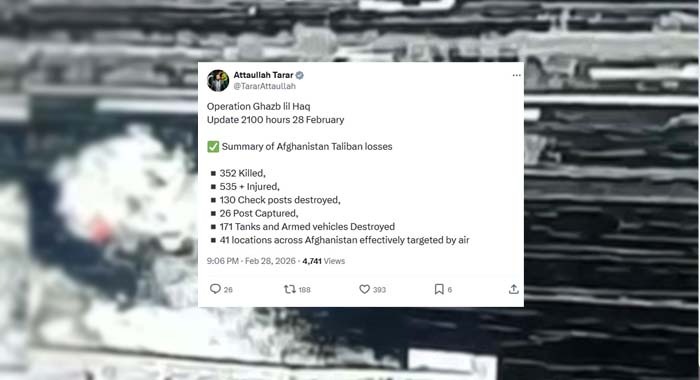
In a highly strategic and devastating offensive, Operation Ghazb lil Haq has inflicted heavy losses on Taliban forces across Afghanistan, marking one of the most impactful blows to the insurgent group in recent years. The operation, which targeted multiple Taliban strongholds, has resulted in significant casualties and the destruction of vital military assets, significantly altering the course of the ongoing conflict.
Reports indicate that at least 352 Taliban militants were killed, with over 535 others injured in a series of precision airstrikes and ground operations. In addition, 130 Taliban checkpoints were destroyed, crippling their logistics network and command infrastructure. The Taliban’s heavy machinery also took a direct hit, with 171 tanks and armored vehicles destroyed, severely diminishing their mechanized strength and mobility.
On the ground, 26 Taliban positions were captured, allowing Afghan forces to gain a decisive advantage in several key areas. The operation, carried out with precision and speed, also saw 41 Taliban sites targeted by airstrikes, crippling their ability to coordinate and retaliate effectively.
This military success has significantly shifted the balance of power in Afghanistan, severely weakening the Taliban’s operational capacity and forcing them to reassess their strategic plans. While the operation has been hailed as a major victory by Afghan forces, it is clear that the fight for control of Afghanistan is far from over. The Taliban’s ability to regroup and retaliate remains a serious concern, but their losses are undeniable.
As Afghanistan’s security forces tighten their grip on key territories, the international community watches closely. Analysts suggest that the success of Operation Ghazb lil Haq could mark a turning point in the conflict, but the road to lasting peace remains fraught with challenges. The operation’s results have demonstrated the effectiveness of modern military tactics, but the future of Afghanistan will depend on sustained military pressure, diplomatic engagement, and continued efforts to stabilize the country.
The operation underscores the importance of intelligence-driven strikes and precision in modern warfare, marking a significant shift in Afghanistan’s struggle against the Taliban insurgency.



