
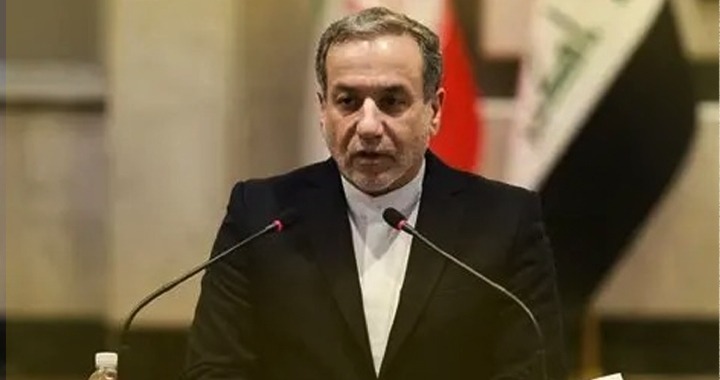
In a bold and threatening declaration, Iran’s Foreign Minister, Abbas Araqchi, announced that Tehran would target all U.S. military bases across the Middle East in retaliation for the recent series of strikes by the United States and Israel. The statement signals a dramatic escalation in the ongoing regional standoff.
Araqchi, speaking to his Iraqi counterpart, made it clear that Iran’s defensive actions would be unrelenting, as the country grapples with increasing foreign military interventions. “We will continue to defend our sovereignty,” Araqchi said. “Any U.S. military installation in the region is now a legitimate target in our efforts to secure our borders and national interests.”
The warning from Iran comes after Israel and the U.S. launched multiple attacks targeting Iranian facilities in Tehran, Isfahan, Tabriz, Qom, and Kerraj, as well as other strategic sites in Iran’s military infrastructure. The response from Tehran has been swift and resolute, with top Iranian officials reiterating their commitment to protecting the nation’s sovereignty by any means necessary.
The Iranian Foreign Ministry’s statement underlines Tehran’s growing frustration with the continuing foreign military presence in the region and the perceived threat posed by both Israeli and American aggression. The recent attacks have intensified hostilities, and Iran has vowed to retaliate with forceful and calculated measures.
The increased U.S. and Israeli military activity in the region has left Tehran with limited options but to take a hardline stance in response. As tensions between Iran and the West reach a boiling point, the escalating attacks on U.S. military bases in the region threaten to deepen the conflict, raising the stakes for not only the Middle East but the broader global security environment.
This development has triggered alarm bells among U.S. allies in the Middle East, with nations like Saudi Arabia, Kuwait, Bahrain, and the United Arab Emirates now facing the potential fallout from these threats. Iran’s targeting of U.S. military bases could set off a broader regional conflict, drawing in more players into the fray and further destabilizing the fragile geopolitical landscape.
Iran’s vow to retaliate against U.S. assets is likely to push the conflict beyond a bilateral exchange into a more widespread war that could reshape the Middle East’s political and security framework. How the U.S., Israel, and other regional powers respond will be crucial in determining whether diplomacy can still play a role in de-escalating the growing tensions.
As Iran prepares to retaliate against its adversaries, the world is left wondering how far the country will go in its efforts to assert its sovereignty. The threats of further violence have put Israel, the U.S., and their respective allies on high alert, and with tensions escalating, the risk of a full-blown regional war looms large.
The Middle East stands at a perilous crossroads, with Iran’s retaliation now set to play a pivotal role in shaping the trajectory of this high-stakes conflict. Iran’s recent warning to target all U.S. military bases in the region marks a critical juncture in a confrontation that has the potential to alter the balance of power in the region, with far-reaching implications for international security.



