
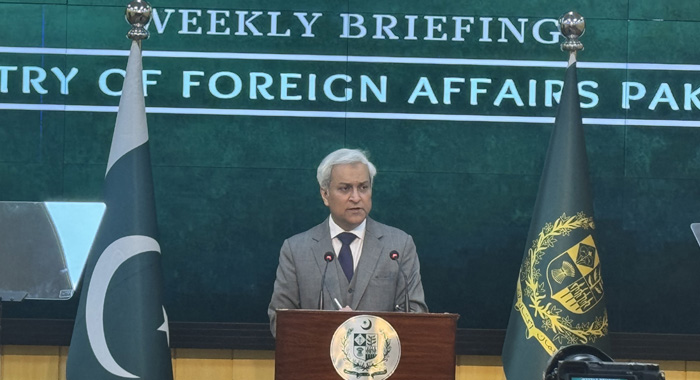
Foreign Office Spokesperson Tahir Hussain Andrabi outlined Pakistan’s recent diplomatic engagements and regional policy priorities during the weekly media briefing, underscoring Islamabad’s commitment to strategic partnerships, counterterrorism efforts, and the protection of national sovereignty.
The spokesperson confirmed that Prime Minister Muhammad Shehbaz Sharif visited Doha at the invitation of the Amir of Qatar. During the visit, both sides agreed to further strengthen bilateral cooperation across all areas of mutual interest, including economic collaboration, defense cooperation, and regional matters, particularly developments concerning Afghanistan. The discussions reaffirmed the shared commitment to expanding the Pakistan–Qatar strategic partnership.
In a separate development, Deputy Prime Minister and Foreign Minister Muhammad Ishaq Dar departed for Saudi Arabia to participate in the extraordinary meeting of the Executive Committee of the Organisation of Islamic Cooperation (OIC), where he will present Pakistan’s position on key issues facing the Muslim world. The spokesperson also strongly condemned Israel’s move to convert the West Bank into state land, reiterating Pakistan’s unequivocal opposition to unilateral actions that undermine Palestinian rights.
Marking the 19th anniversary of the tragic Samjhauta Express bombing, which claimed the lives of more than 70 people, Pakistan condemned what it described as India’s failure to deliver justice, particularly the release of individuals convicted in connection with the attack. Islamabad called for accountability and demanded that those responsible be brought to justice.
On Afghanistan, the spokesperson emphasized that Pakistan’s actions are directed against terrorist elements, not the Afghan people. He noted that documented evidence of cross-border terrorism has been presented before the United Nations Security Council. While welcoming Qatar’s efforts to facilitate Pakistan-Afghanistan reconciliation, he described recent threatening statements from Afghan authorities as regrettable. Pakistan’s armed forces and law enforcement agencies, he affirmed, remain fully prepared to respond to any provocations.
Pakistan also condemned what it termed continued Indian aggression in Indian Illegally Occupied Jammu and Kashmir, particularly the killing of three youth in Kishtwar district. The spokesperson accused India of pursuing a policy of staged encounters and custodial killings and vowed that Pakistan would continue to raise these issues before international human rights organizations to hold India accountable.
Responding to discussions in the British Parliament regarding the rights of former Prime Minister Imran Khan, the spokesperson stated that Pakistan is a signatory to international human rights conventions and considers such commentary as interference in its internal affairs. He further stressed that ensuring the safety of Pakistani diplomats and citizens in Afghanistan remains a priority and that the Afghan authorities bear responsibility for their protection, particularly in Kabul. He clarified that the agenda of the upcoming OIC emergency meeting focuses on Palestine and does not include Afghanistan.
The spokesperson also commemorated the anniversary of Operation Swift Retort as a defining military episode that demonstrated Pakistan’s resolve and capability to defend its sovereignty. Addressing reports of growing defense cooperation between India and Israel, he stated that Pakistan remains vigilant to evolving security challenges and prepared to safeguard its national interests. Commenting on protests in Israel during the Indian Prime Minister’s visit, he remarked that it was encouraging to see voices of conscience being raised.
Concluding the briefing, the spokesperson reiterated Pakistan’s call for the elimination of terrorist sanctuaries on Afghan soil and stressed that there is currently no structured dialogue format similar to Doha or Istanbul underway on Afghanistan. He reaffirmed Pakistan’s commitment to regional peace, while making clear that any threat to its sovereignty or security would be met with a firm and proportionate response.



