
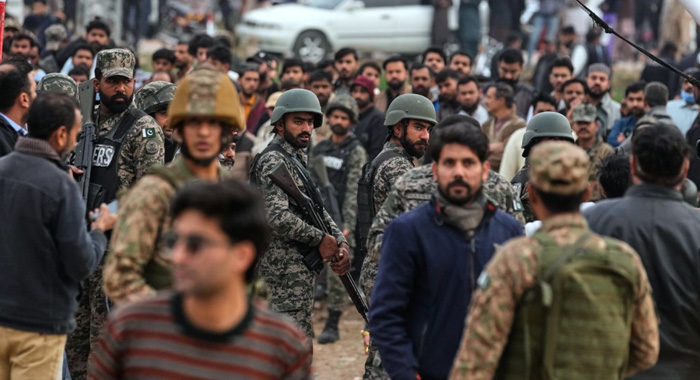
The tragic suicide bombing at a Shia mosque on the outskirts of the federal capital has once again brought into sharp focus the evolving and multidimensional nature of terrorism confronting Pakistan. The attack, carried out during Friday congregational prayers, resulted in the loss of 36 innocent lives and left more than 160 worshippers injured. Beyond its immediate human toll, the incident reflects deeper structural shifts within the regional militant ecosystem that warrant careful strategic assessment.
For several years, Pakistan had experienced a relative decline in large-scale urban terrorist incidents. The breach of a heavily secured zone in the capital region signals that militant actors retain the capability to plan, infiltrate, and execute complex operations despite sustained counterterrorism pressure. The sophistication of the assault indicates that the threat cannot be categorized as residual or fragmented; rather, it underscores a recalibrated militant strategy that prioritizes precision, symbolism, and psychological impact.
Preliminary analyses attribute responsibility to the Islamic State Khorasan Province (ISKP), a group that has undergone significant transformation in recent years. While it has suffered the loss and arrest of several key figures including its senior propagandist and ideologue Sultan Aziz Azam, apprehended in May 2025 near the Pakistan-Afghanistan border the organization has demonstrated resilience through structural adaptation. Notably, Azam had previously been reported killed in a 2018 airstrike in Afghanistan, highlighting the opaque and fluid nature of transnational militant networks.
ISKP’s trajectory reflects a broader organizational shift from territorial ambition to ideological diffusion. Instead of seeking overt geographic control, the group now prioritizes clandestine recruitment, digital indoctrination, and decentralized operational planning. Encrypted communication channels and secure online platforms have become central to its strategy, enabling it to sustain influence even under intense physical and intelligence pressure. This diffusion model complicates detection and enhances unpredictability, particularly in regions where technological countermeasures remain under-resourced.
The sectarian dimension of the mosque attack is consistent with the doctrinal foundations of ISKP’s parent movement, which has long embedded anti-Shia rhetoric within its ideological framework. However, the group’s hostility extends beyond sectarian boundaries. Its propaganda frequently targets regional governments and international powers alike, portraying a broad array of state and non-state actors as adversaries. Such narratives are designed not only to justify violence but also to deepen societal fissures and erode institutional legitimacy.
Speculation surrounding the timing of the attack coinciding with heightened political mobilization and cultural events elsewhere in the country has circulated widely. Security experts caution against conflating operational timelines with domestic political developments. Attacks of this magnitude typically require weeks of preparation, including reconnaissance, logistics coordination, and explosives training. The convergence with other national events appears more coincidental than strategic, reflecting readiness rather than reactive disruption.
Compounding the complexity of the security environment are reports of rivalries among militant factions operating in border regions. Accounts of armed confrontations between ISKP and other non-state actors suggest a volatile landscape marked by shifting alignments and proxy dynamics. Such competition may produce localized clashes, but it can also trigger retaliatory cycles with broader implications for internal stability.
The latest incident also underscores the importance of measured public discourse in times of crisis. Large-scale attacks often generate competing narratives, accusations, and conspiracy theories that risk amplifying social polarization. A cohesive national response grounded in institutional coordination and factual clarity remains essential to counter both the operational and psychological objectives of extremist violence.
Pakistan’s security agencies continue to investigate the attack and intensify efforts to dismantle militant infrastructures operating within and beyond its borders. Strengthening digital surveillance capacities, enhancing intelligence integration, and reinforcing community-based resilience against sectarian incitement are integral components of a sustainable counterterrorism framework.
The Islamabad mosque bombing is not solely a security event; it is a reminder that militant organizations are continuously adapting to shifting regional dynamics. Addressing this evolving threat demands strategic patience, technological modernization, and sustained cooperation at national, regional, and international levels. Pakistan remains resolute in its commitment to protecting all citizens, preserving social cohesion, and confronting extremism in all its manifestations.



